





What Exactly Is Falling?
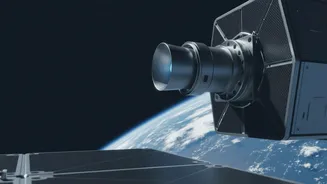
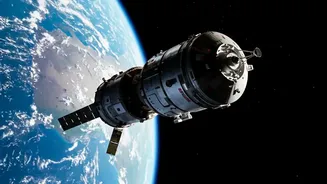
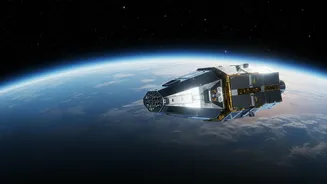
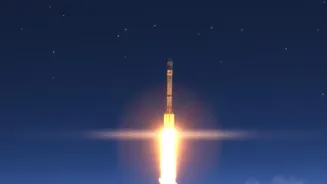
The object in question is the large core stage of a Long March rocket, likely weighing over 20 metric tons. These boosters are used to lift heavy modules for space stations into orbit. After completing their primary mission of pushing a payload into space,
these massive rocket bodies are left in a low orbit. Without any propulsion system to guide their descent, they begin a long, uncontrolled fall back to Earth, pushed along by the faint wisps of atmospheric drag.
The Science of an Uncontrolled Reentry
Most modern space operators design their rockets for a controlled reentry. This involves reserving a small amount of fuel to perform a final engine burn, steering the defunct rocket stage towards an uninhabited area, typically the South Pacific Ocean Uninhabited Area, known as Point Nemo. However, some large rocket stages are left in orbit without this capability. Their orbits gradually decay over days or weeks due to friction with the upper atmosphere. This process is highly unpredictable. Factors like the object's shape, whether it's tumbling, and minute changes in atmospheric density caused by solar weather can alter its trajectory significantly, making a precise impact prediction impossible until the final moments.
How Is the Impact Zone Predicted?
Global military and civilian space surveillance networks, led by organizations like the U.S. Space Command, use a worldwide system of powerful radars and optical telescopes to track thousands of objects in orbit. For a high-interest event like this, they monitor the rocket body constantly. As it descends, the predictions become more accurate. Initially, the potential impact zone spans a huge swath of the globe, covering any area under its orbital path. With days to go, the reentry window might be narrowed to a day or two. With hours left, it can be refined to within an hour, and in the final hour, predictions can be accurate to within minutes and a few hundred kilometres. But even then, a few minutes' difference in reentry time can mean a difference of thousands of kilometres in where the debris lands.
What Are the Real-World Risks?
The good news is that the personal risk is infinitesimally small. With about 75% of the Earth's surface covered by water and vast unpopulated land areas, the odds of a piece of debris hitting a person are astronomically low. Most of the rocket will burn up upon re-entry due to the intense heat, which can exceed 1,600 degrees Celsius. However, dense and heat-resistant components, such as parts of the engine or fuel tanks made of titanium or stainless steel, can survive the fiery descent and reach the ground. While no person has ever been killed by falling space debris, there have been instances of property damage, and the recurring nature of these events raises international concern.
A Growing Problem in a Crowded Sky
This event, while dramatic, is a symptom of the much larger problem of space debris. As more countries and private companies launch rockets, the amount of junk in low Earth orbit is increasing. These uncontrolled reentries pose a potential, if small, risk to people on the ground and a more significant risk to air traffic. Experts point to the lack of binding international treaties requiring all launch providers to ensure the controlled disposal of their rocket bodies. Until such standards are universally adopted and enforced, these unpredictable returns to Earth will continue to be a feature of the modern space age.