







The End of an Era
On November 12, Nvidia announced that Jensen Huang, the company's co-founder and CEO for over 33 years, was resigning effective immediately. The move followed board-level investigations and marked the end of one of the most successful and visionary leadership
tenures in Silicon Valley history. Huang transformed Nvidia from a niche maker of graphics cards for gamers into a global powerhouse whose chips underpin the entire artificial intelligence revolution. His departure was abrupt and, according to many reports, unplanned for, as the company had no formal, public CEO succession plan. This has introduced a level of uncertainty and governance risk that has drawn concern from credit rating agencies like Moody's.
Meet the Interim Leadership
Stepping into the top role as interim CEO is Colette Kress, who has served as Nvidia's Chief Financial Officer since 2013. While continuing her duties as CFO, Kress is seen by the market as a stabilizing presence and a trusted voice during a period of volatility. Her appointment is intended to provide continuity and financial confidence. Concurrently, the board appointed longtime director Harvey C. Jones as its first-ever Chair, tasked with overseeing the search for a permanent CEO, for which both internal and external candidates will be considered. In her first statements, Kress committed to advancing Nvidia's leadership in AI and executing on its strategy to serve customers and shareholders, signaling a message of stability.
Is the Product Roadmap Secure?
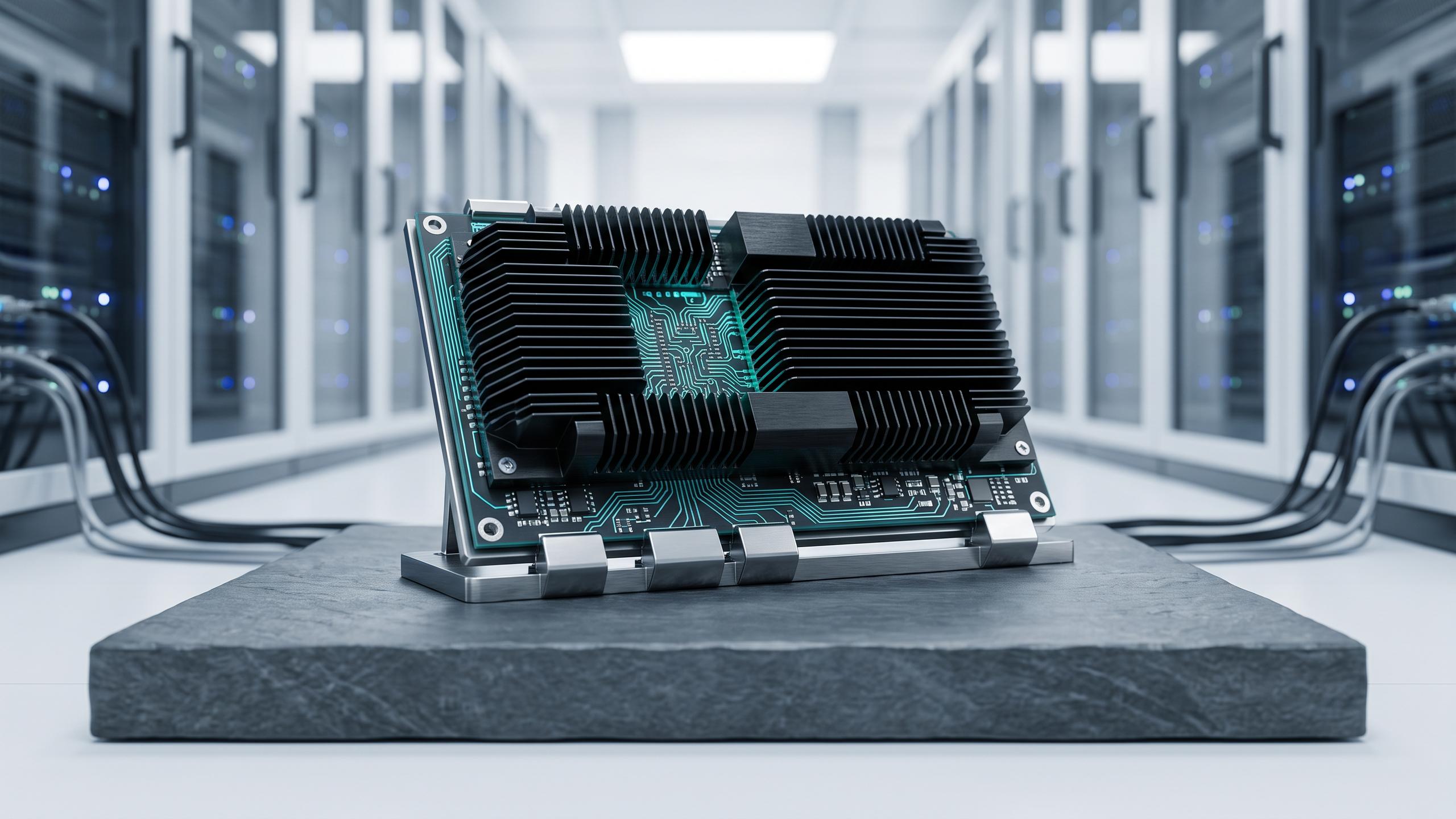
The critical question for customers and investors is whether Nvidia's relentless pace of innovation can continue without Huang. Company executives have been quick to provide reassurance. In an all-hands meeting, leaders insisted that the product roadmap, customer relationships, and execution strategy remain intact. Analysts largely agree that products for the next two years are already locked in. The next-generation 'Vera Rubin' platform is reportedly in full production for a 2026 launch, with the 'Rubin Ultra' slated for 2027 and the 'Feynman' generation for 2028. Interim CEO Colette Kress has affirmed the company's multiyear roadmap and strong supply agreements. The real test will be whether the company can maintain Huang's signature annual upgrade cadence and visionary pivots in the long term.
Maintaining Momentum and Managing Risk
Nvidia's leadership is working to prove the company is more than just one person. Operations chief Debora Shoquist emphasized that core principles and deep supplier partnerships ensure consistency regardless of leadership changes. The company recently expanded its manufacturing and packaging partnerships with major suppliers like TSMC, Amkor, and Foxconn to boost production capacity for its AI accelerators, a move that predates the leadership crisis and shores up its supply chain for 2027 and beyond. Engineering leaders have also outlined a vision to move beyond selling chips to delivering entire containerized 'AI factories'. While this demonstrates deep institutional momentum, the new leadership must still navigate significant challenges, including intense competition from customers-turned-rivals like Google and Microsoft, who are developing their own AI chips.