







The '0-3 Hour' Sleep Norm
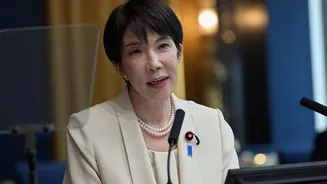
Prime Minister Sanae Takaichi, Japan's first female leader, recently shared on the social media platform X that sleeping for "zero to three hours has become the norm" since she took office in October 2025. In a post that drew widespread attention, she described
a recent three-day weekend where she was finally able to get five hours of sleep, which she called a blessing. She detailed a demanding routine that involves reviewing policy documents until dawn, handling thousands of emails, and attending to household chores like laundry and sewing during any personal time. The post provided a rare, unvarnished look into the life of a national leader, but it also quickly became a focal point for both concern and criticism.
A Hard-Working Image
This is not the first time Takaichi has highlighted her relentless work ethic. Upon being elected leader of the ruling Liberal Democratic Party (LDP), she famously vowed to "work, work, work, work and work," a phrase that became a national buzzword. She has often cited former British Prime Minister Margaret Thatcher as an inspiration, modeling an image of a leader who does not let exhaustion get in the way of her duties. Takaichi's supporters see these disclosures as proof of her dedication. However, her post about sleeping only a few hours a night has also raised alarms.
Criticism from the Opposition
Opposition leaders were quick to question the wisdom of such a schedule. Yuichiro Tamaki, head of the Democratic Party for the People, argued that resting is a crucial part of a prime minister's job. He and other critics suggested that leadership is about effective delegation, not personal endurance, and that making critical decisions for the nation requires a clear mind. Another lawmaker warned that chronic sleep deprivation could impair judgment and pose a risk to the country's crisis management capabilities. The debate touches on a sensitive issue in Japan, a country that has long struggled with a culture of overwork and has a specific term, "karoshi," for death caused by it.
Political Pressures and Public Perception
Takaichi's post comes at a challenging time. Despite leading her party to a landslide victory in February 2026, she faces significant domestic headwinds, including concerns over inflation and a weak yen. Some analysts believe the post might be an attempt to show the public she is working tirelessly to address these issues. However, it also feeds into a narrative of a leader under immense pressure, potentially struggling to manage the demands of the office. One LDP official noted the post might reflect a sense of impatience and a need for more reliable assistants. This comes as Takaichi reportedly considers a cabinet reshuffle to assert her policy agenda more strongly within a government that includes coalition partners.