









The Old Model Is Broken
For previous generations, the career path was often a straight line: get a degree, find a stable job, and stay loyal to one employer for decades in exchange for security. That model is fading. Having entered a world marked by economic uncertainty, rising
living costs, and rapid technological disruption, Gen Z views lifelong loyalty to a single company as a risky, outdated strategy. They've seen jobs evaporate during economic downturns and wages stagnate, leading them to reject the notion that one employer can provide absolute security. Instead, they are approaching their careers with the calculated mindset of a savvy investor, making a rational decision that the grass is often greener—and safer—elsewhere.
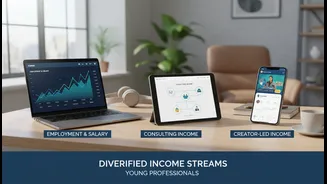
Diversification Through 'Polywork'
The cornerstone of this new approach is diversification. Known as 'polywork' or building a 'portfolio career', it involves juggling multiple income streams simultaneously. This isn't just about having a weekend side hustle. It's a deliberate strategy that combines freelance gigs, part-time roles, passion projects, and sometimes even multiple full-time jobs. Research from LinkedIn shows that in India, 75% of Gen Z entrepreneurs manage multiple income streams, a significant jump from older generations. This approach serves two purposes: it provides a financial cushion if one income stream disappears, and it allows them to explore different interests and build a wider range of skills. The goal is to create financial resilience by not putting all their eggs in one basket.
Job Hopping as Risk Management
What older generations might see as a lack of commitment, Gen Z views as strategic risk management. Job hopping is no longer a red flag but a calculated method for growth and financial gain. Staying with one employer rarely yields the salary increases that switching jobs can. Reports have shown that job-switchers often earn significantly more than those who stay put, making mobility a practical way to boost income in the face of inflation. Beyond money, each job change is an opportunity to acquire new skills, gain different experiences, and pivot toward roles that better align with their values and long-term goals. This isn't random movement; it's a deliberate recalibration of their career portfolio to maximize returns.
Investing in High-Growth Assets
A smart investor focuses on assets with high growth potential, and Gen Z treats their skills the same way. They are proactively developing capabilities that are future-proof, especially in a world being reshaped by Artificial Intelligence. A recent report highlighted that 55% of Gen Z believe AI will reshape their careers, prompting them to diversify their skills to remain adaptable. Technical skills in software development, data analytics, and AI are highly sought after. However, there is also a strong emphasis on human-centric skills that machines cannot replicate, such as critical thinking, creativity, communication, and emotional intelligence. By continuously learning and upskilling, they ensure their personal 'stock value' remains high, regardless of the job market's fluctuations.
The Future Is Fluid
This portfolio-based approach to work signals a fundamental shift from a rigid, linear career path to a more fluid and dynamic one. For Gen Z, a career is not a single destination but a collection of experiences and assets that can be rebalanced and reconfigured over time. This mindset is driven by a desire for flexibility, autonomy, and control over their professional and financial destiny. As this generation becomes a larger part of the workforce, employers who want to attract and retain top talent will need to adapt. This means offering project-based work, embracing flexible arrangements, and providing opportunities for continuous skill development. The era of the single-job-for-life is over; the age of the career portfolio is just beginning.