






A Groundbreaking Orbital Flight
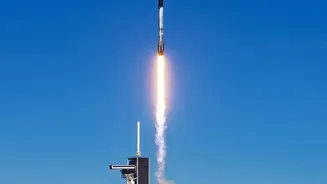
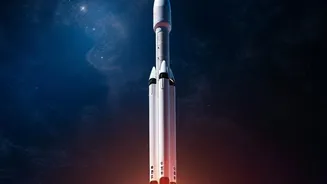
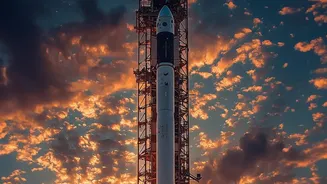
On September 28, 2026, SpaceX's Starship vehicle lifted off from its Starbase facility in Texas, successfully achieving orbit for the first time in its history. This fourteenth test flight was a monumental step, transitioning the program from the suborbital
"hops" of the past into the realm of true orbital spaceflight. The mission saw the Super Heavy booster successfully separate and perform a controlled splashdown in the Gulf of Mexico. The Starship upper stage then continued, firing its own engines to enter a stable orbit around the Earth, a primary objective that had eluded previous attempts. Though not everything went perfectly—one of the upper stage's six engines failed during ascent—the vehicle compensated and completed its main goal.
From Suborbital Hops to Orbital Velocity
To understand the significance of this flight, it is crucial to distinguish between suborbital and orbital flight. Previous tests sent Starship on a high arc, reaching the edge of space before falling back to Earth without achieving the necessary speed to circle the planet. Reaching orbit requires achieving a blistering velocity of over 28,000 km/h, which is technically far more complex than a simple up-and-down trajectory. This test proved Starship can operate not just as a rocket, but as an orbital spacecraft capable of surviving and maneuvering in space. This capability is the fundamental requirement for all of SpaceX's future ambitions, from deploying satellites to long-duration missions to the Moon and Mars.
A Successful First Job in Orbit
This mission was more than just a test; it was also a functional deployment. For the first time, Starship carried an operational payload, successfully deploying 26 of SpaceX's next-generation Starlink V3 internet satellites into low-Earth orbit. This demonstrated the vehicle's potential as a commercial workhorse, capable of launching unprecedented mass and volume into space. The successful satellite deployment marked a key milestone, proving the vehicle can perform its primary commercial function. Originally planned to orbit the Earth for nearly ten hours, mission controllers opted to shorten the flight to about three hours out of an abundance of caution following the earlier engine issue.
The Fiery Return and Pacific Splashdown
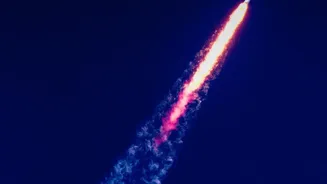
Perhaps the most critical phase of the mission was the atmospheric reentry. The Starship vehicle successfully performed a deorbit burn to begin its descent. It then endured the intense heat and pressure of reentering the atmosphere, using its large body and flaps to control its path—a phase that produces a spectacular plasma fireball. The vehicle survived this trial by fire and performed a final landing burn, flipping to a vertical orientation just before hitting the water. It achieved a controlled, targeted splashdown in the Pacific Ocean north of Hawaii. While the rocket ultimately tipped over and was destroyed upon impact with the water, as is common in splashdowns, surviving the journey all the way to a controlled landing maneuver was a massive success, providing invaluable data for future reuse.
What This Means for NASA and Mars
This successful orbital flight is a critical step for NASA's Artemis program. The American space agency has selected a modified version of Starship to serve as the lunar lander that will return astronauts to the Moon's surface, a mission currently targeted for 2028. Before that can happen, SpaceX must demonstrate repeatable success and perfect complex maneuvers like in-orbit refueling, which will require multiple Starship launches. This flight builds confidence that the foundational technology is sound. For SpaceX founder Elon Musk, the ultimate goal remains the colonization of Mars. A fully and rapidly reusable Starship is the cornerstone of that vision, as it is designed to drastically lower the cost of access to space. By proving the vehicle can reach orbit and return, SpaceX has taken a giant leap toward making that multi-planetary future a tangible possibility.