



The Problem with the Plateau
Holding a single-leg stand is a classic balance exercise for a reason: it works. It strengthens the tiny stabiliser muscles in your feet, ankles, and hips, and improves your body's awareness in space, a sense known as proprioception. However, like any
exercise, your body adapts. Once you can comfortably hold the pose for 30 or 60 seconds, simply adding more time yields diminishing returns. You've mastered static balance—the ability to stay still—but life requires dynamic balance, the ability to remain stable while in motion. Think about walking on an uneven pavement, stepping off a kerb, or navigating a crowded market. These actions require your body to react and adjust, not just stay frozen in one position. Chasing longer holds on a flat, stable surface doesn't prepare you for that.
Challenge the System, Not the Clock
The key to next-level balance is to make the exercise harder, not just longer. Progressions work by introducing instability or new movements that force your neuromuscular system to adapt in new ways. Instead of just standing there, you can challenge your visual system, add movement to your limbs, or change the surface you're standing on. These methods disrupt your body's equilibrium, forcing the stabilising muscles in your standing leg and core to work harder and more reactively. This 'dynamic' approach is far more effective for building the kind of robust stability that prevents falls and improves athletic performance.
Progression 1: Change Your Surface
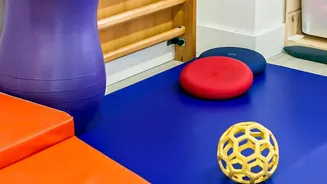
The simplest way to increase the difficulty is to stand on an unstable surface. Your feet and ankles get constant feedback from the ground; changing that feedback makes them work harder. Start by moving from a hard floor to a thicker yoga mat or a plush carpet. When that becomes manageable, try standing on a pillow or a folded towel. For a greater challenge, a balance disc or wobble board creates a 360-degree unstable environment that significantly fires up the stabilisers in your lower leg and hip. Even with these tools, aim for controlled holds of 20-30 seconds rather than marathon sessions. Quality over quantity is the goal.
Progression 2: Add Head and Eye Movements
Your eyes play a massive role in maintaining balance. To reduce your reliance on visual cues, try performing your single-leg stand while slowly turning your head from side to side. This small movement is surprisingly disruptive. The next step is to challenge your balance by looking up towards the ceiling and then down towards the floor. The ultimate challenge in this category is to close your eyes completely. Doing so forces your body to rely entirely on proprioception—the signals from your muscles and joints—to stay upright. Start with very short, 5-second holds with your eyes closed and have a wall or chair nearby for support.
Progression 3: Incorporate Limb Movement
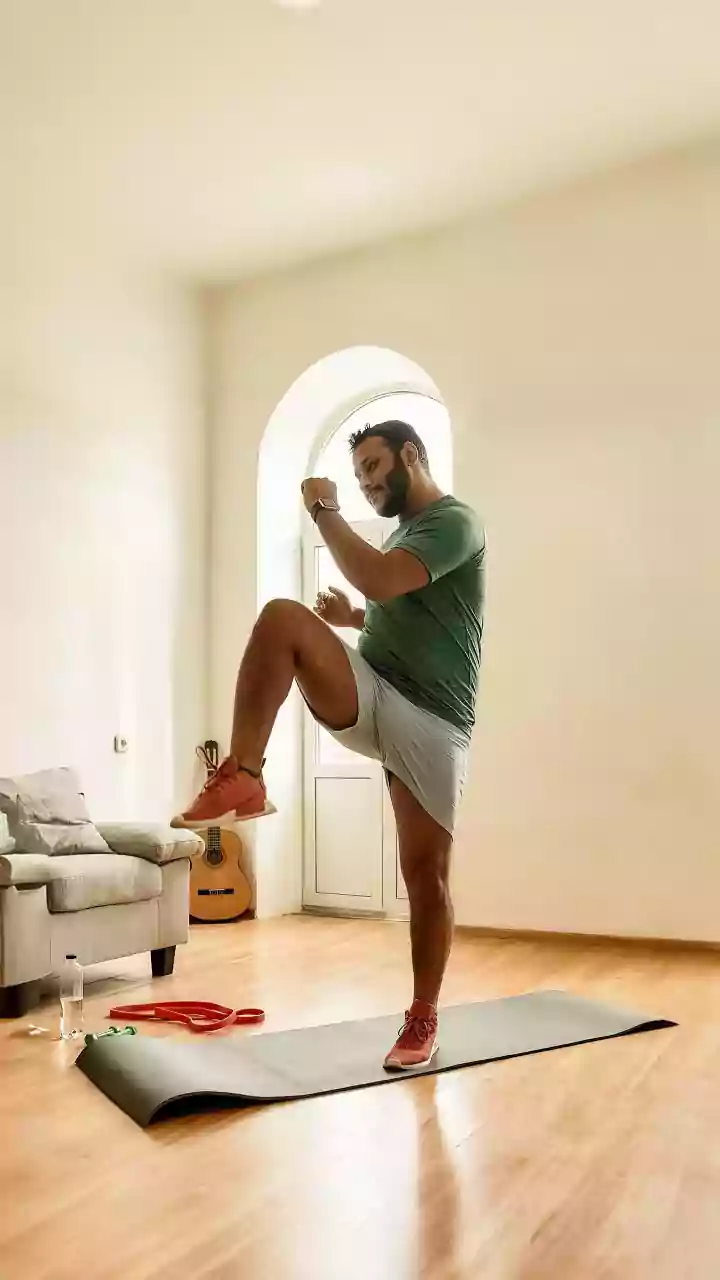
Static holds are passive, but real-world balance is active. Introducing limb movements simulates this perfectly. While balancing on one leg, try some of these dynamic drills: - Arm Reaches: Slowly reach your arms forward, overhead, or out to the sides. Returning to the start position in a controlled manner is just as important.- Leg Lifts: Keeping your standing knee slightly bent, lift your other knee up towards your chest, then extend it straight out in front, to the side, or behind you.- Clock Taps: Imagine you are standing in the centre of a clock. Tap your free foot to 12 o'clock, then back to centre, then 3 o'clock, and so on, hitting various points on the dial without putting your full weight down. - Pass Arounds: Hold a light weight (like a water bottle or a small dumbbell) and pass it from one hand to the other, or in a circle around your body. This shifting weight constantly changes your centre of gravity, providing an excellent challenge.