




The label 'overrated' can be a death knell for any travel destination. Recently, several forums and travel lists have included some of India’s most iconic cities, citing overcrowding and commercialisation as major drawbacks. But does this label tell the
whole story?
Agra: More Than a Mausoleum
The primary criticism against Agra is that it's a 'one-monument city'. Travellers often arrive, see the magnificent Taj Mahal, and leave, finding the rest of the city chaotic and underwhelming. While the crowds at the Taj can be overwhelming, this perspective misses the deep well of history Agra offers. The city was the capital of the Mughal Empire. Beyond the Taj lies the formidable Agra Fort, a UNESCO World Heritage site that served as the main residence of emperors. There's also the exquisitely detailed Tomb of Itimad-ud-Daulah, often called the 'Baby Taj', and the peaceful Mehtab Bagh, a garden offering serene views of the Taj from across the river. To see Agra properly is to spend time exploring these layers of history, which provide the context for the crown jewel itself.
Goa: Beyond the Beach Parties
For many, Goa is synonymous with crowded beaches like Baga and Calangute, a repetitive party scene, and rampant commercialisation. This has led to many experienced travellers labelling it as overrated, especially for those seeking tranquility. But to dismiss all of Goa is to ignore its quieter, more soulful side. The state's long coastline offers numerous alternatives. South Goa is known for its serene stretches like Palolem and Agonda, while hidden gems like Kakolem and Butterfly Beach offer seclusion. Beyond the coast, Goa's hinterlands are rich with spice plantations, lush wildlife sanctuaries like Netravali, and the unique cultural fabric of its old Latin Quarter in Panjim and riverine islands like Divar. True Goa is a state of mind, not just a beach party.
Delhi: Finding Order in the Chaos
India's capital often gets a bad rap from tourists for being overwhelming, polluted, and chaotic. First-time visitors can find the sheer scale and intensity of the city a challenge. However, writing Delhi off means missing one of the world's most historically dense and culturally vibrant metropolises. The city is a study in contrasts, from the winding, sensory-rich lanes of Old Delhi and Chandni Chowk to the grand, tree-lined avenues of Lutyens' Delhi. It holds three UNESCO World Heritage sites: Humayun's Tomb, the Qutub Minar complex, and the Red Fort. Furthermore, it is a food lover's paradise, offering everything from celebrated street food to high-end gastronomy. The key to enjoying Delhi is to embrace its multiple personalities and explore its distinct neighbourhoods one at a time.
Mumbai: The Relentless City of Dreams
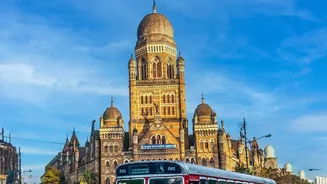
Mumbai's unstoppable energy, crowds, and fast paced lifestyle are often cited as reasons why some travellers find it overrated and exhausting. The 'City of Dreams' can feel more like a concrete jungle with little room to breathe. But this very energy is what makes Mumbai so compelling. It's a city of immense diversity, where you can experience colonial era architecture in Colaba, explore vibrant street art in Bandra, and feel the local pulse in neighbourhoods like Dadar. It's a melting pot of communities and cuisines, from local Maharashtrian fare and Parsi cafes to bustling street food stalls at Juhu Beach. To appreciate Mumbai is to dive into its local life, perhaps by taking a local train, exploring a market, or simply walking along Marine Drive.
Jaipur: The Pink City in a New Light
As a cornerstone of the 'Golden Triangle' tourist circuit, Jaipur can sometimes feel like a victim of its own success. Visitors complain of crowded forts, over‑commercialised markets, and a tourist experience that can feel scripted. But the Pink City has countless hidden corners that most tours miss. Beyond the main attractions of Amer Fort and Hawa Mahal are quieter gems like the Royal Gaitor Tumbas and the stunning Panna Meena ka Kund stepwell. The city is a hub for artisans, and exploring the backstreets of Johri Bazaar reveals gem cutters at work. For a break from the urban landscape, eco‑restoration projects like Kishan Bagh and the Jhalana Leopard Reserve offer unexpected natural escapes just outside the city.