
A Puzzle from the Cosmic Dawn
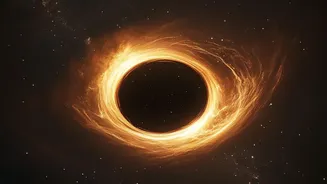
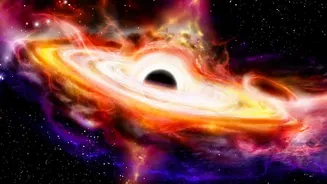
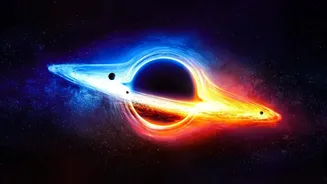
One of the greatest mysteries in modern astronomy is the existence of supermassive black holes in the very early universe. These cosmic giants, millions or even billions of times the mass of our sun, sit at the heart of most large galaxies, including
our own Milky Way. Yet, observations show they existed a mere few hundred million years after the Big Bang. This timeline presents a major problem for scientists. According to current models of black hole growth, there simply wasn't enough time for them to have grown so enormous. It's a cosmic chicken-and-egg problem: did the galaxy form the black hole, or did the black hole form the galaxy? Finding the seeds of these giants has been a primary mission for astronomers, and now, thanks to the James Webb Space Telescope (JWST), they may have found a vital clue.
Meet the 'Quasi-Star'
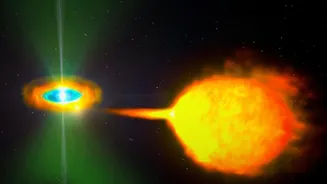
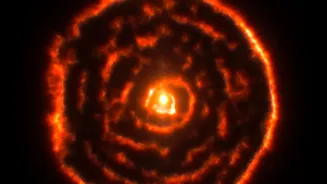
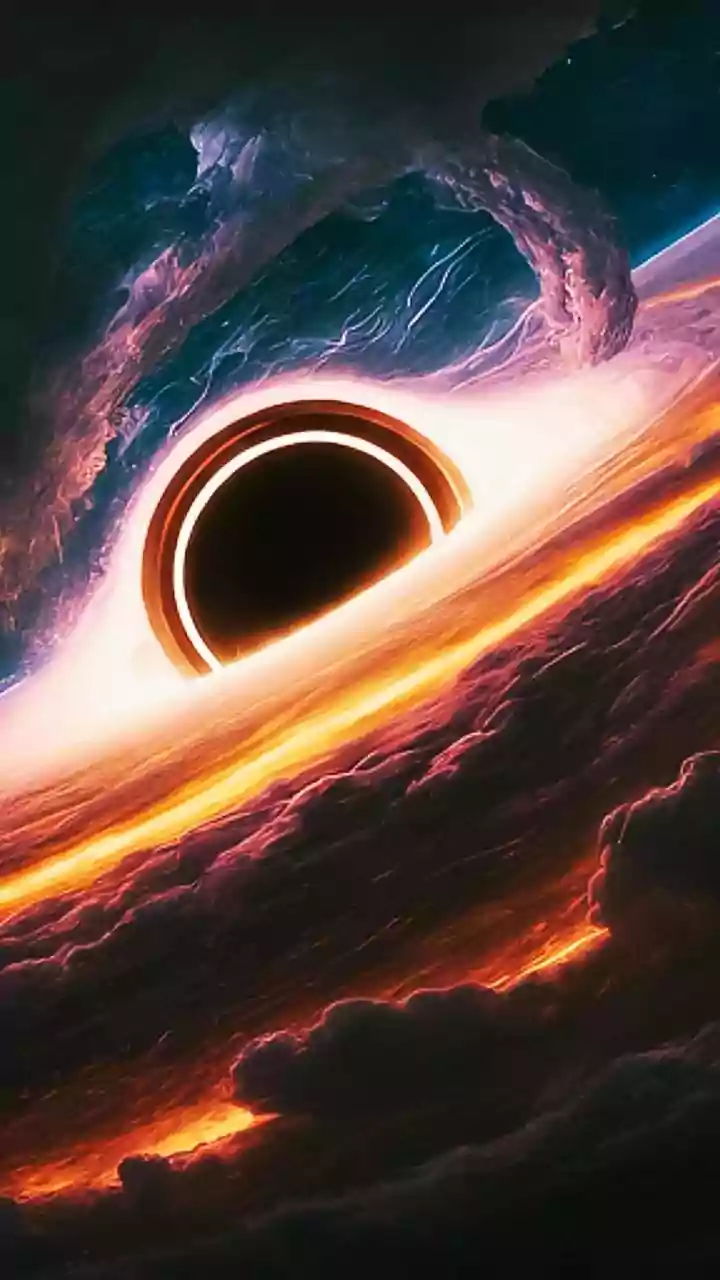
Enter the 'quasi-star', or black hole star, a hypothetical object first theorized years ago. Unlike a normal star like our sun, which is powered by nuclear fusion in its core, a quasi-star gets its energy from a black hole at its center. The theory goes like this: in the dense, primordial universe, enormous clouds of gas could collapse under their own weight. Instead of igniting into a star, the core of this massive cloud collapses directly into a black hole. However, the surrounding envelope of gas is so immense that it isn't blown away. Instead, it remains, forming a 'star-like' object. This gigantic, puffy cocoon of gas is then powered by the intense energy released as matter from the envelope falls into the central black hole. The result would be an object as large as our solar system, glowing brilliantly but with a distinct, reddish light.
Webb’s Tantalizing Clues
For years, quasi-stars were purely theoretical. But the JWST, with its unparalleled ability to peer into the distant, early universe, is changing that. Astronomers have been puzzled by a number of mysterious 'Little Red Dots' appearing in Webb's deep-field images. Recently, researchers focused on specific objects, including one nicknamed MoM-BH*-1, that were exceptionally bright and red. Using Webb's powerful spectrographs to break down the light from this object, scientists found features that didn't match any known type of star or galaxy. The object was far too bright to be a normal star, yet its light signature was consistent with the model of a massive, gas-shrouded, and rapidly feeding black hole — the exact profile of a quasi-star. Another candidate was found in the galaxy GN-z11, where Webb detected extremely dense gas near a central black hole, a key sign of this type of object.
A Solution to a Giant Problem
The potential discovery of these quasi-stars is hugely significant because it provides a neat solution to the supermassive black hole problem. The black hole at the core of a quasi-star would have a constant, massive food source: its own gaseous envelope. This would allow it to grow incredibly rapidly, far faster than a black hole that has to slowly pull in surrounding interstellar gas and dust. Once the quasi-star's envelope is consumed, what’s left behind is a mid-sized black hole of perhaps 10,000 to 100,000 solar masses. These 'seeds' are already substantial and provide a much more plausible starting point for the growth of the supermassive black holes we see just a few hundred million years later. These objects may represent the 'nascent, swaddled phase' that begins almost every supermassive black hole's journey.
From Theory to Potential Reality
It is crucial to remember that these findings, while exciting, are still preliminary. Scientists have found candidates that fit the profile of quasi-stars, but more evidence is needed for definitive confirmation. The objects are incredibly distant, and their light has traveled for over 13 billion years to reach us, making detailed analysis a challenge. Researchers are now working to find more of these 'Little Red Dots' and use different instruments on the JWST to further analyze their composition and behaviour. Each new candidate brings us closer to confirming a brand-new type of cosmic object and filling in a critical missing chapter in the story of our universe. The hunt is on, and Webb is leading the charge.