




The Final Uncrewed Success
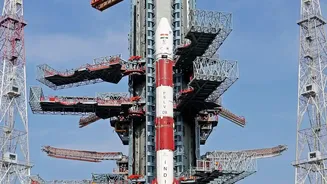
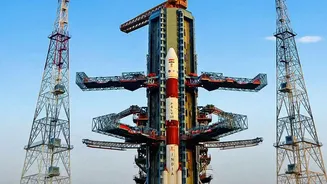
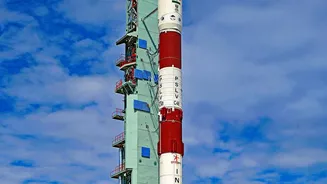
The latest significant update is the successful completion of the first full-scale uncrewed flight test, known as the G1 mission. In this crucial trial, the human-rated LVM3 rocket launched the Gaganyaan orbital module into its intended orbit. Onboard
was 'Vyommitra', a sophisticated humanoid robot designed to simulate human functions and monitor the spacecraft's performance. The mission flawlessly executed all phases, from launch to a precise splashdown in the Indian Ocean, where recovery teams successfully retrieved the crew module. This test was the ultimate dress rehearsal before Indian astronauts make the journey themselves.
Why This Test Was a Game-Changer
Human spaceflight is incredibly complex, and astronaut safety is the absolute highest priority. This uncrewed mission was not just another launch; it was an end-to-end validation of every system required to keep the crew safe. It proved the reliability of the powerful LVM3 rocket, specifically modified for human rating. It tested the life support systems in a space environment, monitored by Vyommitra. Crucially, it demonstrated that the module's heat shield could withstand the fiery temperatures of re-entry, and that the complex parachute system could deploy perfectly to slow the capsule for a safe splashdown. This success provides the final data and confidence needed to clear the vehicle for human flight.
Joining an Elite Global Club
With this achievement, India is now on the verge of joining a very exclusive group of nations. Currently, only the United States, Russia, and China have the independent capability to launch their own astronauts into space. The success of the Gaganyaan uncrewed flight signals that India is ready to become the fourth nation in the world to achieve this remarkable feat. This is a monumental moment for the country's scientific community and a powerful statement of its technological prowess on the global stage. It elevates India's position as a major player in space exploration and opens doors for future international collaborations.
A Green Light for the Astronauts
For the four Indian Air Force pilots selected as the nation's first 'Gaganauts', this update is the most important one yet. They have been undergoing extensive training, both in Russia and at ISRO's specialized Astronaut Training Facility in Bengaluru, covering everything from flight procedures to survival skills. One of the astronauts, Group Captain Angad Pratap, recently noted that patience is key in such a prototype program. The success of the uncrewed flight means their long wait is nearly over. Their rigorous preparation now has a proven, space-worthy vehicle ready for them, turning their historic mission from a plan into a tangible, upcoming reality.
What Happens Next on the Road to Space?
While the first uncrewed flight is a massive victory, ISRO will proceed methodically. According to the current timeline, at least one more uncrewed test flight is planned to ensure repeatability and iron out any remaining issues before the first crewed mission, which is targeted for 2027. Engineers will meticulously analyze the data from the G1 flight to make final adjustments. The focus will now intensify on the integration of the crewed module and final preparations for the historic H1 mission, which will carry three astronauts into a 400 km orbit for three days. The final countdown for India's journey to the stars has truly begun.