

India’s Eye on the Sun
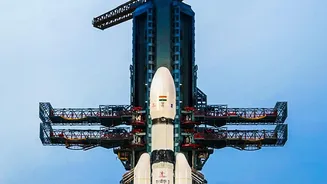
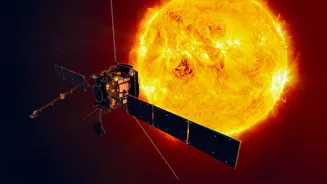
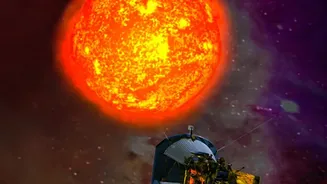
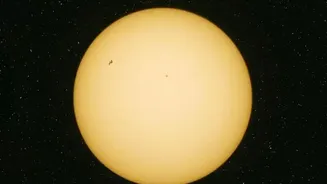
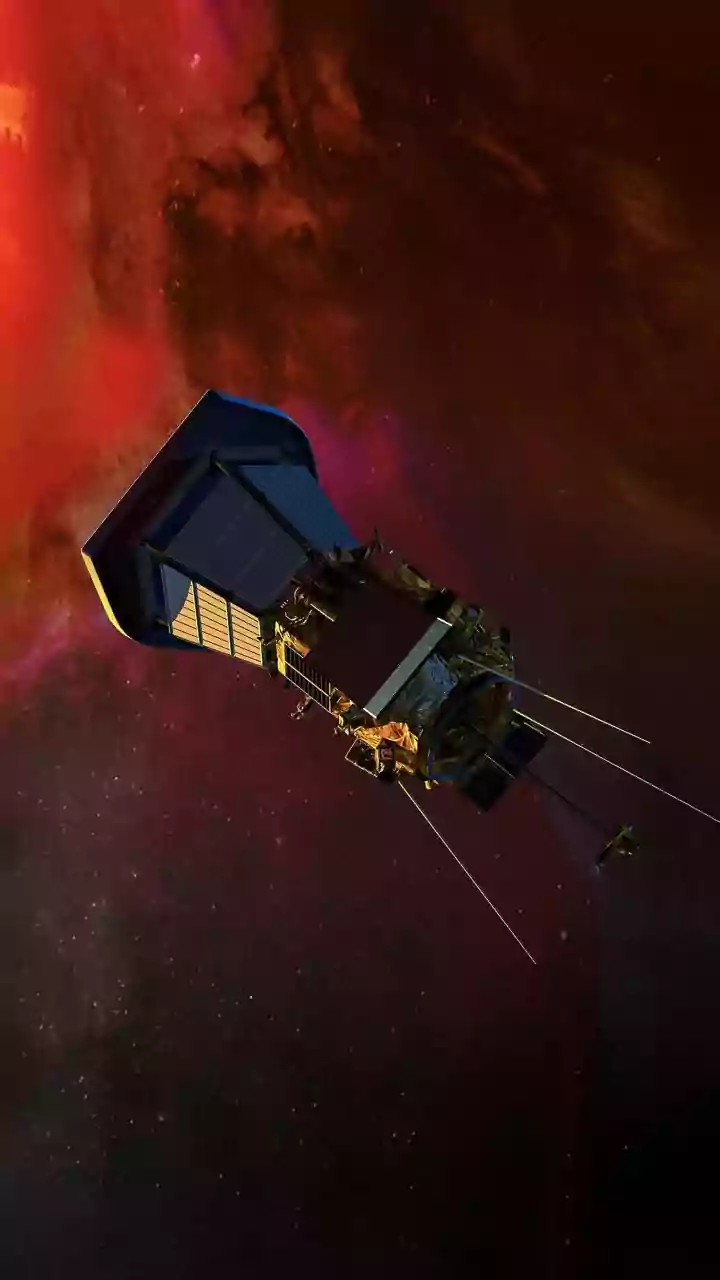
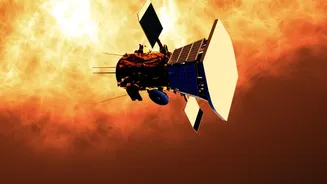
India's first dedicated solar observatory, Aditya-L1, is strategically positioned at the Sun-Earth Lagrange Point 1 (L1), about 1.5 million kilometres from Earth. From this vantage point, it gets a continuous, uninterrupted view of the Sun. Launched by
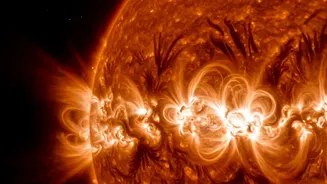
ISRO in September 2023, its mission is to study the Sun’s atmosphere, from its visible surface (photosphere) to its outer layer (corona). Aditya-L1 is equipped with seven specialised instruments to unravel solar mysteries like coronal heating—the perplexing phenomenon where the corona is millions of degrees hotter than the surface below. Its key instrument for this collaborative work is the Visible Emission Line Coronagraph (VELC), which performs spectroscopy to analyse the temperature, velocity, and density of coronal plasma, providing crucial data on the 'what' and 'how' of solar events.
Europe’s Artificial Eclipse
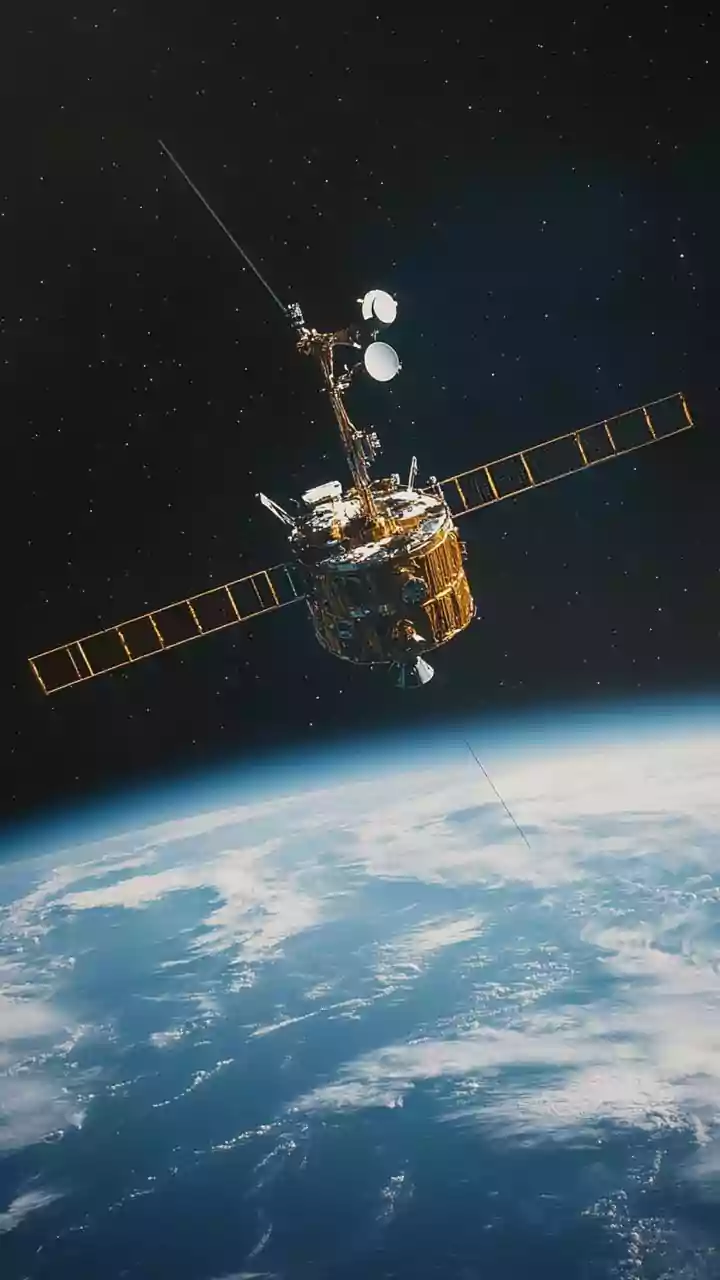
The European Space Agency's (ESA) Proba-3 mission, launched in December 2024 aboard an Indian PSLV rocket, is a marvel of engineering. It consists of two spacecraft flying in precise formation, just 150 metres apart, to create a prolonged artificial solar eclipse. One spacecraft acts as the 'occulter', blocking the blinding glare of the Sun's main disk. This allows the second spacecraft, carrying a coronagraph named ASPIICS, to get an unprecedentedly clear view of the Sun’s faint inner corona. This region is notoriously difficult to study except during rare natural eclipses. By creating eclipses that can last for hours, Proba-3 provides incredibly sharp images that reveal the shape, movement, and mass of solar structures as they erupt from the Sun.
Two Views, One Solar Eruption
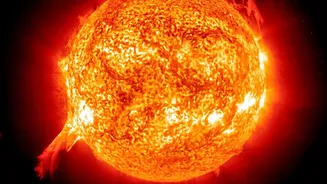
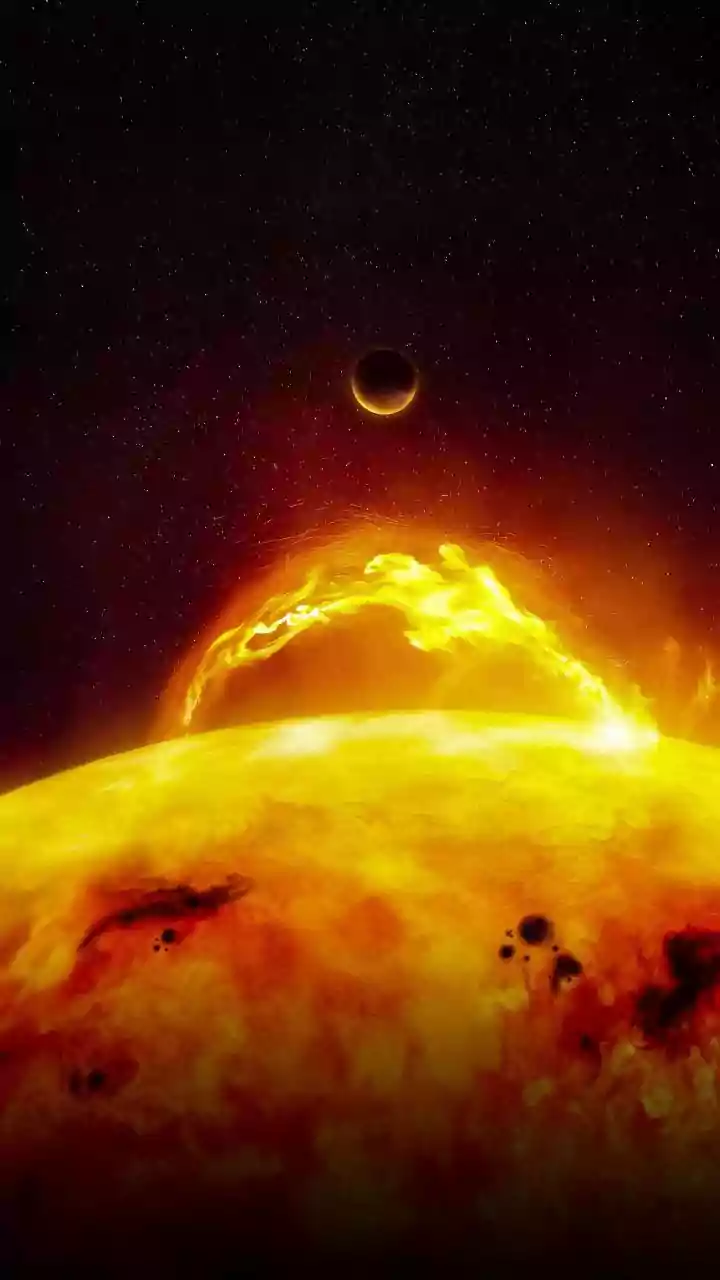
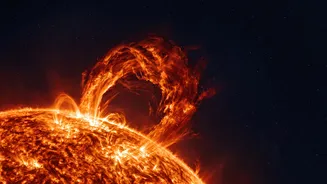
The collaboration's power lies in how these two missions complement each other. While Proba-3's ASPIICS provides sharp images of a solar eruption's structure and mass, Aditya-L1's VELC provides detailed spectroscopic data about the temperature and density of the same event. For the first time, scientists have combined these two perspectives to study the same Coronal Mass Ejections (CMEs)—massive bursts of plasma and magnetic fields from the Sun. In a joint analysis of two CMEs observed in September 2025, researchers were able to cross-check their data. VELC captured the eruptions in their earliest stages, while ASPIICS tracked their structure as they expanded. This dual approach provides a more complete and reliable understanding of an eruption's energy and evolution than either mission could achieve alone.
Why This Team-Up Matters
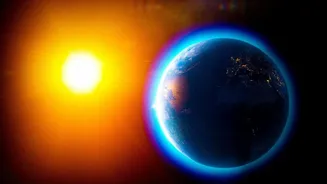
Understanding CMEs is not just an academic exercise. When directed at Earth, these solar storms can trigger geomagnetic storms that disrupt power grids, damage satellites, and interfere with communication and navigation systems. Studying their initial moments close to the Sun is critical for improving space weather forecasts and protecting our technology-dependent society. The joint observations have already revealed new details about how a CME's energy is distributed between motion, heat, and magnetic fields right after it erupts—information that was previously hard to obtain. This India-Europe partnership, built on decades of cooperation between ISRO and ESA, enhances India's role as a major player in global space science and strengthens our collective ability to monitor our star's powerful influence on the solar system.