



Why the Name on the Label Matters
In the world of spices, the word 'cinnamon' is used as a catch-all for the bark of several different trees from the Cinnamomum genus. While they are related, they offer surprisingly different flavours, aromas, and properties. Most of the cinnamon sold
in supermarkets, particularly in India and North America, is a variety called Cassia. It’s likely the strong, spicy flavour you associate with the name. However, another variety, Ceylon cinnamon, is known as 'true cinnamon'. Without checking the botanical name printed on the packaging, it's nearly impossible to know which one you've picked up. The distinction is not just for foodies; it has implications for both taste and health.
The 'True' Cinnamon: Cinnamomum verum
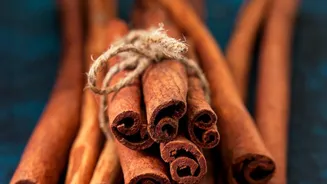
If the label says Cinnamomum verum (or Cinnamomum zeylanicum), you've found Ceylon cinnamon. The name verum literally means 'true'. Native to Sri Lanka and southern India, this is the original, prized variety that sparked the ancient spice trade. Its flavour is delicate, complex, and mildly sweet with floral and citrus notes. This makes it perfect for desserts, pastries, and beverages where you want a nuanced flavour that doesn't overpower other ingredients. Visually, Ceylon cinnamon sticks are distinct. They are tan-brown, made of many thin, fragile layers of bark rolled together like a cigar, and are crumbly to the touch.
The Common Cousin: The Cassia Family
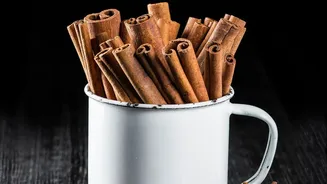
If your jar simply says 'cinnamon' without a botanical name, it is almost certainly a type of Cassia. Cassia is the cheaper, more robust, and widely available variety. Its sticks are dark reddish-brown, thick, hard, and curl inward from one side, forming a mostly hollow tube. The flavour is what many recognise as classic cinnamon: strong, spicy, and pungent. This boldness comes from a higher concentration of the essential oil cinnamaldehyde. There are three main types of Cassia you might encounter: Cinnamomum cassia (Chinese cinnamon), Cinnamomum burmannii (Korintje or Indonesian), and Cinnamomum loureiroi (Saigon or Vietnamese). Saigon cinnamon is known for being particularly potent and spicy, while Korintje is often the sweetest and most common of the Cassia types.
The Coumarin Consideration
One of the most significant differences between Ceylon and Cassia cinnamon is the level of a natural compound called coumarin. Coumarin is a flavouring agent that, in high doses, can potentially cause liver issues in sensitive individuals. All Cassia varieties are high in coumarin, containing up to 1% by weight. In contrast, Ceylon (Cinnamomum verum) contains only trace amounts, often 250 times less. For the average person using cinnamon occasionally in cooking, this isn't a major concern. However, for those who consume large amounts daily, perhaps for its potential health benefits, choosing Ceylon cinnamon is considered a safer option for regular use.
Making the Right Choice for Your Kitchen
So, which one should you buy? It entirely depends on your needs. For that bold, spicy kick in a hearty curry, a robust stew, or a classic cinnamon roll, the strong flavour of Cassia is often preferred and performs beautifully. Its intensity holds up well during cooking. For more delicate applications, like flavouring cream, custards, or light baked goods, the subtle and complex sweetness of Ceylon cinnamon is the superior choice. Its flavour enhances rather than dominates. Many chefs keep both on hand, using Cassia as a powerful background spice and Ceylon as a featured, aromatic top note. When in doubt, look for Cinnamomum verum for the 'true' and more versatile option.