



The Comfort of an Artificial Sky
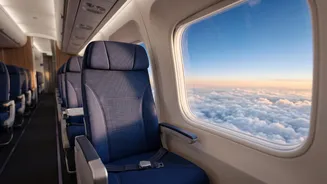
Commercial jets cruise at altitudes between 30,000 and 42,000 feet, where the air is too thin for humans to breathe. To solve this, aircraft are designed with pressurisation systems that pump compressed air into the sealed cabin. This system maintains
a comfortable and safe 'cabin altitude'—typically equivalent to the air pressure you'd experience at 6,000 to 8,000 feet above sea level, similar to being in a mountain town. This artificial atmosphere allows passengers and crew to breathe normally, preventing oxygen deprivation, also known as hypoxia. The system constantly regulates the air, bleeding it from the engines, cooling it, and managing the pressure through a special outflow valve.
When That Pressure Is Lost
A cabin pressure problem, or depressurisation, occurs when this controlled environment is compromised. It can be gradual and slow, perhaps due to a faulty valve, or rapid and explosive, caused by a structural failure. In either case, the immediate result is the same: the air inside the cabin thins out, and oxygen levels drop. This is what triggers the yellow oxygen masks to drop from the ceiling. These masks are mandated to provide at least 10 minutes of supplemental oxygen, which is more than enough time for the pilots to perform the next critical step.
The Critical Race Against Time
The single most important reason for the rapid descent is a concept called 'Time of Useful Consciousness' (TUC). This is the brief window a person has to take effective, life-saving action after oxygen is cut off before they become confused, incapacitated, and eventually lose consciousness. At a cruising altitude of 40,000 feet, the TUC can be as short as 15 to 20 seconds. For the pilots, who must remain in full control of the aircraft, this is an extremely critical period. They are trained to immediately don their own oxygen masks and begin an emergency descent to an altitude where the air is thick enough to breathe without supplemental oxygen.
The Controlled Dive to Safety
What feels like a terrifying free-fall to a passenger is actually a highly controlled and practised manoeuvre. It's not a 'fall' at all; the aircraft is fully under the pilots' control. The procedure for an emergency descent involves reducing engine power to idle, and often deploying speed brakes or landing gear to increase drag. This allows the aircraft to descend as rapidly as possible without exceeding its structural speed limits. The goal is to get down to a safe altitude—usually 10,000 feet—as quickly as possible. At this altitude, everyone on board can breathe normally again, even without the oxygen masks.
The View from the Cockpit
From the moment a depressurisation is detected, the flight crew is executing a well-rehearsed plan. The procedure is so critical that pilots must memorise it and be able to perform it by reflex. One pilot will typically fly the aircraft while the other handles communications with air traffic control, declaring an emergency and ensuring the descent path is clear of other traffic. To maintain control and passenger comfort, pilots will often execute the descent in a controlled bank or turn. This entire sequence is a standard part of pilot training, regularly practised in simulators to ensure a swift and effective response in a real-world emergency.