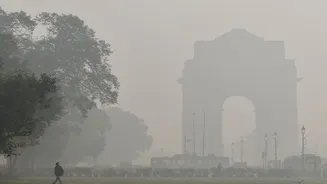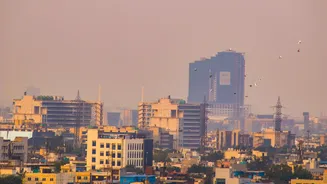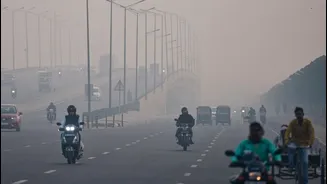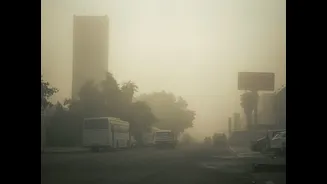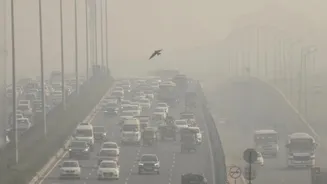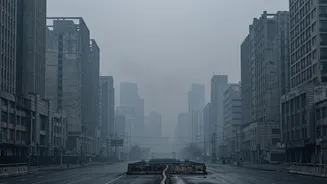



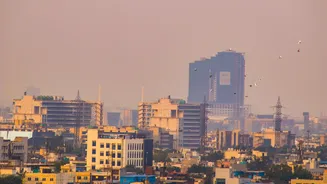
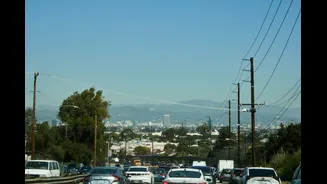

Every winter, a thick, grey blanket of smog descends on Delhi, and the blame game begins. But what if the air itself could tell us a more accurate story? Understanding two key pollutants, PM2.5 and PM10, is the first step to decoding the truth.
Decoding the Air: What is Particulate Matter?
When we
talk about air pollution, we are often talking about 'Particulate Matter' or PM. This isn't one single substance, but a complex mix of microscopic solid particles and liquid droplets floating in the air. Think of it as a cocktail of dust, soot, smoke, and chemicals. Because these particles are too small to see, we measure their concentration to understand air quality. For health purposes, they are sorted into two main categories based on their size: PM10 and the much smaller, more dangerous PM2.5. These measurements act like clues, helping scientists and policymakers identify the sources of pollution and understand the specific health risks on any given day. Recent data from early November 2026 shows Delhi's air quality has frequently been in the 'very poor' or 'severe' category, making this understanding more critical than ever.
PM10: The Coarse Particles
PM10 refers to inhalable particles with a diameter of 10 micrometres or smaller. To put that in perspective, a single strand of human hair is about 50 to 70 micrometres wide. These are considered 'coarse' particles. The primary sources of PM10 are mechanical processes: dust from construction sites, roads, and agricultural fields, as well as pollen and mold spores. When you breathe in PM10, these particles are large enough to be mostly trapped in your nose, throat, and upper airways. While this can cause irritation, coughing, and worsen conditions like asthma, they are generally less likely to cause systemic, long-term disease because they don't travel deeper into the body. Road dust is often the single largest contributor to PM10 levels in Delhi.
PM2.5: The Fine and Dangerous Intruder
PM2.5 are the fine particles, with a diameter of 2.5 micrometres or less—about 30 times smaller than a human hair. These particles are so tiny that they behave differently. Their main sources are combustion processes: vehicle exhaust, industrial emissions, power plants, and the burning of wood, coal, or agricultural waste like stubble. Because of their minuscule size, PM2.5 particles can bypass the body’s natural filters, travel deep into the lungs, and even enter the bloodstream. This is what makes them so hazardous. Long-term exposure to PM2.5 is linked to serious health issues, including heart disease, lung cancer, and other chronic respiratory illnesses. Studies have shown that even when stubble burning subsides, PM2.5 levels from local sources like traffic and industry keep Delhi's air toxic.
A Tale of Two Pollutants
The distinction between PM2.5 and PM10 is crucial because their ratio tells a story about the source of the smog. A day with high PM10 but relatively lower PM2.5 might indicate a dusty, windy day. However, when PM2.5 levels are high, it’s a clear signal that the pollution is dominated by dangerous combustion sources. During Delhi's severe pollution episodes, the spike is often driven by a massive increase in PM2.5. Stubble burning in neighbouring states is a major seasonal contributor to these PM2.5 peaks, with its share sometimes exceeding 30-40% on the worst days. However, even without farm fires, Delhi has a high baseline of pollution. The transport sector alone can be responsible for nearly half of the city's locally generated PM2.5 emissions.
Beyond a Single Villain
Focusing only on stubble burning gives an incomplete picture. Data shows that even after the farm fire season ends in December, Delhi's pollution can intensify due to a combination of cold, stagnant weather and a high concentration of local pollutants. These yearround sources include vehicular emissions, industries within and around the NCR, construction dust, and the burning of waste. Studies have highlighted that a significant portion of Delhi's pollution is transported from the wider NCR region, making it a collective 'airshed' problem. Therefore than blaming a single source whether it is farmers or firecrackers distracts from the complex reality Delhi s air is a toxic mix from multiple sources that require a multipronged yearround strategy Understanding the data from both PM2 .5 and PM10 allows for more targeted and effective solutions from controlling dust to cutting down on combustion emissions.