









The Adviser's Double-Edged Message
Speaking at the CII GCC Business Summit on July 9, 2026, Chief Economic Adviser (CEA) V. Anantha Nageswaran delivered a message that was both a caution and a challenge. He conceded that a part of the GCC model is “indeed exposed.” Specifically, he noted
that work which is “routine, repetitive and rule bound is exactly the work that AI does most easily and most cheaply.” For any center whose value rests solely on performing simple tasks at a low cost, he stated that its value is under “real threat.” However, this was far from a doomsday prediction. Nageswaran argued that most of India’s GCCs have already evolved beyond this basic model. The core of his argument was optimistic: “Artificial intelligence does not build, deploy or govern itself,” he explained, pointing to the expanding need for humans to design, train, test, and take responsibility for these complex systems. In his view, for well-run centers, AI doesn't eliminate jobs but rather “raises the value of each person who works there.”
What Are GCCs and Why They Matter
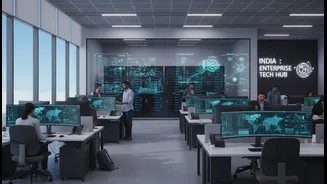
Global Capability Centers are not just another set of offices; they are the strategic nerve centers of multinational corporations operating from India. Unlike outsourcing to a third-party, a GCC is a subsidiary owned by the parent company, handling core functions that range from IT and R&D to finance, analytics, and customer support. Initially established to leverage India's cost advantages, they have evolved dramatically. India is the undisputed global leader in this space, hosting roughly half of the world's GCCs. The numbers are staggering: over 2,000 centers employ more than 2 million professionals, contributing nearly 2% to the nation's GDP with revenues heading towards $100 billion. These hubs are located in cities like Bengaluru, Hyderabad, Pune, and Chennai, where they are integral to the local economies and professional talent ecosystems.
The Jobs on the Frontline of Disruption
The threat Nageswaran referenced is very real for specific roles. The jobs most vulnerable are those based on predictable processes and data handling, which generative AI can now perform with increasing sophistication. Industry reports suggest that roles like manual quality assurance testers, L1 IT support, and various back-office functions are most susceptible to automation. One analysis from earlier in 2026 by consulting firm Zinnov suggested that as much as 55% of the work performed in Indian GCCs is of a procedural or commoditized nature, making it vulnerable to AI-driven disruption. Another projection indicated a typical banking GCC could see its workforce shrink significantly by 2028 as automation replaces these repetitive roles. This is the core of the disruption: AI's ability to compress procedure into automation is relentless.
Beyond Routine: India’s Capability Advantage
The reason for the CEA's overall optimism lies in the evolution of India's GCCs. As he put it, global firms “first came to India for cost. They stayed for capability.” This capability advantage is harder to replicate than a cost advantage. Today, Indian GCCs are not just back-offices; they are innovation hubs where cutting-edge work is done. Global banks run their risk systems from Mumbai and Bengaluru, automakers design embedded systems in Chennai and Pune, and pharmaceutical firms conduct clinical analytics from India. More than 1,200 of these centers are performing advanced work in AI and machine learning, making India the second-largest enterprise AI talent base in the world. This shift from execution to innovation is crucial. The work being done is no longer just about supporting global operations but shaping them, with patents being filed and global products being shipped directly from India.
The Path Forward: A Call for Adaptation
Nageswaran's speech was ultimately a call to action against complacency. “Other countries are watching us and copying us. Our costs are rising,” he warned. The key to staying ahead, he argued, is a concerted effort in upskilling and moving up the value chain. It’s a vision where machines handle repetitive tasks, freeing up people to do what only they can: “to reason, to decide, to take responsibility, and to exercise wisdom.” This requires a collaborative effort between the government, industry, and academia to bridge the gap between the graduates India produces and the job-ready talent the industry needs. The message is clear: centers that stand still will suffer, but those that adapt and invest in higher-value skills will thrive. India must be an “active author” of its technological future, not a passive recipient of its effects.