







The AI Supercomputer in a Cabinet
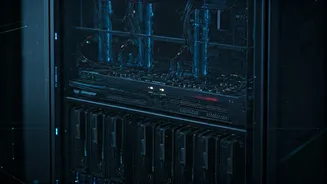
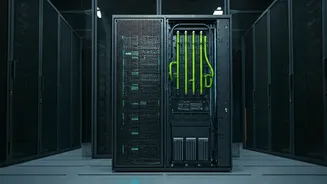
The 'massive AI computer cabinet' in question is NVIDIA's state-of-the-art GB200 NVL72 system. This isn't your average server; it's a filing cabinet-sized behemoth that links 72 of the latest Blackwell GPUs and 36 CPUs to function as a single, colossal
graphics card. A single one of these racks delivers significantly more computational power than the world's most powerful supercomputer from just a few years ago. These systems are the engines for training and running the next generation of artificial intelligence, and companies across the globe are lining up to buy them for millions of dollars apiece. The goal is to pack as much computing power as possible into a small space to make AI models faster and more efficient, but this density creates an enormous challenge.
A Problem of Power and Heat
The core of the trouble lies in a fundamental law of physics: all that computing power generates an immense amount of heat. A single NVL72 rack can consume up to 120 kilowatts of power, an order of magnitude more than a traditional server rack. At that level of power density, simply blowing air over the components is no longer feasible. It would be like trying to cool a bonfire with a desk fan. Consequently, NVIDIA has made liquid cooling mandatory for its latest Blackwell-generation chips. This involves circulating a fluid through sophisticated 'cold plates' that sit directly on the chips, drawing heat away much more efficiently than air ever could. This move to liquid cooling at such a massive scale is a new frontier for many data centers.
Reports of Leaks and Delays
The specific 'trouble' revolves around this critical liquid cooling system. Recent reports have pointed to issues with components like pipes and connectors, leading to potential leaks within the server cabinets. While the thought of water leaking inside a $3 million server rack is alarming, these issues were reportedly discovered before mass shipments began. This has allowed NVIDIA and its suppliers to address the problems, with some analysts suggesting the issues have been largely resolved. However, these 'teething issues' are a normal, if stressful, part of deploying such advanced new technology. Separately but relatedly, NVIDIA has also faced manufacturing challenges with other next-generation rack systems, with reports on July 5 and 6, 2026, indicating its Kyber architecture has been delayed.
Why It's a High-Stakes Game
For NVIDIA, the stakes couldn't be higher. The company is at the forefront of the AI boom, but its success depends on flawlessly executing its ambitious product roadmaps. Any significant delays or reliability concerns with its flagship products could create an opening for competitors. A cooling system failure could lead to catastrophic equipment damage and costly downtime for customers, which include some of the world's largest tech companies. These cloud service providers are 'nervous,' according to some reports, and are keen to have multiple supplier options to avoid bottlenecks. The entire industry is watching how NVIDIA handles these engineering challenges, as they are a preview of the complexities everyone will face as AI hardware becomes even more powerful and dense.