



The End of an Era
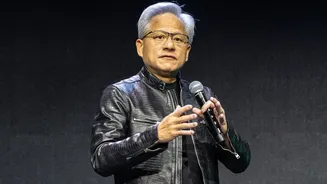
On November 12, 2026, Nvidia confirmed that its co-founder and CEO, Jensen Huang, had resigned from all his roles, effective immediately. The departure marks a pivotal moment for the technology giant, which Huang built from a graphics card company into
the undisputed leader of the AI revolution, reaching a valuation in the trillions of dollars. Longtime CFO Colette Kress has been appointed interim CEO while the board begins a search for a permanent successor, stating it will consider both internal and external candidates. The suddenness of the transition has understandably raised questions about continuity at a company where the founder's identity and strategy were seen as one and the same.
A Roadmap Set in Silicon
In response to the market's concerns, Nvidia's leadership has been quick to assert that the company's operational cadence and product roadmap will proceed without interruption. This isn't just corporate talk; for years, Nvidia has been architecting a highly disciplined, multi-year plan. The company has moved to an annual release cycle for its data centre platforms to compete with the rapid innovation from cloud giants. This aggressive schedule means the next several generations of technology are already well into development. Following the currently shipping 'Blackwell' platform, the roadmap includes 'Vera Rubin' in late 2026, 'Rubin Ultra' in 2027, and a future architecture codenamed 'Feynman' for 2028. Each generation promises significant leaps in performance and efficiency.
More Than Just a Chip Company
A key part of the continuity plan is Nvidia's evolution from simply a chip designer to a full-blown AI infrastructure and platform company. The roadmap isn't just about individual GPUs; it encompasses a whole system, including CPUs (like Vera and Rosa), advanced networking (NVLink and Spectrum-X), and the critical CUDA software ecosystem that creates a powerful lock-in effect. At a recent all-hands meeting, executives reassured employees that this strategy remains firmly in place. The company's focus is on delivering entire AI factories, from racks to containerized 'pods' and eventually full data centres, making the system, not just the CEO, the star.
The Succession Challenge
Despite the well-defined product plan, the succession challenge is real. Huang was famous for his unique management style, which involved having around 60 direct reports and a belief that continuous knowledge sharing was better than a formal succession plan. This flat structure was credited with accelerating decision-making but also made the company unusually dependent on its founder. In an internal meeting, board chair Harvey Jones acknowledged the challenge, stating that the board does not expect to find a 'Jensen clone' and is prepared for a different style of leader. While interim CEO Colette Kress is seen as a steady hand, analysts believe an external hire for the permanent role is likely. Names of potential internal candidates, such as Ian Buck, the creator of CUDA, have also been floated.