




A Surprising Find in a Cold Desert
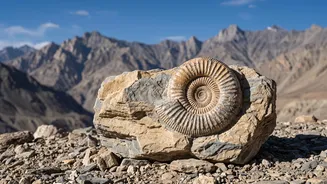
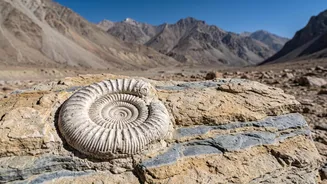
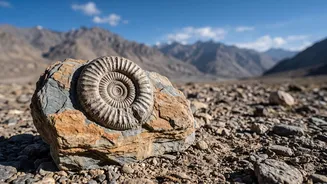
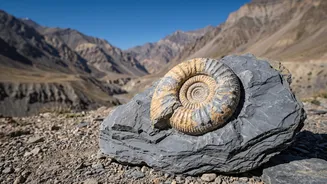
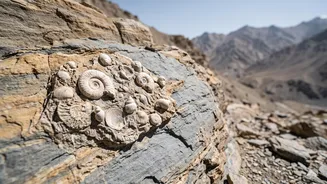
In the high-altitude Changthang region of eastern Ladakh, a geologist has uncovered a rich collection of marine fossils estimated to be between 34 and 38 million years old. The discovery was made in Nyoma by Dr. Ritesh Arya, a veteran geologist and founder
of the Tethys Fossil Museum. Today, Ladakh is a cold, arid desert perched thousands of metres above sea level. But these fossils—dominated by spiral-shaped gastropods, bivalves, and oyster-like forms—tell a story of a completely different world. This finding suggests that a warm, shallow sea once covered this landscape, connecting it to an ancient ocean that has long since vanished.
Uncovering an Ancient Ocean
The fossils bear a striking resemblance to those found in the Subathu Formation, a well-known geological layer in the outer Himalayas. This similarity is crucial because it suggests that the ancient Subathu marine realm extended much farther east into the Ladakh corridor than scientists had previously realised. Dr. Arya noted the immediate familiarity of the fossils, stating, "When I first saw the gastropods at Nyoma, I immediately recognised something familiar... But this time I was standing in Nyoma, Ladakh. That was the real surprise." This discovery builds on earlier findings in the region, which included freshwater molluscs, fish, and plant remains, but this new collection provides the most extensive evidence of a significant marine presence.
A Glimpse into the Eocene Epoch
The Eocene Epoch, which lasted from about 56 to 34 million years ago, was a pivotal time in Earth's history. Following a period of intense global warming, the planet was significantly warmer than it is today, with little to no ice at the poles and a much smaller temperature difference between the equator and the poles. The discovery of these fossils, along with previously found fossilised palms and wood, paints a picture of Ladakh during this era. It suggests a warm, subtropical coastal environment fringed by palm trees—a stark contrast to the icy peaks and dry valleys of present-day Ladakh. This find helps reconstruct the paleoenvironment, showing a landscape that bears little resemblance to the one we know today.
Rewriting the Himalayan Story
The Himalayas are the result of one of the most dramatic geological events on Earth: the collision of the Indian and Eurasian tectonic plates. This monumental collision, which began between 40 and 50 million years ago, closed the ancient Tethys Sea that once separated the two landmasses. The marine fossils found in Ladakh are remnants of this lost ocean, preserved in rock and lifted thousands of feet into the air as the mountains rose. The discovery injects critical new data into our understanding of this process. It helps scientists pinpoint the extent of the Tethys Sea just before the final continental collision and provides crucial markers for dating the rock layers that tell the story of the Himalayas' birth.
Why This Discovery Matters
Beyond its historical significance, this find has important implications for modern science. By studying these fossils, researchers can refine their models of geological history and plate tectonics. The specimens are now undergoing detailed analysis to confirm their exact age and species, which will help correlate rock layers across the Himalayan region. Eminent paleontologist Prof. Ashok Sahni has commended the discovery, noting its importance for understanding the deep-time archive of eastern Ladakh. Furthermore, understanding past climates, like the warm and wet Eocene, provides valuable context for studying today's climate change. These ancient shells and remnants of a subtropical past are not just curiosities; they are vital clues to understanding the powerful forces that shaped our planet and continue to do so.