
A Picture of Cosmic Illusion
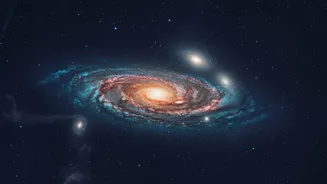
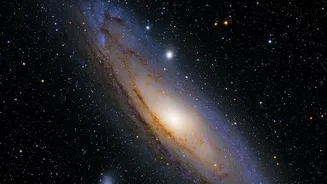
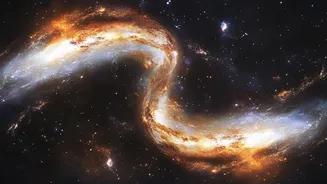
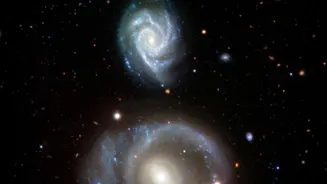
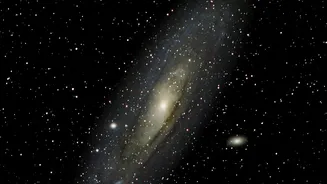
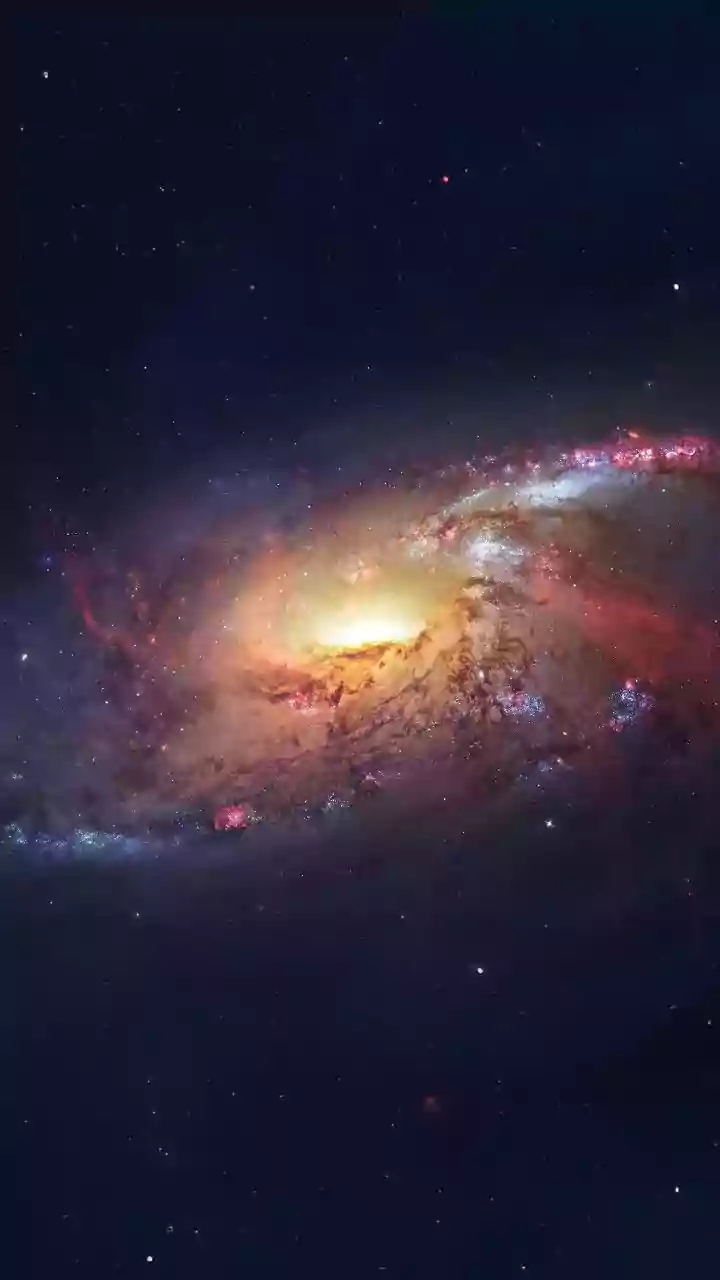
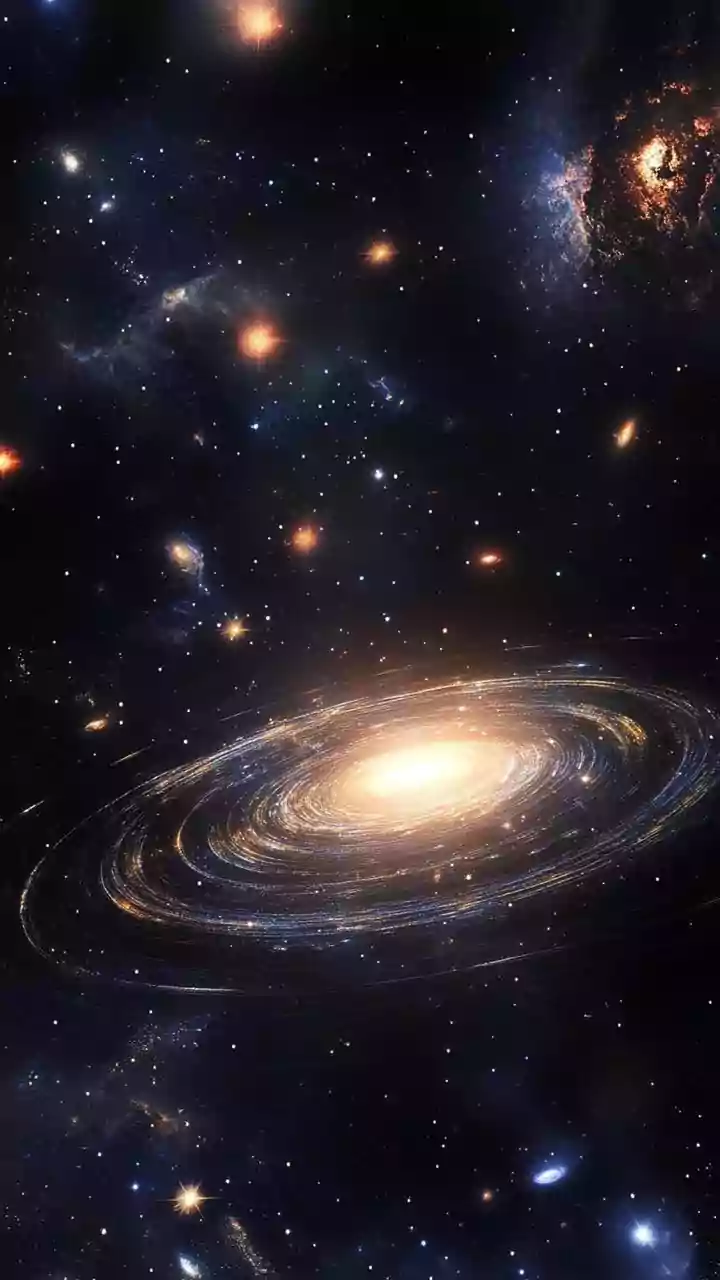
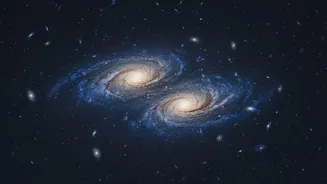
Recent images from the Hubble Space Telescope often capture breathtaking scenes where multiple galaxies appear to be interacting, their spiral arms overlapping in a celestial embrace. One such view showcases three distinct pairs, each telling a different
story of proximity and distance. In some cases, the galaxies are true partners, gravitationally bound and on a long-term collision course to form a single, larger galaxy. But in others, what appears to be a close encounter is nothing more than a trick of alignment. The galaxies are like two ships passing in the night, separated by millions of light-years, that just happen to line up perfectly from our vantage point on Earth. This phenomenon of chance alignment is a common and fascinating challenge in astronomy.
The Challenge of Looking into the Deep
When you look at a photograph, you lose the sense of depth. An object in the foreground can appear the same size as a much larger object far in the background. The universe, when viewed through a telescope, presents the same problem. A small, nearby galaxy can appear right next to a giant galaxy that is hundreds of millions of light-years farther away. Without a way to measure the third dimension—distance—astronomers would be left to guess whether galaxies are true neighbours or cosmic strangers. This is why determining the distance to celestial objects is one of the most fundamental tasks in astronomy. It helps scientists distinguish between genuine galactic mergers and these awe-inspiring, but misleading, optical alignments.
The Cosmic Distance Ladder
So, how do astronomers measure the unmeasurable? They use a technique metaphorically called the 'cosmic distance ladder', where each 'rung' represents a different method for measuring progressively larger distances. For objects within our solar system, we can use radar. For nearby stars, we use parallax, observing how a star's position appears to shift against the distant background as the Earth orbits the Sun. For galaxies farther out, astronomers rely on 'standard candles'—objects with a known, consistent brightness, like a specific type of exploding star called a Type Ia supernova or pulsating stars known as Cepheid variables. By comparing how bright they appear to us versus how bright we know they truly are, we can calculate their distance.
Redshift: The Ultimate Yardstick
The highest and most powerful rung on the ladder, used for measuring the most distant galaxies, is redshift. This concept is rooted in the fact that our universe is expanding. Almost every galaxy is moving away from us, and the farther away a galaxy is, the faster it recedes. As a galaxy moves away, the light waves it emits get stretched, shifting them towards the red end of the spectrum—much like how the pitch of an ambulance siren drops as it speeds away from you. By analysing the light from a galaxy and measuring the extent of this 'redshift', astronomers can calculate its speed and, by extension, its distance. This is the ultimate tool that reveals the true, staggering separation between galaxies that look like they are touching.
Solving the Puzzle in the Picture
Armed with the power of redshift, astronomers can look at an image of overlapping galaxies and solve the puzzle. For one pair, they might measure a similar redshift, confirming they are genuine neighbours in a cosmic dance. For another pair, they might find that one galaxy has a tiny redshift, indicating it is relatively close, while the other has a massive redshift, placing it hundreds of millions of light-years deeper into the void. For example, in one famous image, galaxy NGC 4496A is 47 million light-years away, while the galaxy it appears to overlap with, NGC 4496B, is actually 212 million light-years distant. These measurements transform a flat picture into a three-dimensional map of the cosmos, revealing the true and awesome scale of the universe.