




Why Foot and Ankle Health Matters
Our feet are our body's foundation, connecting us to the ground and supporting every move we make. Strong, flexible feet and ankles are crucial for good balance, proper walking mechanics, and overall independence, especially as we get older. Stiffness,
poor circulation, and weakness in this area can increase the risk of falls and affect our ability to perform daily activities like climbing stairs. Neglecting foot health can lead to a chain reaction of issues, potentially impacting the knees, hips, and even the lower back. By focusing on simple, targeted exercises, we can maintain this crucial mobility and support our active lives.
The Power of a Simple Tap
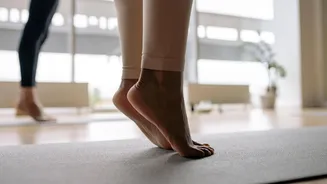
Toe-tapping exercises are exactly what they sound like: simple, repetitive movements of lifting and lowering your toes. Their main advantage is accessibility. They can be performed almost anywhere, including while seated at a desk, watching television, or as a dedicated part of a warm-up routine. This movement primarily targets the anterior tibialis, the muscle on the front of your shin that is responsible for lifting your foot. Strengthening this muscle is vital for clearing your foot when you walk, which helps prevent tripping. It's a low-impact movement, making it suitable for beginners and people with joint sensitivity.
Key Benefits of Toe Tapping
Despite their simplicity, toe taps offer a surprising range of benefits. One of the most significant is improved blood circulation in the lower legs, which can help warm up cold feet and reduce feelings of stiffness. The repetitive motion acts like a pump, encouraging blood flow. The exercise also enhances ankle flexibility and range of motion, which is crucial for stability. Regularly performing toe taps can strengthen not only the shin muscles but also the smaller, intrinsic muscles within the feet that are essential for balance and coordination. This can contribute to better gait, improved balance, and a lower risk of common issues like shin splints.
How to Do a Basic Seated Toe Tap
The easiest and safest way to start is from a seated position. Sit upright in a sturdy chair with your back supported and your feet flat on the floor, about hip-width apart. Keeping your heels on the ground, simply lift the toes and the balls of your feet toward the ceiling. Hold for a second, then lower them back down in a controlled manner. You can tap them rhythmically or perform slow, deliberate lifts. Aim to continue for 30 to 60 seconds, rest, and repeat a few times. This version is excellent for activating lower leg muscles without putting any stress on your joints or challenging your balance.
Standing Taps with Balance Support
Once you feel comfortable with the seated version, you can progress to standing taps. It's essential to use support to ensure safety. Stand facing a wall, a sturdy countertop, or the back of a solid chair, placing your hands on it for balance. With your feet hip-width apart, shift your weight slightly to one leg. With the other foot, lightly tap your toe on the floor in front of you. You can alternate feet in a marching motion. The key is to keep the movement light and controlled, without putting significant weight on the tapping foot. This variation engages your core and the muscles in your standing leg, adding a balance component to the exercise.
Simple Variations to Try
To keep your routine effective and interesting, you can incorporate a few variations. Try performing alternating side taps while seated, tapping your left foot out to the side and then your right. You can also combine toe taps with heel raises; after a set of toe taps, perform a set of lifting your heels off the floor while keeping the balls of your feet down. Another effective exercise is ankle circles: while seated, lift one foot off the floor and slowly rotate your ankle clockwise 10 times, then counter-clockwise. These additions work the ankle through a fuller range of motion and engage different supporting muscles.