




An Introduction to the Dhokla Sandwich
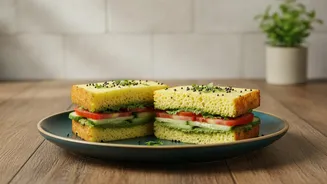
For the uninitiated, the dhokla sandwich is a delightful creation where soft, spongy squares of steamed dhokla act as the 'bread'. These savoury cakes, typically made from a fermented batter of gram flour or a mix of rice and lentils, are sliced horizontally.
The layers are then smeared with tangy green chutney and sometimes a sweet tamarind chutney before being stacked. The result is a light, flavourful, and utterly unique snack that has become a favourite across India for tea time, parties, or a light meal. While the classic version often just contains chutney, a modern and increasingly popular variation involves adding a layer of fresh vegetables, transforming it into a more substantial and texturally exciting dish.
The Number One Enemy: Sogginess
The primary challenge in creating any sandwich, especially one with a base as delicate as dhokla, is moisture control. The airy, porous structure of dhokla that makes it so light and fluffy also makes it susceptible to becoming soggy. This is the main pitfall when adding vegetables. Ingredients with high water content, like many common vegetables, can leach liquid into the dhokla, turning its celebrated spongy texture into a dense, wet disappointment. The vibrant flavours get muddled, and the satisfying contrast is lost. A well-made dhokla sandwich should be moist from the tempering and chutneys, not wet from its filling. This is precisely why the freshness and firmness of your vegetable slices are paramount.
Why Freshness and Firmness Are Key
The magic of a great dhokla sandwich lies in the contrast of textures and flavours. You have the soft, yielding dhokla, the sharp and spicy chutney, and then—the crunch. This is where fresh, firm vegetables play their starring role. 'Fresh' ensures the vegetables have a vibrant, clean taste that complements, rather than overpowers, the other components. 'Firm' is the structural hero. A firm vegetable slice provides that essential crispness, a satisfying counterpoint to the soft dhokla. Think of the snap of a fresh cucumber or the bite of a crisp capsicum. This textural difference elevates each mouthful from a simple snack to a more complex culinary experience. Watery, limp vegetables offer no crunch and only contribute to the dreaded sogginess.
The Perfect Vegetable Lineup
Not all vegetables are created equal when it comes to sandwich fillings. For the perfect dhokla sandwich, you need to choose wisely. The all-star team includes cucumbers, tomatoes, onions, and capsicum (bell peppers). For cucumbers, choose firm ones and consider scooping out the watery seeds before slicing. When using tomatoes, opt for firm, ripe ones and either remove the pulpy, seed-filled centre or use varieties with less water content. Thinly sliced red onion provides a pungent, sharp crunch that cuts through the richness. Crisp capsicum—whether green, red, or yellow—adds a wonderful sweetness and a sturdy texture that holds up well. The goal is to slice them thinly enough to be delicate, but not so thin that they lose their structural integrity.
Simple Preparation for Maximum Crunch
Once you've selected your vegetables, a little preparation goes a long way. After slicing your cucumber, tomato, and onion, lay them on a paper towel for a few minutes. Gently pat them dry to remove any excess surface moisture. This simple step is a game-changer and your best defence against a soggy sandwich. Some recipes even suggest cooking firm vegetables like bell peppers and onions on high heat for a very short time to soften them slightly without making them limp. When assembling, spread a thick layer of green chutney on the dhokla first. This acts as a delicious barrier, further protecting the delicate crumb from the vegetable slices. Then, arrange your carefully prepared, crisp vegetable slices in an even layer before topping with the second piece of dhokla.