


A Ghost in the Solar Machine
Our solar system is a relatively orderly place now, but its infancy was a chaotic shooting gallery of colliding planetary building blocks. A new theory, published in the Monthly Notices of the Royal Astronomical Society, proposes that one of these early
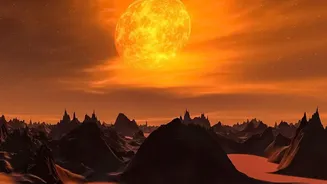
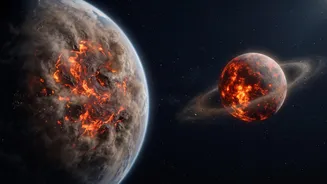
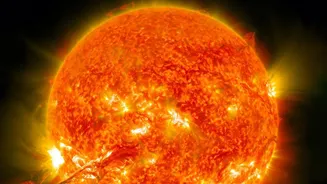
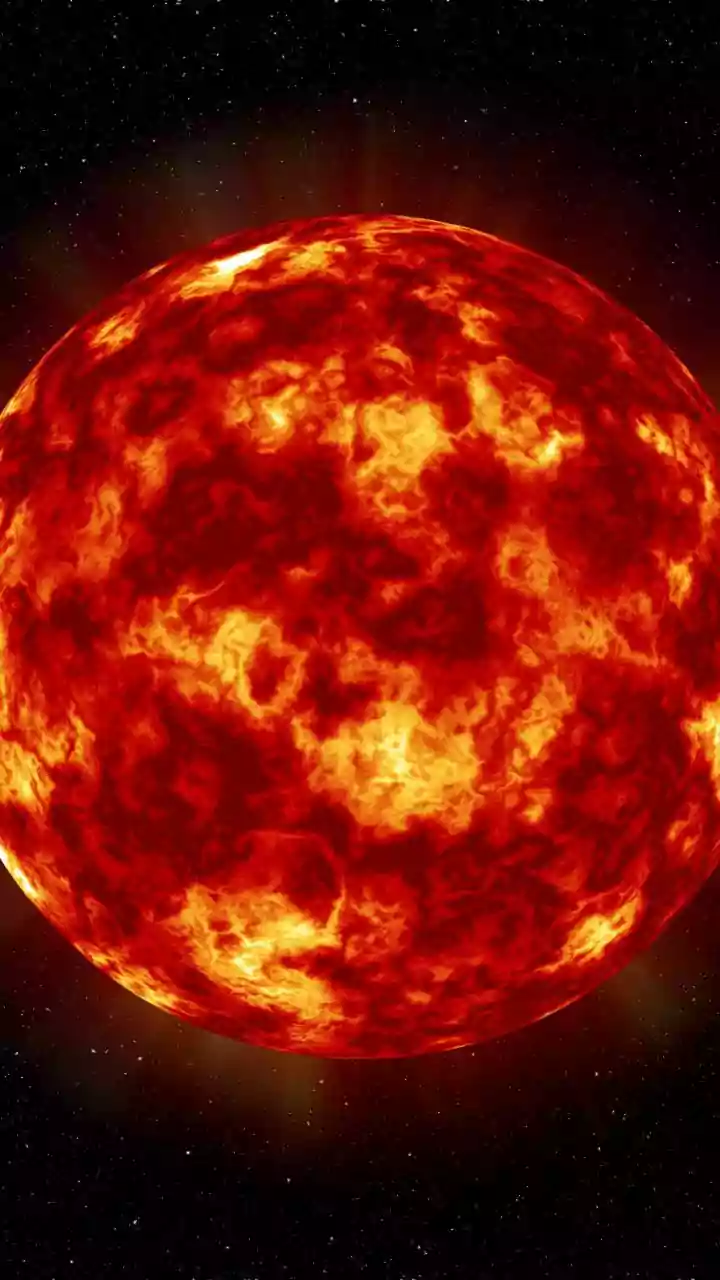
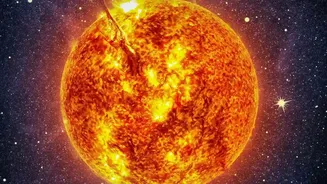
planets, a so-called “super-Earth” several times more massive than our own world, may have met a fiery end by spiraling into the young Sun. This isn't just a dramatic story; the event would have been so significant that it could have left permanent, measurable changes in the Sun's chemical composition and internal structure. A team of researchers led by Professor Mutlu Yildiz of Ege University in Turkey suggests that by modeling this ancient collision, we can explain several long-standing puzzles about our star that standard models of stellar evolution have struggled to solve.
The Chemical Fingerprints
The primary evidence for this planetary lunch lies in the Sun's chemistry. For years, scientists have noted discrepancies between the Sun's makeup and that of other, similar stars known as solar twins. Specifically, the Sun appears to be slightly depleted of certain elements that form rocks, known as refractory elements, compared to volatile elements that remain as gas. One theory was that these missing rock-forming elements were simply locked up in terrestrial planets like Earth and Mars. However, the new model proposes a more violent explanation. A rocky super-Earth, rich in heavy elements, plunging into the Sun would alter the composition of the star's outer layers. This could account for anomalies like the Sun's surprisingly low level of lithium, an element that is easily destroyed at the high temperatures found deep within a star. The ingestion of a planet could have changed the Sun's internal mixing processes, causing it to burn through its lithium more effectively than its peers.
Solving a Solar System Mystery
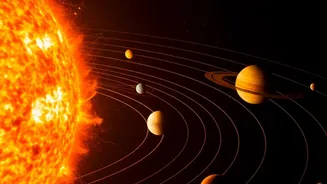
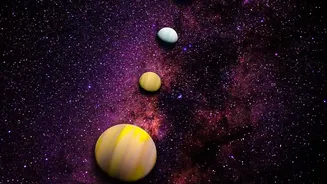
Beyond explaining the Sun's chemical quirks, the theory also addresses a major question about our own cosmic neighborhood: Why doesn't our solar system have a super-Earth? These planets, which range from five to ten times the mass of Earth, are incredibly common in other star systems astronomers have studied. Their absence here is conspicuous. Previous research has suggested that one or more of these large planets could have formed in the inner solar system, perhaps even inside the orbit of Mercury, before migrating inward. This new study provides a potential conclusion to that story, suggesting the planet didn't just migrate—it fell all the way in. The Sun, in effect, may have eaten the most common type of planet in the galaxy, fundamentally shaping the solar system we see today.
Echoes of Theia
The idea of a lost planet shaping our cosmic environment is not entirely new. It echoes the leading theory for our Moon's formation, known as the giant-impact hypothesis. This theory posits that a Mars-sized protoplanet, nicknamed Theia, slammed into the proto-Earth about 4.5 billion years ago. The resulting debris coalesced to form the Moon, while remnants of Theia may have been absorbed into Earth itself. The theory of a Sun-swallowed planet is a variation on this theme, illustrating just how violent and dynamic the process of planetary system formation can be. Collisions, rather than being rare accidents, were a fundamental part of how our solar system was built, with some planets growing larger while others were destroyed or consumed entirely.
Searching for the Evidence
For now, the swallowed planet remains a theory based on computer modeling. The researchers stress that they have not found direct proof, but have offered a plausible scenario that elegantly ties together several observational puzzles. The next step is to find physical evidence. Scientists believe this might be possible through helioseismology, the study of the Sun's interior by observing vibrations and sound waves on its surface. A massive planetary core sinking into the Sun could have subtly altered the way sound waves travel through its interior. If these signatures can be detected, it would not only confirm the fate of a long-lost world but also prove that stars can preserve the fingerprints of the planets they consume for billions of years.