





The Allure of 'Natural'
In a world of complex ingredient lists, the word 'natural' is a powerful magnet for health-conscious shoppers. Pure maple syrup comes from a simple process: tapping the sap of maple trees and boiling it down to a thick, sweet liquid. This minimal processing
is what earns it the 'natural' tag, and it's true that it avoids the chemical refining that table sugar undergoes. Unlike heavily processed sweeteners, pure maple syrup retains some of the minerals and compounds from its plant source. However, it's important to distinguish between naturally occurring sugars, like those in a whole apple, and added sugars. Maple syrup, despite its natural origin, falls into the category of added sugars, just like table sugar or honey, because it's added to foods for sweetness rather than being consumed in its original, whole-food form.
Myth: It's Not Really Sugar
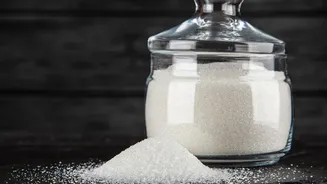
This is the core misunderstanding. While maple syrup is less processed, its primary component is sugar. Specifically, it's about two-thirds sucrose, the same molecule that makes up table sugar. A single tablespoon of maple syrup contains around 52 calories and 12 grams of sugar. Your body metabolises the sugar in maple syrup in much the same way it processes any other sugar, breaking it down into glucose for energy. Consuming too much of it will have similar effects to overindulging in any other sweet treat, including potential weight gain and other adverse health effects. The main difference is that maple syrup is a liquid and contains water, making it slightly less concentrated in sugar by weight compared to dry granulated sugar.
Reality: It Has Some Minor Advantages
This is where maple syrup gains a slight edge over refined white sugar. Because it's less processed, maple syrup contains trace amounts of several minerals and vitamins. It is a source of manganese, which is essential for bone health and metabolism, and riboflavin (Vitamin B2). It also contains small amounts of calcium, potassium, zinc, and iron. Furthermore, maple syrup is packed with antioxidants—compounds that help protect your body's cells from damage. Some studies have identified unique compounds like quebecol, which is found only in maple products. White sugar, on the other hand, is stripped of these nutrients during refining, providing what are often called 'empty calories'.
The Blood Sugar Question
Another point of comparison is the glycemic index (GI), a scale that measures how quickly a food raises blood sugar levels. Maple syrup generally has a GI of around 54, which is lower than that of table sugar (around 65). This means it raises blood sugar a bit more slowly. This might make it a marginally better choice for some, but it doesn't mean it's a 'free food'. It still causes a significant blood sugar response and should be consumed with caution, especially by individuals with diabetes or blood sugar concerns. The impact is still substantial, and moderation remains the key.
The Verdict: A Better Sugar, But Still Sugar
So, is maple syrup healthy? The answer is nuanced. It is certainly a better choice than refined white sugar or high-fructose corn syrup because it offers some nutritional benefits in the form of minerals and antioxidants. If you are going to use a sweetener, maple syrup is one of the superior options. However, these benefits are small and do not negate the fact that it is a concentrated source of sugar. You would have to consume an unhealthy amount of maple syrup to get a significant dose of most of its nutrients. The 'natural' label doesn't give you a free pass to pour it generously over everything. Treat it as you would any other sweetener: a treat to be enjoyed for its unique flavour in moderation.