
A Celestial Lineup
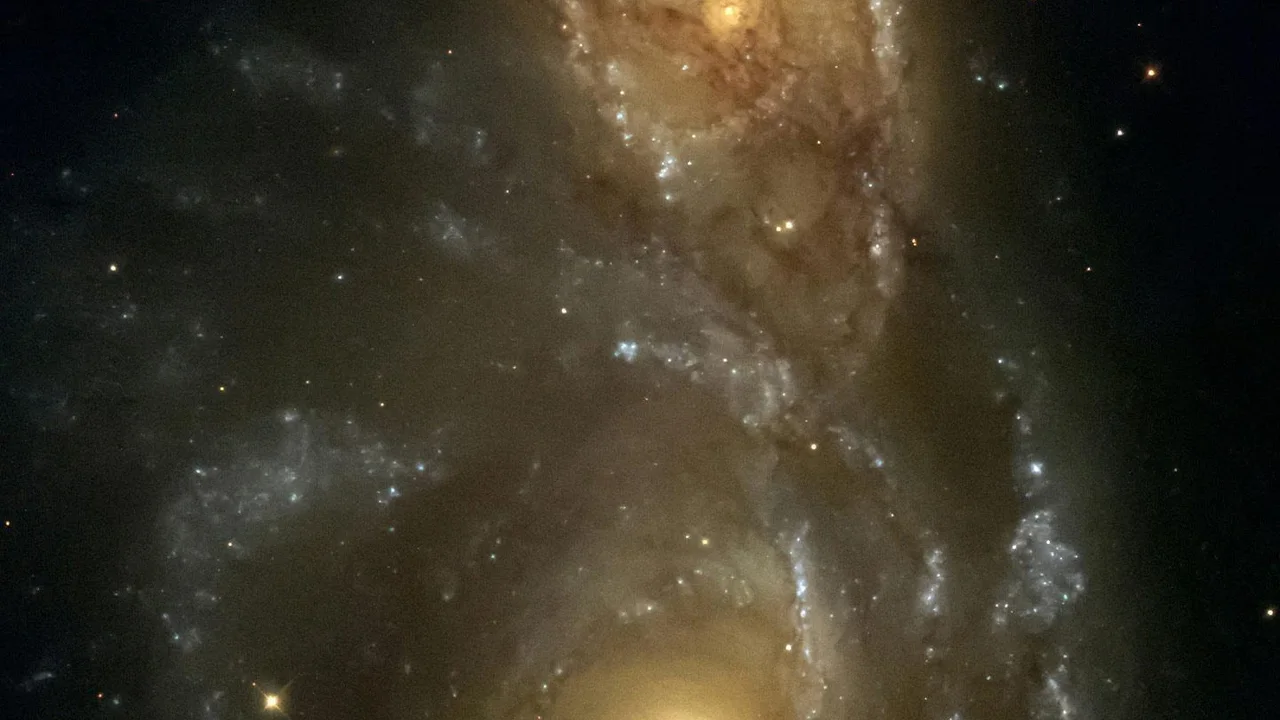
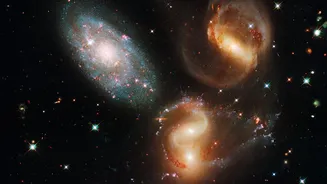
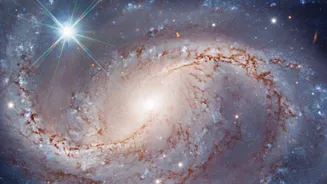
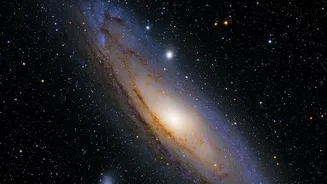
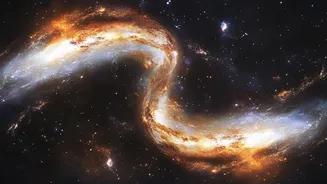
The image in question, highlighted by NASA, shows six distinct galaxies organized into what appear to be three pairs. At first glance, it looks like a snapshot of cosmic interactions, with galaxies drawing each other in through immense gravitational forces.
In one pair, the galaxies seem to be actively merging, their shapes distorting as they collide. Another pair appears close enough to be gravitationally linked, while a third set seems more distant from each other but still part of a cosmic dance. This kind of image is captivating because it appears to show galaxy evolution in action. However, the story behind this celestial arrangement is more about perspective than it is about physical interaction for some of the pairs.
The Illusion of Proximity
The universe is a three-dimensional space, but when we view it from Earth, it's flattened into a two-dimensional image. We lose our sense of depth. This creates optical illusions where celestial objects can appear right next to each other when, in reality, they are separated by millions of light-years. This phenomenon is known as a chance alignment. For instance, in the highlighted image, the middle pair of galaxies, NGC 4650 and its companion, look like they are interacting. However, their relative speeds suggest this is unlikely. Similarly, Hubble has captured many such illusions, like the pair NGC 4496A and NGC 4496B, which appear to overlap. In reality, NGC 4496A is 47 million light-years away, while NGC 4496B is a staggering 212 million light-years distant. They are not partners in a cosmic dance but rather ships passing in the night, separated by an enormous void.
How Astronomers See in 3D
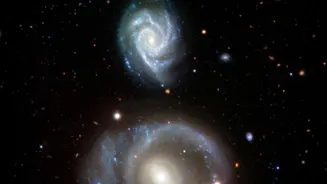
So, if we can't trust our eyes, how do astronomers figure out which galaxies are truly neighbors and which are just photobombing each other? They use several techniques to measure the vast distances across space. One key method involves analyzing the light from a galaxy. As the universe expands, distant galaxies are moving away from us, which stretches the wavelength of their light toward the red end of thespectrum—a phenomenon called 'redshift.' By measuring a galaxy's redshift, astronomers can calculate its distance. Another method involves looking for 'standard candles,' which are types of stars or supernova explosions that have a known, consistent brightness. By comparing how bright they appear to us with their known intrinsic brightness, scientists can accurately determine their distance. These measurements are crucial for distinguishing between a true interacting pair, like the bottom two galaxies in the image (NGC 4622A and NGC 4622B), and a line-of-sight coincidence.
Why This Deception Matters
Understanding these cosmic illusions is vital for the business of astronomy. The primary goal is to map the universe, understand its structure, and trace how galaxies form and evolve. True galactic interactions are a key part of that story. When galaxies collide, their gravitational forces can trigger furious bursts of star formation, a process called a starburst. The collision can completely reshape the galaxies, often leading to them merging into a single, larger galaxy over millions of years. These mergers are believed to be how the most massive galaxies in the universe, known as Brightest Cluster Galaxies (BCGs), are formed. By accurately identifying which galaxies are truly interacting versus those that just appear close, astronomers can build more precise models of cosmic evolution. Images showing these chance alignments are also useful, as they allow scientists to study how dust in the foreground galaxy absorbs and scatters light from the one behind it, providing valuable data on the composition of interstellar dust.