


What Is Happening to the Glaciers?
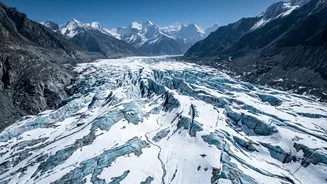
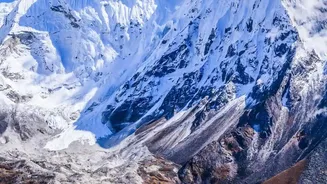
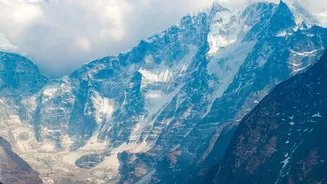
The Himalayan region is warming at a rate significantly faster than the global average. This accelerated warming is causing its vast glaciers to melt at an alarming pace. According to a 2026 assessment, glaciers across the Hindu Kush Himalaya have been
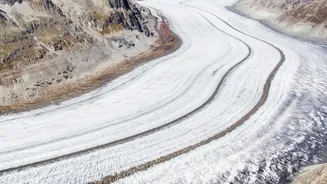
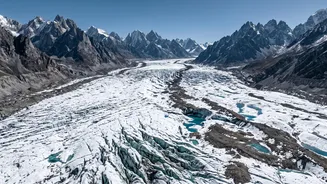
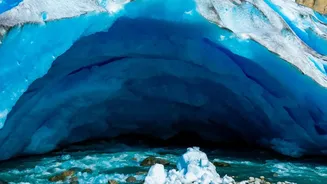
retreating rapidly, with the rate of ice loss doubling since the year 2000. This isn't just a slow melt; it involves massive chunks of ice breaking off, thinning of the ice sheets, and the formation of new and larger lakes at the foot of the glaciers. These changes are making the cryosphere—the frozen parts of our planet—increasingly fragile and unpredictable.
The Menace of Glacial Lake Outburst Floods
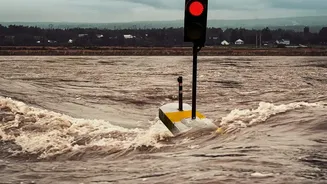
One of the most severe threats stemming from melting glaciers is a phenomenon called a Glacial Lake Outburst Flood, or GLOF. As a glacier retreats, it can leave behind a large depression that fills with meltwater, creating a glacial lake. These lakes are often dammed by unstable walls of moraine—loose rock and debris left by the glacier. These natural dams can breach suddenly, triggered by events like heavy rainfall, an avalanche of rock or ice falling into the lake, or even an earthquake. When they burst, they unleash a catastrophic wall of water, mud, and boulders that rushes downstream, destroying everything in its path, including villages, bridges, and crucial infrastructure like hydropower plants. Nepal has recorded over 24 GLOF events in its recent history.
Why Nepal Is on the Frontline
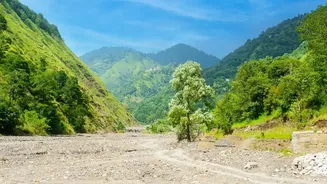
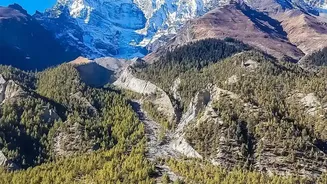
Nepal's geography places it in a uniquely vulnerable position. Home to eight of the world's ten highest mountains, the country has thousands of glaciers and glacial lakes. Many of these, like Tsho Rolpa and Imja, are identified as being at high risk of a GLOF. In late August 2026, a catastrophic flood in the Langtang region, triggered by a massive collapse of rock and glacial ice, highlighted this vulnerability in the most tragic way, causing immense devastation and loss of life on both sides of the Nepal-Tibet border. The disaster saw water levels rise by up to nine metres in just 30 minutes, giving communities no time to escape. This event, which registered as a seismic shock, served as a grim reminder that these are not ordinary floods but complex, climate-driven disasters.
More Than Just Floods
The instability extends beyond GLOFs. As rising temperatures thaw permafrost—the permanently frozen ground that acts as a mountain's glue—entire slopes are becoming weaker. This increases the frequency of landslides and rockfalls, which can themselves trigger floods or cause widespread damage. In fact, some recent devastating events were initiated not by a lake outburst, but by a massive failure of the bedrock beneath a glacier, which then collapsed and took the ice with it. This creates a cascading chain of hazards, where a single event in the high mountains can lead to multiple disasters downstream, compounding the risk for communities.
What Is Being Done?
Addressing such a colossal threat requires a multi-pronged approach. In Nepal, efforts are underway, often with international support from partners like the UNDP and Green Climate Fund, to mitigate the risks. This includes physically lowering the water levels in the most dangerous glacial lakes, such as Imja Tsho and Tsho Rolpa, through controlled drainage. Another critical component is the establishment of early warning systems, using sensors and community-based monitoring to provide downstream populations with precious time to evacuate. However, the sheer scale of the Himalayas and the cross-border nature of many river systems make comprehensive monitoring a immense challenge, necessitating greater regional cooperation, especially with China.