



A Priceless Rock from the Heavens
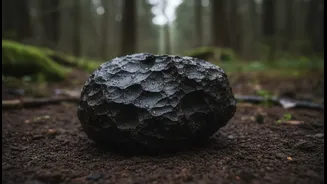
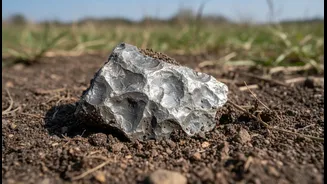
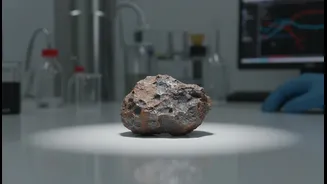
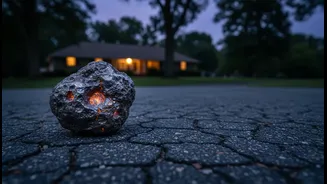
In February 2021, a fireball lit up the sky over the UK, and soon after, fragments of rock were found in the quiet town of Winchcombe. What landed on a family’s driveway wasn’t just any stone; it was a 4.6-billion-year-old meteorite, a relic from the time
before planets even existed. Scientists were ecstatic because it was a carbonaceous chondrite, one of the rarest and most scientifically valuable types of meteorite. Of the tens of thousands of known meteorites, only a tiny fraction belong to this group. Because it was recovered within hours, its pristine condition, uncontaminated by Earth's environment, made it an almost perfect sample for study—as good as a sample return mission from an asteroid.
Cosmic Time Capsules
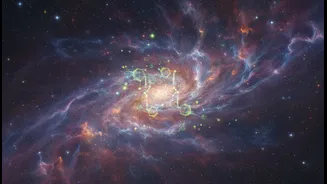
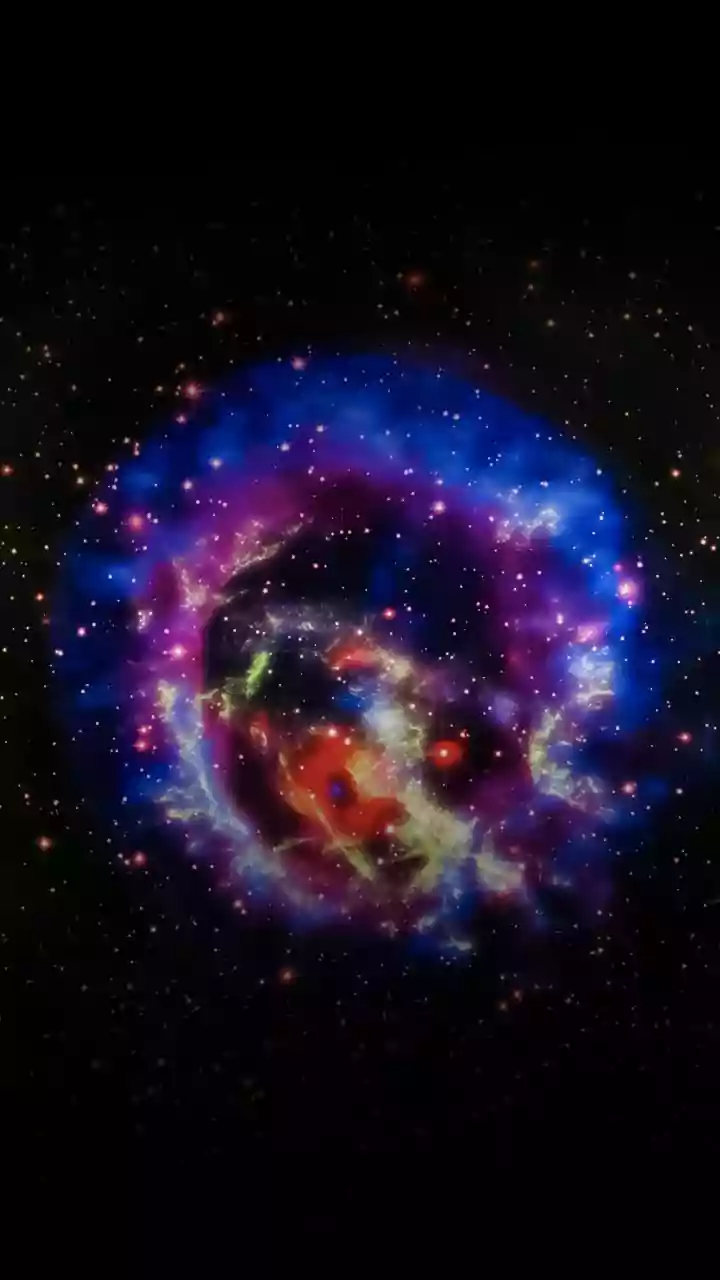
So, what makes these dark, crumbly rocks so special? Carbonaceous chondrites are essentially leftover building blocks from the formation of our solar system. More than 4.5 billion years ago, a giant cloud of gas and dust called the solar nebula began to collapse, forming the Sun at its centre. The remaining material swirled around, clumping together to form asteroids and eventually, planets. Meteorites like the one that landed in Winchcombe are fragments of those primordial asteroids, which have been orbiting in the cold of space ever since. They are like time capsules, perfectly preserving the chemical makeup of the early solar system and offering us a direct glimpse into the ingredients that were available when Earth was just beginning to form.
The Ingredients of Life, Delivered
When scientists began analysing the Winchcombe meteorite, they found something extraordinary. Locked within its minerals was water. Crucially, the chemical signature of this extraterrestrial water, specifically its hydrogen isotopes, was a remarkably close match to the water in Earth’s oceans. This finding provides powerful support for the theory that asteroids and comets were responsible for delivering a significant portion of the water to our young, dry planet, helping to create the oceans we see today. But the delivery didn't stop at water. The meteorite was also found to contain a rich variety of organic compounds, including amino acids—the essential building blocks of proteins and, by extension, of life itself.
A Prebiotic Pizza Delivery Service
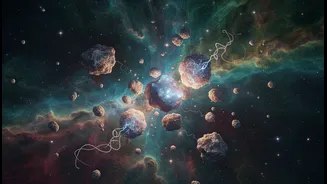
This leads to the most profound lesson these celestial visitors can teach us. The headline asks what they reveal about 'life before Earth,' and the answer is that they may have provided the crucial starter kit. The theory, known as panspermia or molecular delivery, suggests that early Earth was a barren rock, but it was subjected to intense bombardment by asteroids and comets for millions of years. This cosmic rain didn't just bring destruction; it also seeded the planet with the fundamental ingredients needed for life to emerge. These meteorites carried not just water, but a complex cocktail of organic molecules formed in space. In essence, the early solar system ran a kind of cosmic delivery service, dropping off the prebiotic materials that, in the warm, watery environments of early Earth, could begin the complex chemical journey toward life.
The Detective Work of Science
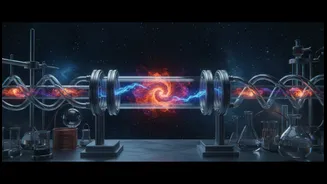
Confirming all this requires incredible scientific detective work. Scientists don’t just look at the rock; they use advanced techniques to read its history. Mass spectroscopy allows them to separate elements by weight and identify the exact isotopic ratios of things like hydrogen, telling them if the water is like Earth's. Raman spectroscopy uses lasers to identify the molecular structure of the minerals and organic compounds without destroying them. By analysing the magnetism, composition, and structure, researchers can piece together the meteorite's journey, from its formation in the outer solar system to its fiery entry into our atmosphere and eventual landing in a quiet English town.