








Inside the Smart Mahindra Plant
Mahindra's manufacturing facility in Chakan, Maharashtra, is a prime example of India's industrial evolution. Recent milestones, like producing its three-millionth vehicle, highlight a dramatic increase in production speed—the latest million units were
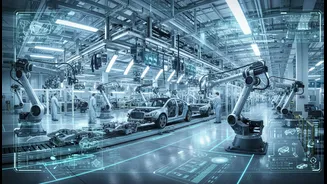
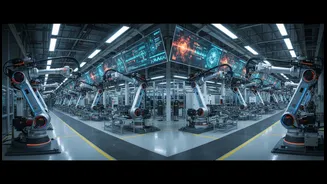
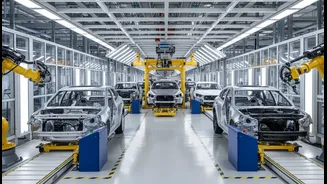
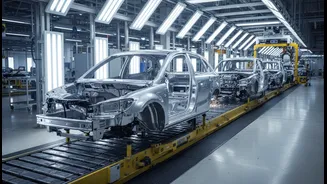
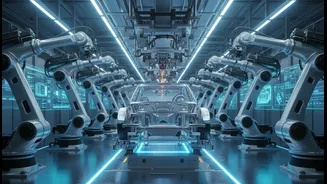
made in just 27 months, compared to 107 months for the first million. This acceleration is powered by what is known as Industry 4.0. The Chakan plant utilises approximately 1,500 robots, leading to over 98% automation in critical areas like the body shop. It's a connected ecosystem where Artificial Intelligence (AI), the Internet of Things (IoT), and 5G connectivity are not just buzzwords but are actively used for everything from real-time quality checks to predictive maintenance. Autonomous mobile robots handle material movement, while AI-powered computer vision inspects paint jobs with a precision that surpasses the human eye. This intense focus on technology ensures quality, enhances efficiency, and allows the flexibility to produce 19 different models on the same assembly lines.
What 'Smarter' Manufacturing Really Means
The term 'smart factory' goes beyond just adding robots to an assembly line. It represents a fundamental shift towards data-driven manufacturing. For Indian automakers, this means integrating digital technologies with physical systems to create a cohesive, intelligent network. This involves using IoT sensors on machinery to collect data, which AI algorithms then analyse to predict when a part might fail, minimising downtime. It allows for the creation of 'digital twins'—virtual replicas of products and production lines where simulations can be run to optimise processes before a single physical part is made. This approach, adopted by Mahindra and others, leads to significant benefits: improved productivity, reduced waste, and enhanced product quality. For consumers, this translates into more reliable and sophisticated vehicles. For manufacturers, it's about staying competitive in a global market where product life cycles are shrinking and the demand for customization is growing.
A Nationwide Industrial Upgrade
Mahindra is not on this journey alone. The entire Indian automotive industry, now the world's third-largest car market, is embracing this technological shift. Initiatives like 'Make in India' and the Automotive Mission Plan have created a fertile ground for this transformation, encouraging both domestic production and foreign investment. Other major players like Maruti Suzuki are also integrating IoT-based systems for real-time data analysis to improve production efficiency. A recent report found that nearly two-thirds of Indian auto component manufacturers have already started deploying smart factory technologies. This widespread adoption is crucial for India's goal to become a global manufacturing hub. The industry is projected to contribute over 12% to the country's GDP and create millions of jobs by 2026, and technology is the engine driving that growth.
The Human Element in an Automated World
The rise of robotics and AI naturally raises questions about the future of human workers. While automation does handle repetitive tasks, the goal is not total replacement but rather a re-evaluation of roles. The shift to smart manufacturing creates a demand for a new set of skills. Workers are needed to manage, maintain, and analyse the data from these complex automated systems. This requires upskilling in areas like data analytics, robotics, and cybersecurity. Companies and industry bodies argue that without these productivity gains, the sector would struggle to meet rising demand and could face crippling labour shortages. Mahindra, for its part, has focused on creating an inclusive ecosystem, even setting targets for gender diversity within its highly automated plants. The factory of the future is not one without people, but one where people and machines collaborate in new, more sophisticated ways.