








The Cinnamon You Likely Know
Most of what is sold globally simply as “cinnamon” is a variety called Cassia. It’s the robust, fiery spice we associate with holiday baking and strong, punchy flavors. Cassia cinnamon is harvested from the thick, single layer of bark from the Cinnamomum
cassia tree, primarily grown in China and Indonesia. It’s inexpensive to produce and has a powerful, pungent aroma because of its high concentration of the essential oil cinnamaldehyde, which can be around 95%. While it delivers a strong cinnamon kick, this is not the “true cinnamon” prized for centuries.
Follow the Scent: A Tale of Two Aromas
The most immediate clue to identifying true Ceylon cinnamon is its aroma. Break open a quill or take a whiff of the ground powder. Ceylon cinnamon has a delicate, sweet, and complex scent with subtle floral and citrus notes. It is mild and inviting, never overpowering. Cassia, on the other hand, hits you with a strong, spicy, and somewhat aggressive fragrance. This intense aroma comes from its higher cinnamaldehyde content, which makes it far more pungent than its refined cousin. The scent of Ceylon is sophisticated; the scent of Cassia is straightforwardly spicy.
Visual Clues: Bark and Powder
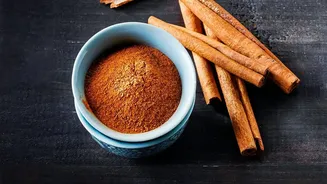
Beyond the smell, a quick visual inspection of cinnamon sticks, or quills, can tell you everything. Ceylon cinnamon sticks are tan-brown and composed of many thin, paper-like layers of bark rolled together into a tight, cigar-like shape. These quills are brittle and can be easily crumbled or ground. Cassia sticks are a darker reddish-brown, consisting of a single, thick layer of bark that curls into a hollow scroll. They are incredibly hard and difficult to break. When ground, Ceylon powder is often a lighter, tan color, while Cassia is typically a deeper red-brown, although distinguishing them in powdered form can be tricky without a side-by-side comparison.
The Health Reason to Know the Difference
This distinction is more than just a matter of culinary preference. The key difference lies in a compound called coumarin. Cassia cinnamon contains high levels of coumarin, which can be harmful to the liver if consumed in large quantities regularly. Some studies show Cassia can have up to 250 times more coumarin than Ceylon. Ceylon cinnamon, derived from the Cinnamomum verum tree, has only negligible or trace amounts of coumarin, making it a much safer choice for daily use or for those who consume cinnamon frequently for its health benefits. European health authorities have even set a tolerable daily intake for coumarin, which can be exceeded with just a teaspoon of Cassia cinnamon.
Choosing and Using True Cinnamon
In the kitchen, Ceylon cinnamon’s mild sweetness makes it perfect for dishes where you want a nuanced flavor that doesn’t overpower other ingredients. It excels in delicate desserts, beverages like tea and coffee, and fruit dishes. Its fine powder blends smoothly into recipes. Cassia's robust, spicy flavor holds up better in heavily spiced baked goods or savory dishes like curries and stews. When shopping, look for labels that explicitly state “Ceylon cinnamon” or “Cinnamomum verum.” If the label just says “cinnamon,” it is almost certainly the cheaper, more common Cassia variety.