



A Sweet Discovery in Deep Space
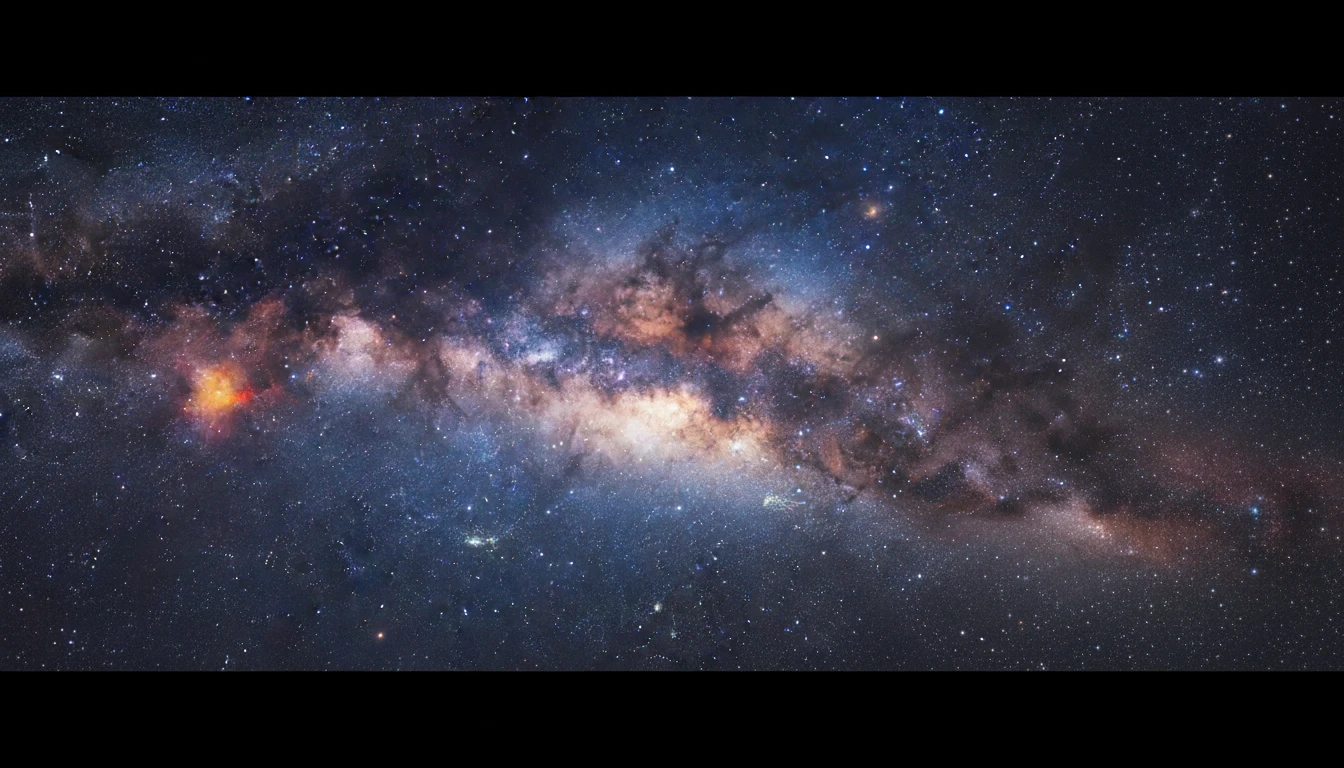
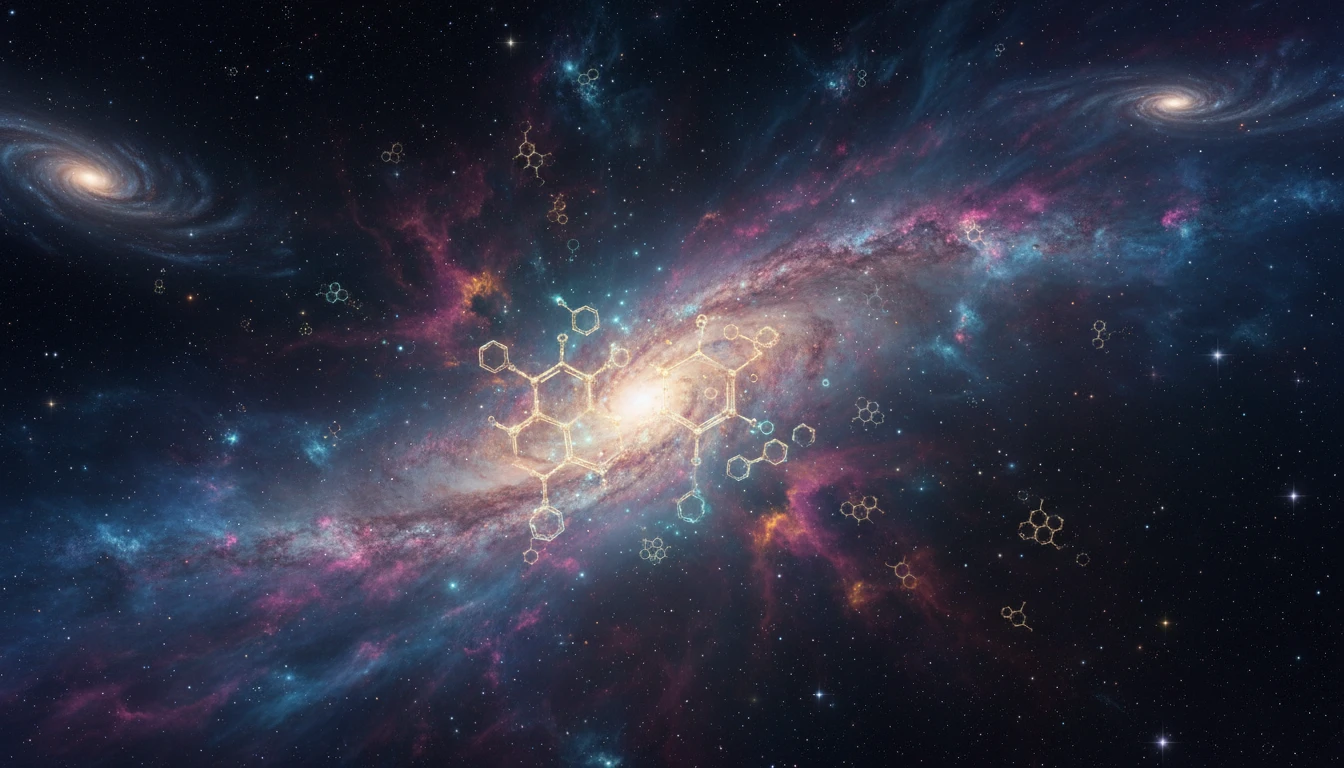
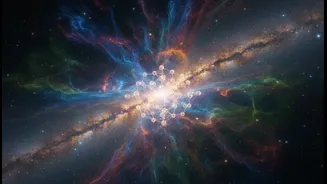
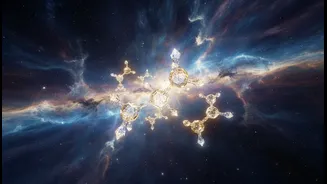
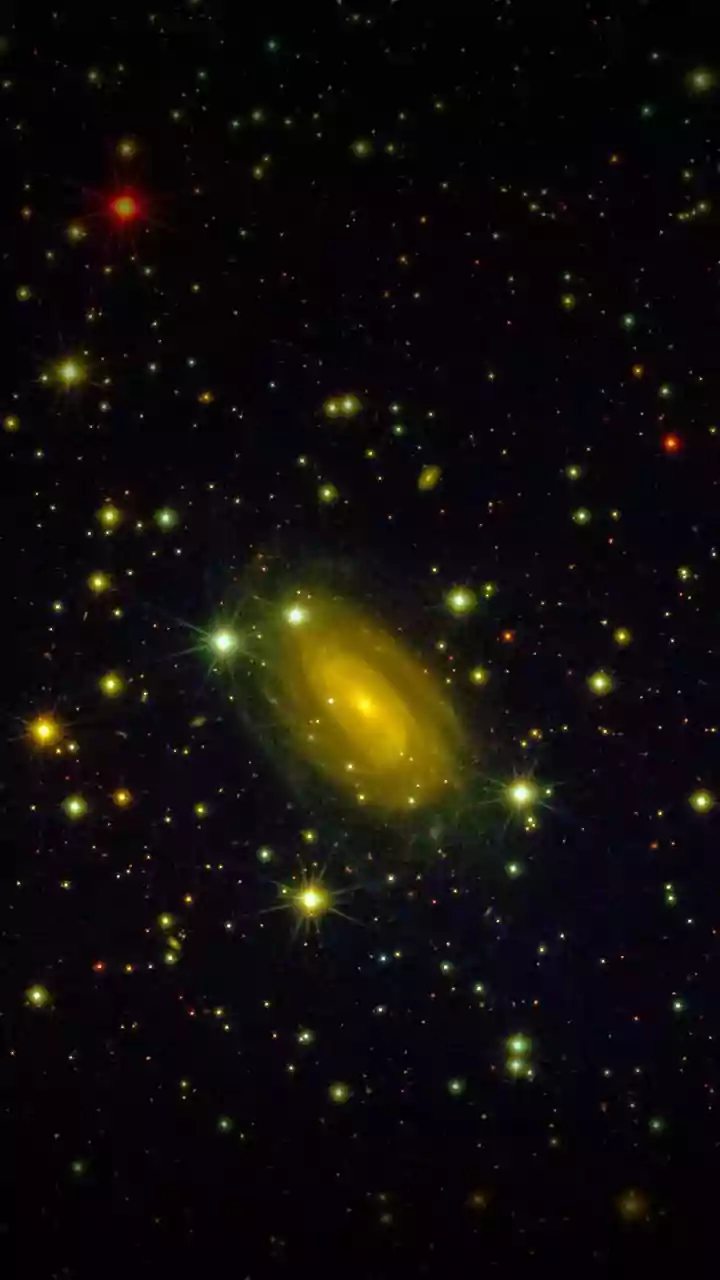
An international team of scientists has identified a 'true sugar' called erythrulose floating in a vast molecular cloud known as G+0.693-0.027, about 27,000 light-years from Earth. This isn't the first time organic molecules have been found in space,
but it is the first confirmed detection of a true sugar in the interstellar medium—the sparse mixture of gas and dust that exists between star systems. Using powerful radio telescopes in Spain, researchers were able to pick up the faint chemical signature of the molecule. This finding is significant because it proves that complex, life-relevant molecules can form in the cold, harsh environment of deep space, long before stars and planets even begin to take shape.
More Complex Than Expected
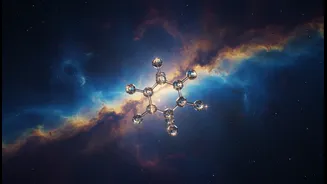
Erythrulose is a four-carbon sugar, which on Earth is found in things like raspberries. While you won't be sweetening your tea with it, its complexity is what has scientists excited. Many simpler molecules have been found in space before, but finding a four-carbon sugar is a major step up. Prevailing theories in astrochemistry suggested that molecules grow incrementally, by adding one carbon atom at a time. However, the team found that erythrulose was surprisingly abundant, more so than similar, simpler three-carbon sugars in the same region, challenging existing models of how these complex molecules form in space. This suggests that the universe may have efficient, yet-to-be-understood pathways for creating the sophisticated chemical precursors to life.
The Ingredients of Life, Delivered
The discovery of erythrulose in an interstellar cloud strengthens a fascinating theory known as panspermia, or the idea that life's ingredients are delivered to planets from space. Scientists have long debated whether the building blocks of life, like amino acids and sugars, formed in a 'primordial soup' on early Earth or arrived here via comets and asteroids. Sugars like ribose (a component of RNA) have been found in meteorites and samples from the asteroid Bennu, but finding a sugar in an interstellar cloud takes the theory a step further. It means these vital ingredients aren't just floating around our solar system; they are available in the raw material from which new solar systems are built. A young planet, therefore, may not have to create these molecules from scratch; it could get them pre-made, delivered by the very comets and asteroids that helped form it.
From Cosmic Cloud to New Worlds
The journey for a molecule like erythrulose is a long one. It starts in a cold, dense cloud of gas and dust. As gravity pulls this cloud together to form a new star, the surrounding material flattens into a spinning protoplanetary disk. Within this disk, icy dust grains, coated with these complex organic molecules, begin to clump together. These clumps grow into planetesimals, then asteroids, comets, and eventually, planets. Comets and asteroids, which are essentially cosmic leftovers, can then crash into young, rocky planets, delivering their cargo of water and organic molecules. This process could have 'seeded' the early Earth with the necessary ingredients to kickstart biology billions of years ago.
A Universe Ripe for Life?
While this discovery is not evidence of life itself, it has profound implications. If the building blocks of life as we know it—sugars, amino acids, and other organic compounds—are being mass-produced in interstellar clouds across the galaxy, it suggests that the conditions necessary for life to emerge might be far more common than previously thought. The detection of erythrulose is particularly exciting because it can be converted into other biologically important sugars, including threose, which is considered a potential precursor to RNA. The ultimate goal for many astronomers is to find ribose, the five-carbon sugar that forms the backbone of RNA, in interstellar space. Finding that would be a landmark discovery, bringing us one step closer to understanding our own cosmic origins and the possibility of life elsewhere.