

A New Window on the Universe
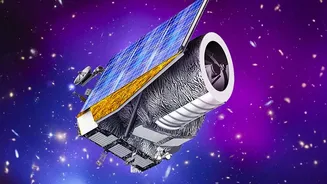
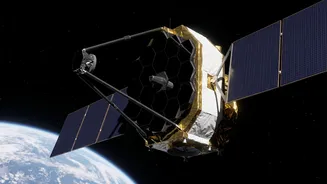
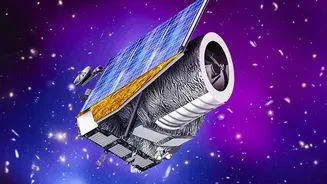
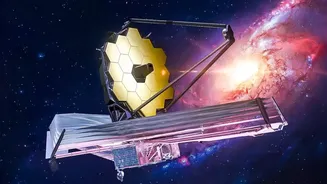
PRIMA, which stands for the PRobe far-Infrared Mission for Astrophysics, is NASA's first mission in a new 'Probe-class' of observatories. Recommended by the 2020 Decadal Survey for astrophysics, this new class fills a crucial gap between smaller, project-led
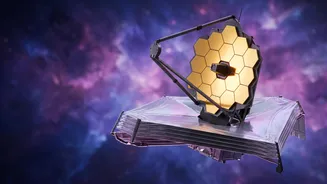
missions and the giant, multi-billion-dollar flagships like the James Webb Space Telescope (JWST). With a projected cost of around $1.2 billion, PRIMA is designed to tackle high-priority science without the massive budget of a flagship mission. Managed by NASA's Jet Propulsion Laboratory, the project is now moving into its detailed design phase with a target launch date of 2033 for a five-year primary mission.
The Power of Far-Infrared Light
So, what makes PRIMA special? The answer is its ability to see the universe in far-infrared light. Much of the cosmos, especially the places where stars and planets are born, is shrouded in vast clouds of cold gas and dust. This dust blocks visible and even some near-infrared light, rendering telescopes like Hubble and, to some extent, JWST blind to the processes happening within. Far-infrared wavelengths, however, can pass through this cosmic dust. Furthermore, the cold dust itself, warmed slightly by the infant stars within, glows brightly in this specific type of light. PRIMA is engineered to capture these faint signals, bridging a significant observational gap between the wavelengths covered by JWST and radio telescopes like ALMA. To achieve this, its 1.8-meter telescope and sensitive instruments will be cryogenically cooled to just a few degrees above absolute zero, drastically reducing heat interference from the spacecraft itself.
From Stellar Nurseries to Hidden Black Holes
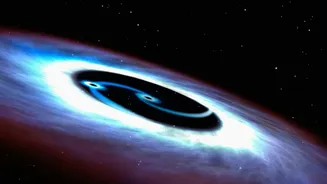
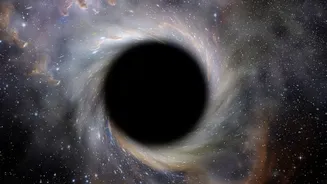
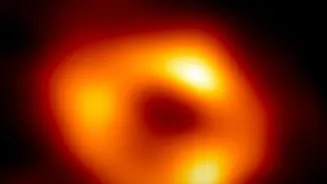
PRIMA's scientific goals are as ambitious as its technology. By peering through the dust, the mission will directly investigate some of the biggest mysteries in astrophysics. One of its primary targets is protoplanetary disks—the swirling collections of gas and dust around young stars where planets form. Scientists hope to quantify the role of water in planet formation and determine the chemical composition of these disks, revealing where and how exoplanets are born. Another major focus will be the evolution of galaxies. PRIMA will trace how cosmic dust and heavy elements have built up over time and study powerful outflows of molecules from galaxies, which shape star formation and the growth of supermassive black holes at their centers. This will help us understand why the universe looks the way it does today.
The Path to a 2033 Launch
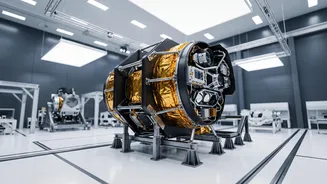
With the mission now entering its next phase of development, known as Phase B, the team at NASA, Caltech, and JPL will finalize the design and mature the necessary technology. This includes two primary instruments: PRIMAger, an imaging tool, and FIRESS, a high-resolution spectrometer that will analyze the chemical fingerprints of distant objects. The selection of PRIMA marks a significant commitment to far-infrared astronomy, a field left with a void since the retirement of ESA's Herschel Space Observatory and NASA's own Spitzer Space Telescope. The mission's development represents decades of work in detector technology pioneered at Caltech and JPL. If it passes its confirmation reviews, construction will begin, putting PRIMA on track to become humanity's next great window into the deep, hidden universe, launching sometime in 2033.