




The Science of Staying Full
Satiety, the feeling of fullness after a meal, is a complex process. It’s not just about filling your stomach; it’s about sending the right signals to your brain. Protein is a powerhouse for satiety, as research shows it can increase hormones that signal fullness.
Fibre adds bulk to your meals and slows down digestion, which helps you feel satisfied for a longer period. Complex carbohydrates provide a steady release of energy, preventing the blood sugar spikes and crashes that can lead to cravings. When these three components work together, they create a meal that is not only nutritious but also deeply satisfying, keeping hunger at bay for hours.
Power Up with Plant-Based Protein
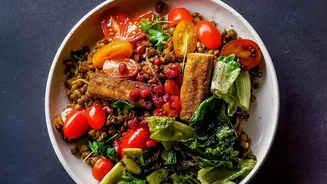
Protein is essential for repairing tissues and building muscle, but it's also a star player in appetite control. Including a good source of protein in every meal is crucial for a balanced vegetarian diet. Legumes are a fantastic and versatile option; think lentils (dal), chickpeas, kidney beans (rajma), and black beans. Soy products like tofu and edamame are also excellent choices, providing complete proteins that are easily absorbed by the body. For those who consume dairy, paneer and Greek yoghurt are protein-rich additions. Nuts and seeds, such as almonds, walnuts, and chia seeds, offer protein along with healthy fats, making them a great addition to any meal or as a fulfilling snack.
Fill Up on Functional Fibre
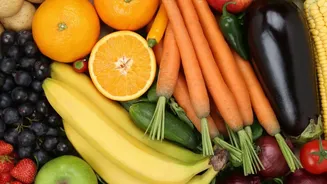
Dietary fibre is the unsung hero of a filling meal. Found exclusively in plant foods, it passes through the digestive system largely undigested, which provides several benefits. Soluble fibre, found in oats, beans, apples, and carrots, forms a gel-like substance that slows digestion, promoting a sustained feeling of fullness. Insoluble fibre, found in whole grains and vegetables, adds bulk and helps with regularity. To easily boost your fibre intake, aim to fill half your plate with a variety of colourful vegetables like broccoli, spinach, and bell peppers. Fruits, especially when eaten whole with their skin, are also excellent sources. Aiming for 25-35 grams of fibre per day is a good target for most adults.
Choose Complex Carbs for Sustained Energy
Not all carbohydrates are created equal. While simple carbs (like those in sugary snacks and white bread) cause a quick spike and fall in blood sugar, complex carbohydrates are digested slowly, providing a steady stream of energy. This slow release is key to preventing mid-afternoon slumps and cravings. Excellent sources of complex carbs include whole grains like oats, brown rice, barley, and millets such as jowar and bajra. Quinoa is another fantastic option as it's a complete protein and a complex carb. Legumes like lentils and beans pull double duty, offering both protein and complex carbs. Starchy vegetables like sweet potatoes also provide lasting energy and a wealth of nutrients.
Putting It All Together on Your Plate
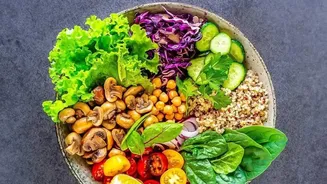
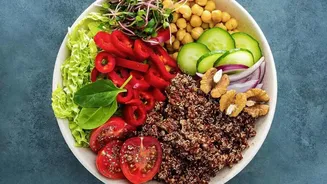
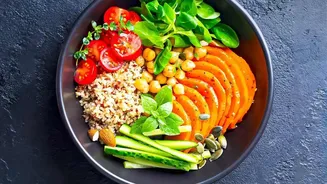
Building the perfect vegetarian plate is about balance and combination. A traditional Indian thali is often a great example. A typical balanced meal could include a portion of dal or chickpea curry for protein, a serving of a mixed vegetable sabzi for fibre and nutrients, and a side of brown rice or whole-wheat roti for complex carbs. Another simple idea is a quinoa bowl topped with black beans, corn, chopped vegetables, and a handful of pumpkin seeds. For breakfast, a bowl of oatmeal made with milk or a fortified alternative, topped with fruit and a tablespoon of chia seeds, provides all three key components to start your day right. The goal is to make this combination a habit, ensuring every meal is designed to be both delicious and satisfying.