








The Vihaan.AI Transformation
Since returning to Tata's fold in 2022, Air India has been driven by a five-year transformation plan named Vihaan.AI. This comprehensive program is now in its final phase, focusing on sustainable growth, profitability, and establishing the airline as a world-class
carrier. The strategy involves a massive order for new aircraft, the complete refurbishment of existing planes, expansion of the route network, and a ground-up revamp of service standards and digital platforms. This isn't just about getting bigger; it's a fundamental effort to rebuild the airline's reputation and capabilities from the inside out. The successful mergers of Air Asia India into Air India Express and Vistara into Air India are key pillars of this consolidation.
An Unprecedented Fleet Expansion
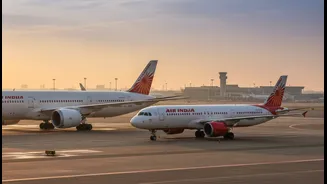
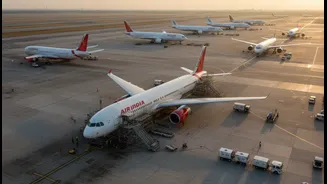
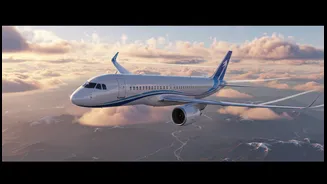
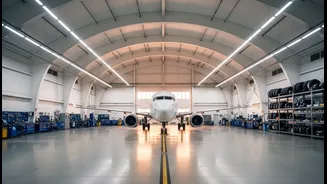
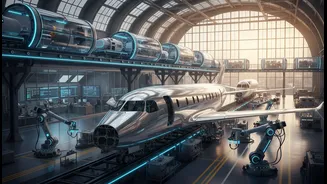
The most visible part of Air India's transformation is its historic aircraft order for hundreds of new planes from Airbus and Boeing. The group expects to induct 50 to 60 new aircraft annually for the next several years. In 2026 alone, the airline anticipates receiving new wide-body jets, including Boeing 787-9s and Airbus A350-1000s, at a rate of roughly one every six weeks. This rapid growth is designed to bolster both international and domestic capacity. The low-cost arm, Air India Express, is also expanding, adding numerous domestic and international routes, particularly to the Gulf region. However, this ambitious schedule is not without challenges, as global supply chain disruptions and geopolitical issues have caused some delays in aircraft deliveries.
A Modern In-Flight Experience
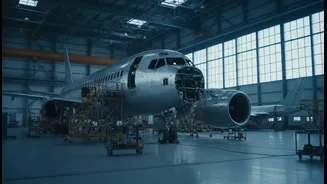
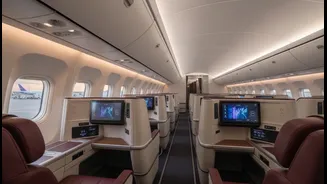
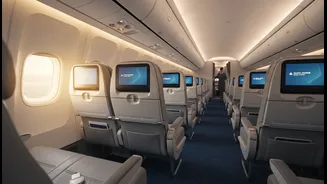
Parallel to adding new planes, Air India is investing heavily in upgrading its existing fleet. A large-scale retrofitting program is underway for its legacy wide-body aircraft, including 26 Boeing 787-8s and its Boeing 777s. The first retrofitted B787-8 was unveiled in April 2026, featuring all-new three-class cabins with private suites in Business Class, a new Premium Economy section, and refreshed Economy seats. These upgraded aircraft are being progressively deployed on key international routes to London, Melbourne, and Tokyo. By the end of 2026, over half of Air India's wide-body fleet is expected to feature new or upgraded interiors, a significant step toward providing a consistent and modern passenger experience. The retrofitting of the entire B787 fleet is expected to be complete by mid-2027.
Service Beyond the Seat
The airline recognizes that a true upgrade is about more than just new hardware. A significant focus of the Vihaan.AI plan is on improving the 'software'—the human and digital elements of the customer journey. This includes investing in new service standards for crew and airport staff, backed by extensive training programs at its new, state-of-the-art aviation academy. Digital systems have also been a priority, with a revamped app and website aimed at faster bookings and better support during disruptions. These efforts are showing results, with call-center wait times drastically reduced and on-time performance seeing significant improvement; Air India ranked as the fourth most punctual airline globally in June 2026, according to aviation analytics firm Cirium.
Navigating the Headwinds
Air India's transformation is a complex and challenging project, made more difficult by external pressures. Officials have acknowledged that geopolitical issues and supply chain bottlenecks have impacted timelines for aircraft delivery and retrofits. In the summer of 2026, the airline had to temporarily rationalize its network, reducing frequencies on some international routes to Europe, North America, and Australia to enhance stability. The plan is to restore most of this capacity starting in the second half of the year. Despite these hurdles, the leadership remains optimistic, stating the transformation is on track, even if it takes a little longer than initially planned to fully realize its goals.