

Why Perfect Texture Matters
Flavor is king in the kitchen, but texture is the kingdom it rules. A gritty soup or a watery sauce can be disappointing, even if the taste is on point. The way food feels in your mouth—its body, smoothness, and consistency—is fundamental to how we perceive
its flavour and quality. Achieving a velvety texture elevates a simple dish into something truly special. Many home cooks turn to flour, cornstarch, or heavy cream to thicken their creations. While these have their place, they can also dull flavours or add unwanted heaviness. The technique of cooking, blending, and reducing offers a purer path to a superior result, concentrating the essence of your ingredients rather than just masking a thin consistency.
Step One: The Foundational Cook
The journey to a great texture begins with a thorough cook. Whether you're making a vegetable soup or a tomato-based sauce, your primary ingredients must be cooked until they are completely tender. Roasting vegetables before adding them to the pot can add a deep, caramelized flavour that you won't get from simply boiling them. For stovetop cooking, a gentle simmer is key. This initial cooking phase isn't just about making the ingredients soft enough to blend; it's about building layers of flavour. Rushing this step will result in a gritty or fibrous final product, no matter how powerful your blender is. Make sure vegetables are uniformly chopped for even cooking and are soft all the way through before moving to the next step.
Step Two: The Silky-Smooth Blend
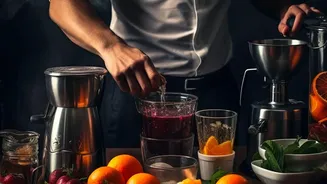
Once your ingredients are tender, it's time to blend. The goal here is to create the smoothest, most uniform puree possible. For this task, an immersion blender is a fantastic tool, allowing you to blend directly in the pot, which minimizes mess. For an even silkier result, a high-powered countertop blender is unparalleled. When using a countertop blender with hot liquids, it's crucial to take safety precautions. Never fill the blender more than halfway, and remove the small cap in the lid to allow steam to escape, covering the opening with a folded kitchen towel. Blending in batches might be necessary, but the reward is a perfectly smooth base. For an ultra-refined texture, some chefs even pass the blended liquid through a fine-mesh sieve to remove any lingering solids.
Step Three: The Gentle Reduction
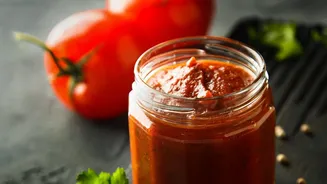
This final step is what separates good from great. After blending, your soup or sauce will be smooth, but it may still be thinner than desired. Instead of adding a thickener, you'll use reduction. Reduction is simply the process of simmering a liquid to allow water to evaporate, which thickens the liquid and intensely concentrates its flavour. Pour your blended puree back into a clean pot and bring it to a gentle simmer over medium-low heat, without a lid. Stir occasionally to prevent it from sticking to the bottom of the pan. As the water evaporates, you'll see the sauce thicken and its color deepen. The key is to do this gently; a rolling boil can ruin the flavour. Keep simmering until the sauce coats the back of a spoon, leaving a clean line when you draw a finger through it—a state chefs call 'nappé'.
Putting It All Together: A Simple Example
Let’s apply this to a simple butternut squash soup. First, you would roast chunks of squash with some onion and garlic until very tender (The Foundational Cook). Next, you’d transfer the roasted vegetables to a pot with vegetable stock and blend everything until perfectly smooth using an immersion blender (The Silky-Smooth Blend). At this point, the soup might taste good, but it could be a little watery. Finally, you would let the soup simmer gently on the stove for 15-20 minutes, allowing it to reduce and thicken naturally (The Gentle Reduction). The flavour of the squash will become richer and more pronounced, and the texture will transform into a velvety, comforting consistency that needs nothing more than a touch of seasoning to be perfect.