


Anatomy of a Workhorse Rocket
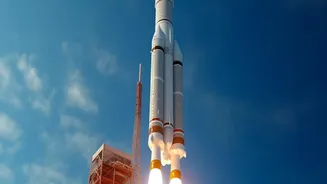
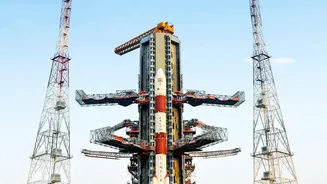
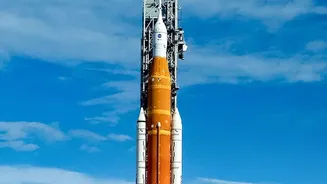
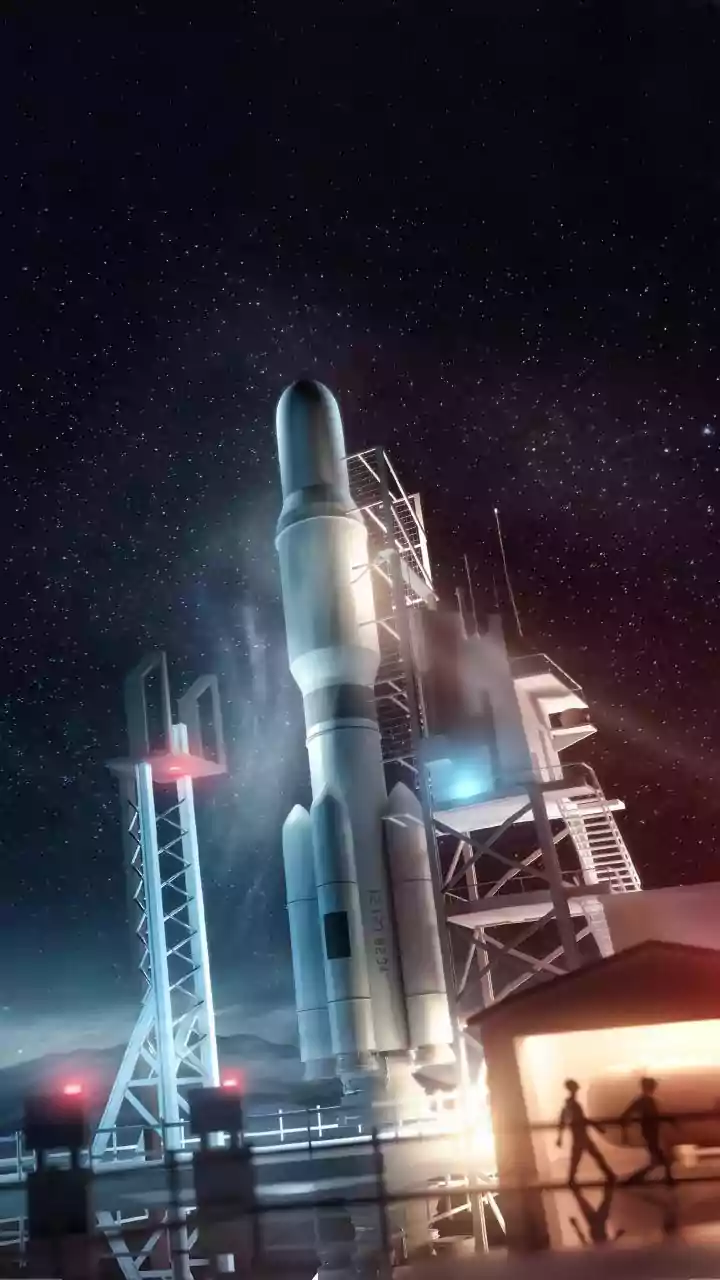
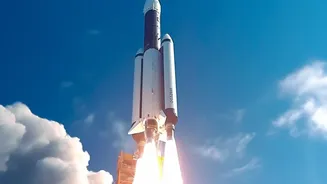
At the heart of many of these complex missions is the Geosynchronous Satellite Launch Vehicle (GSLV). Standing 51.7 metres tall, this three-stage rocket is ISRO's heavy lifter, designed specifically to place satellites into a highly sought-after orbit.
The first stage consists of a solid propellant motor flanked by four liquid-fueled strap-on boosters, providing the initial immense thrust needed to overcome Earth's gravity. The second stage also uses earth-storable liquid propellants. However, the real game-changer is the third and final stage: the cryogenic engine. Mastering this technology was a major milestone for India, making it one of only a handful of nations with this capability. This stage is what gives the GSLV the powerful final push required for high-altitude orbits.
The Challenge of Cryogenics
The cryogenic upper stage is both the GSLV's greatest strength and its most complex component. It uses liquid hydrogen as fuel and liquid oxygen as the oxidizer, which must be stored at extremely low temperatures: -253°C and -183°C, respectively. While these super-cooled propellants provide significantly more thrust for every kilogram burned, managing them is a massive engineering challenge. It requires specialised tanks, high-speed turbopumps running at around 40,000 RPM, and complex ground systems. The successful and repeated operation of this indigenous cryogenic engine, especially after early setbacks, has turned the GSLV from a rocket once nicknamed the 'naughty boy' into a reliable and disciplined vehicle for ISRO's most critical launches.
A Case Study: The INSAT-3DS Mission
To see how this all comes together, we can look at the successful GSLV-F14 mission on February 17, 2024, which delivered the INSAT-3DS satellite into orbit. This mission, fully funded by the Ministry of Earth Sciences, was designed to enhance India's weather forecasting and disaster warning capabilities. The satellite itself, weighing 2,275 kg, is packed with advanced instruments, including a 6-channel imager and a 19-channel sounder. These tools allow it to monitor land and ocean surfaces, provide vertical profiles of atmospheric temperature and humidity, and augment the services already provided by the operational INSAT-3D and INSAT-3DR satellites. It also carries transponders for data relay and satellite-aided search and rescue operations.
The Fiery Ascent to Orbit
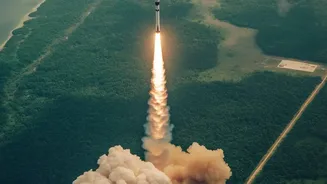
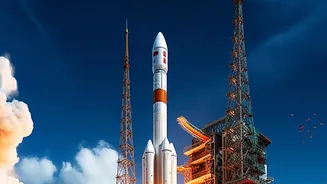
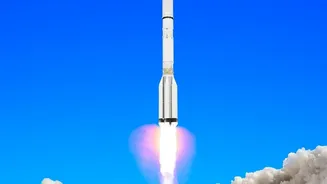
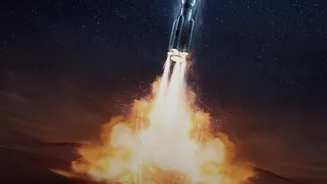
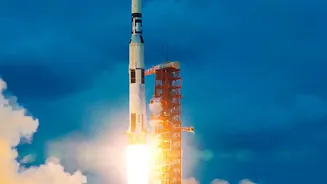
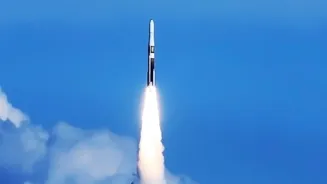
The launch is a precisely choreographed sequence lasting just over 18 minutes. After liftoff from the Satish Dhawan Space Centre in Sriharikota, the first stage boosters burn out and separate. The second stage then ignites, pushing the rocket further into the atmosphere. Once that stage separates, the crucial cryogenic third stage fires up. This engine burns for approximately 12 minutes, accelerating the satellite to the correct velocity and altitude. Its job is to place the satellite not in its final orbit, but in a Geosynchronous Transfer Orbit (GTO). This is a highly elliptical path, with its lowest point (perigee) much closer to Earth and its highest point (apogee) near the final orbital altitude of about 36,000 km. Once the satellite is successfully injected into GTO, the rocket's job is done.
The Final Journey and National Impact
After separating from the GSLV, the satellite begins its own journey. Using its onboard Liquid Apogee Motor (LAM), it performs a series of engine firings over several days. Each firing raises the perigee, gradually making the orbit more circular. Once it reaches the final circular Geostationary Orbit, the satellite appears to hang stationary over one spot on Earth. For a meteorological satellite like INSAT-3DS, this is perfect, allowing for continuous observation of the Indian subcontinent. This provides invaluable data for the India Meteorological Department (IMD) for everything from daily weather reports to early warnings for cyclones, protecting lives and property. Each successful GSLV mission, therefore, is not just a technological triumph but a direct contribution to the nation's well-being and security.