





A Trifecta of Safety Checks
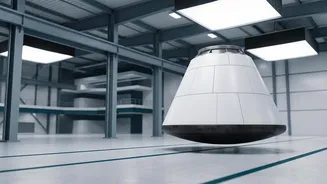
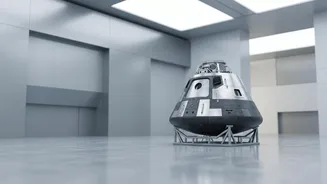
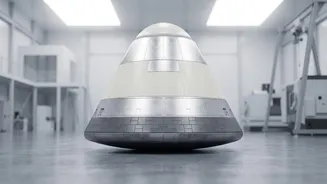
In the journey to send Indian astronauts, or 'Gaganyatris', into orbit, no component is more important than the crew module—their home in space. Recently, the Indian Space Research Organisation (ISRO) successfully completed a critical series of three
qualification tests focused squarely on astronaut safety during the most hazardous part of the mission: re-entry and recovery. These tests were not about the launch, but about the return. They included the Crew Module Up-righting System (CMUS) to ensure the capsule stays correctly oriented after splashing down in the sea; the separation of the umbilical cords connecting the crew module to its service module; and a structural test to ensure the module can withstand the force of the apex cover being jettisoned to deploy the parachutes. Each test validates a moment in the mission where failure is not an option and automation is paramount.
Simulating the Final Moments
This new testing push adds a fresh layer of real-world context to years of component-level work. While earlier tests focused on individual parts, this phase is about how integrated systems perform under stress. The up-righting system, for instance, uses a stored cold-gas mechanism to inflate flotation bags, a critical function to keep the crew safe post-splashdown. Similarly, the tests for the apex cover separation apply forces greater than what is expected during an actual flight to confirm the module's structural integrity. This is part of a broader, exhaustive testing campaign that includes Integrated Air Drop Tests (IADT), where a full-scale module is dropped from a helicopter to validate the complex parachute deployment sequence. These IADTs, which use a series of drogue, pilot, and main parachutes, are essential for slowing the nearly six-tonne capsule to a safe landing speed.
What This Means for the Timeline
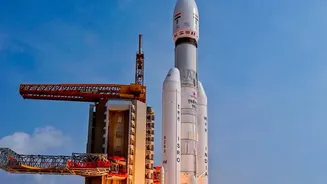
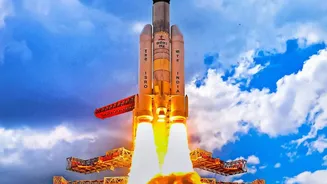
Every successful test brings ISRO closer to the first major flight of the program: the uncrewed G1 mission. This mission, planned for late 2026, will be the first full dress rehearsal, sending an unpressurised module into a 400 km orbit before bringing it back to Earth. The spacecraft will carry a humanoid robot named Vyommitra to simulate astronaut conditions and collect vital data on the life support systems. The successful qualification of the crew module's safety systems is a mandatory prerequisite for this uncrewed flight. While the overall timeline for the first human flight has shifted to 2027 to ensure all safety protocols are meticulously met, this intensive testing phase signals that preparations are in their advanced stages. The Human Rated Launch Vehicle (HLVM3) has already completed ground testing for its propulsion stages, and the crew's mission-specific training is underway in Bengaluru.
The Bigger Picture: A Foundation for the Future
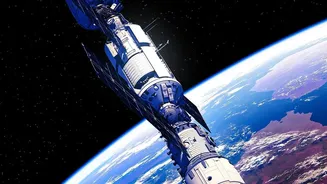
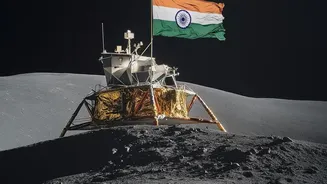
The Gaganyaan program is more than a single mission; it is the cornerstone of India's long-term space exploration ambitions. The goal is not just to become the fourth nation capable of independent human spaceflight but to establish a sustained presence in orbit. The government has already announced plans for a 'Bharatiya Antariksh Station' (Indian Space Station) by 2035 and a crewed lunar landing by 2040. The technologies and safety protocols being validated today for the Gaganyaan crew module are the foundational building blocks for these future endeavours. Each test, from parachute drops to structural stress checks, builds the expertise and confidence needed for more complex missions, ensuring that when Indian astronauts finally launch, they do so on the back of one of the most rigorously tested systems in the world.