





The New Nuclear Renaissance
After decades of stagnation following high-profile accidents, nuclear energy is experiencing a global resurgence. Seen as a stable, low-carbon power source, it is being championed as a crucial tool in the fight against climate change and a path to energy independence.
This revival is different from the state-led projects of the 20th century. Today, the field is buzzing with private investment and technological innovation, most notably in the form of Small Modular Reactors (SMRs). These smaller, factory-built reactors promise lower costs, faster deployment, and greater flexibility than their massive predecessors, attracting interest from developing nations and even tech giants seeking to power energy-hungry data centers. This wave of commercial enthusiasm is driving nuclear power into new markets and applications, from industrial heat to seawater desalination.
The Global Safety Net
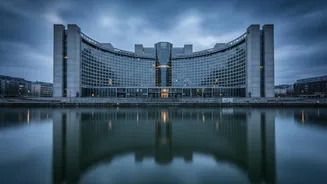
The peaceful use of nuclear energy has always been predicated on a delicate balance: harnessing its power while preventing its misuse. This balance is maintained by a global framework of safeguards, with the International Atomic Energy Agency (IAEA) at its core. Established under the principle of "Atoms for Peace," the IAEA works with countries under the Nuclear Non-Proliferation Treaty (NPT) to ensure that civilian nuclear materials are not diverted to create weapons. This involves rigorous inspections, material accounting, and continuous monitoring of declared nuclear facilities. For decades, this system, while not perfect, has been credited with limiting the spread of nuclear weapons, even as nuclear power became a global industry.
The Core of the Criticism
Critics' concerns are rooted in this new, fast-paced commercial environment. The fundamental worry is that the profit motive could clash with the stringent, costly, and time-consuming culture of nuclear safety. Experts point to several key risks. Firstly, there is the fear of proliferation. The widespread deployment of SMRs, potentially numbering in the thousands, could strain the IAEA's capacity to monitor all nuclear material effectively. Some SMR designs also use higher-than-normal enriched uranium, which, if diverted, could be more easily used for weapons. Secondly, critics argue that market competition could create a "race to the bottom," where countries might weaken their regulatory oversight to attract nuclear investment, jeopardizing safety standards. Finally, there are persistent issues of long-term radioactive waste disposal, which have no permanent solution and add a complex cost and safety layer to any project.
A Question of Governance
The debate is not just about technology; it's about governance. The established international nuclear order was built around a small number of state-owned utilities and supplier nations. Today's landscape involves a complex web of private companies, international supply chains, and newcomer countries eager to start their own nuclear programs. Critics argue that international rules are struggling to keep up with evolving threats like cyberattacks and insider risks. Recent geopolitical instability further complicates the picture, with concerns that major players like Russia and China may use nuclear exports to gain political leverage with less transparent safeguards. As one recent deal demonstrated, the temptation to bend long-standing non-proliferation rules for commercial or diplomatic gain is a significant concern for the global security order.
The Path Forward
Proponents of the nuclear commercial boom argue that these fears are overstated. They contend that modern reactor designs, including many SMRs, have inherent safety features that make them less prone to accidents. They also posit that the private sector's innovation and efficiency are essential to deploying nuclear power at the scale needed to address the climate crisis. The industry maintains that a strong safety culture and robust non-proliferation are good for business, and that new technologies can enhance security. The key, according to many, is not to halt progress but to adapt the international regulatory framework. This includes harmonizing licensing standards for new reactors and ensuring the IAEA is funded and equipped to handle the challenges of a more decentralized nuclear world.