

Seeing Double: A Tale of Two Dumplings
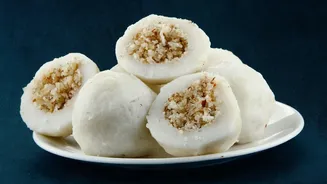
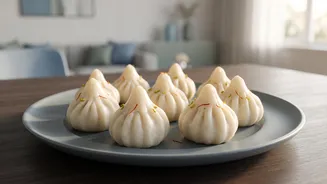
At first glance, the Modak and the Kozhukattai are culinary twins. Both are meticulously crafted dumplings, typically made from a soft rice flour dough that is steamed to perfection. Their most striking feature is the iconic pleated shape, tapering to a delicate
point at the top, a form often achieved by skilled hands or a special mould. This visual similarity is at the heart of the cultural comparison, especially during festivals like Ganesh Chaturthi, when kitchens across India are filled with the sweet aroma of these offerings. While Modak is the name most associated with the state of Maharashtra, Kozhukattai is its counterpart in South India, particularly in Tamil Nadu and Kerala. In reality, they are part of a larger family of Indian dumplings, with names like kadubu and kudumu used in other regions.
The Heart of the Matter: Filling and Flavour
The true distinction between these two sweets lies within. The classic filling for both is a delightful mixture of freshly grated coconut and jaggery, scented with a hint of cardamom. This sweet, moist filling, known as 'poornam' or 'saran', provides a burst of flavour that contrasts beautifully with the mild outer casing. However, this is where their paths begin to diverge. The traditional Maharashtrian Modak, especially the steamed variety known as Ukdiche Modak, almost exclusively features this coconut-jaggery stuffing. In contrast, the Kozhukattai boasts a more versatile tradition. While the sweet coconut version is a festive staple, South Indian cuisine also embraces savory Kozhukattai, filled with spiced lentils, as well as sweet variations using sesame seeds and jaggery. This flexibility has allowed the Kozhukattai to be not just a festive treat, but also a common breakfast item or evening snack in many households.
A Divine Offering for Lord Ganesha
The deepest connection between Modak and Kozhukattai is their shared role as a sacred offering to Lord Ganesha. During the festival of Ganesh Chaturthi (known as Vinayaka Chaturthi in the South), both sweets are prepared with great devotion. The Modak, however, holds a particularly special place in Maharashtrian culture as it is believed to be Ganesha's absolute favourite sweet, earning him the name 'Modakapriya', or 'one who loves Modaks'. Legend has it that an offering of 21 or 101 Modaks is the perfect way to please the deity. The shape itself is symbolic, said to represent a pouch of spiritual knowledge or bliss. While the Kozhukattai is also central to Vinayaka Chaturthi celebrations in the South, its cultural significance extends further. In Kerala, for example, it is also prepared by the Christian community on the Saturday before Palm Sunday, connecting the dumpling to a different set of traditions and beliefs entirely.
More Than Just a Sweet
While the online comparisons often playfully pit one against the other, the story of Modak and Kozhukattai is not one of rivalry, but of regional richness. The existence of these similar-yet-distinct dishes speaks to a shared culinary heritage that has evolved over centuries. From the steamed Ukadiche Modak of Maharashtra to the fried versions found in other parts of India and the diverse array of Kozhukattai in the South, each variation tells a story about local ingredients, climate, and customs. The fact that a similar sweet even exists in Japan—the Kangidan, offered to a Ganesha-like deity—shows how these food ideas have travelled and transformed across Asia. These dumplings are not just food; they are edible history, connecting generations through the act of making and sharing them.