



A New Eye on the Cosmos
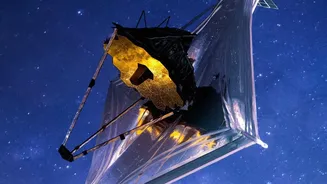
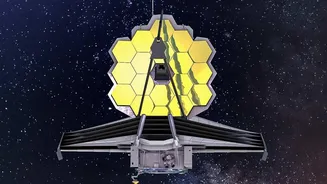
Launched in August 2026, the Nancy Grace Roman Space Telescope is not just another telescope; it's a cosmic surveyor. Named after NASA's first chief of astronomy, this mission is designed to do something fundamentally different from its famous cousins,
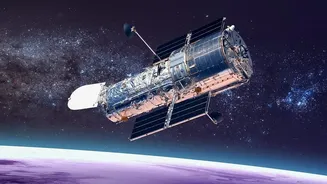
the Hubble and James Webb Space Telescopes. While Hubble and Webb excel at capturing stunning, detailed images of small patches of the sky, Roman is built for breadth. Its Wide Field Instrument can image a patch of the sky at least 100 times larger than Hubble can in a single pointing, all while maintaining similar sharpness. Think of it as the difference between a telephoto lens and a panoramic one. Roman's primary job is to create vast cosmic maps, enabling scientists to study the universe on an unprecedented scale.
Chasing the Universe's Phantom
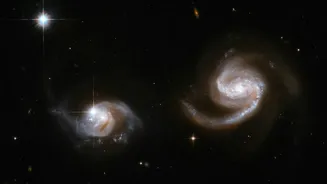
One of Roman's primary targets is one of the biggest mysteries in all of physics: dark energy. This enigmatic force is believed to be responsible for the accelerating expansion of the universe, but scientists know very little about it. Roman will tackle this question using three powerful techniques. It will map the distribution of galaxies using a method called Baryon Acoustic Oscillations, which measures the faint imprints of sound waves from the early universe. It will also hunt for thousands of specific exploding stars, known as Type Ia supernovae, to measure cosmic distances with high precision. Finally, it will use weak gravitational lensing—observing how the gravity of massive objects subtly bends light—to map the invisible scaffolding of dark matter that holds the universe together. By combining these large-scale surveys, astronomers hope to finally understand how dark energy has shaped the cosmos over billions of years.
A Census of a Billion Worlds
While it charts the grand structure of the universe, Roman will also be looking for something much smaller: planets orbiting other stars. The mission is expected to conduct the largest exoplanet census ever attempted, potentially discovering over 100,000 new worlds. It will do this primarily using a technique called gravitational microlensing. This method can detect planets, even those as small as Mars or rogue planets that drift through space without a host star, by observing how their gravity momentarily brightens the light from a more distant star. In addition to its survey work, Roman is testing a powerful new Coronagraph Instrument. This technology is designed to block the overwhelming glare of a star, allowing astronomers to directly image the faint planets orbiting it, a key technological step for future missions aimed at finding habitable worlds.
Two Ambitious Goals, One Telescope
How can a single telescope accomplish both of these monumental tasks? The answer lies in its unique design. The same wide-field capability that allows Roman to map billions of galaxies for its dark energy survey is perfect for simultaneously monitoring the crowded starfields of our own Milky Way galaxy for microlensing events. By observing a billion galaxies and hundreds of millions of stars, Roman will create a dataset of unparalleled size and scope—a treasure trove for astronomers for decades to come. The mission is not a replacement for Hubble or Webb but a powerful collaborator. Roman will act as a scout, identifying the most interesting targets across the sky, which its more focused counterparts can then study in greater detail, creating a more complete picture of the cosmos.