


The World’s Busiest Energy Chokepoint
The numbers are staggering. Every day, around 21 million barrels of oil and petroleum products sail through the Strait of Hormuz. This accounts for roughly 21% of global petroleum consumption, or one out of every five barrels used worldwide. The traffic
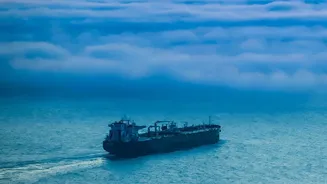
is dominated by massive supertankers carrying crude from Saudi Arabia, Iraq, the UAE, and Kuwait to the rest of the world. But it’s not just oil. The strait is also a critical corridor for about one-third of the world's liquefied natural gas (LNG), with powerhouse producer Qatar sending the majority of its exports through this route. The sheer volume makes it an irreplaceable part of the global energy system. At its narrowest, the shipping lane is only a few kilometres wide, creating a funnel that is both highly efficient and incredibly vulnerable.
Why the Strait Matters Deeply for India
For India, the stability of the Strait of Hormuz is not a distant geopolitical issue; it is a matter of national economic and energy security. As a nation that imports over 80% of its crude oil, a significant portion of that supply comes from Middle Eastern producers and must pass through this very waterway. Countries like Iraq and Saudi Arabia are among India's top suppliers, and their oil travels through Hormuz to reach Indian refineries. Any disruption, whether a blockade, conflict, or even an increase in insurance premiums for tankers, has an immediate and direct impact. A closure could trigger sharp spikes in fuel prices, driving up inflation and straining the nation’s finances. It's a direct lifeline for India's growing economy, and any squeeze on this artery is felt almost instantly at home.
A History of Tension and Geopolitical Risk
This strategic importance has long made the Strait of Hormuz a flashpoint for regional and international conflict. Situated between Iran and Oman, it has been at the centre of geopolitical tensions for decades. During the Iran-Iraq War in the 1980s, it was the site of the “Tanker War,” where commercial ships were targeted by both sides. In more recent years, Iran has repeatedly threatened to close the strait in response to international sanctions and military pressure. Incidents involving the seizure of tankers and drone attacks have highlighted how quickly the situation can escalate. Because of its geography, Iran is in a position to exert significant control over the passage, creating a permanent state of risk for the billions of dollars in cargo that transit it daily.
The Search for a Plan B
Given the high stakes, affected countries have long sought alternatives to bypass this vulnerable chokepoint. However, the options are limited and insufficient. Saudi Arabia operates the East-West Pipeline, which can carry crude oil across the peninsula to the Red Sea, and the UAE has the Abu Dhabi Crude Oil Pipeline that terminates at the port of Fujairah, bypassing Hormuz. While useful, the combined capacity of these pipelines is a fraction of the total volume that moves through the strait. For LNG, the situation is even more dire, as there are virtually no alternative pipeline routes for countries like Qatar to get their gas to global markets. These alternatives can mitigate a small part of the risk, but they cannot replace the Strait of Hormuz, leaving the global economy heavily reliant on its continued accessibility.