







New York Hits the Brakes
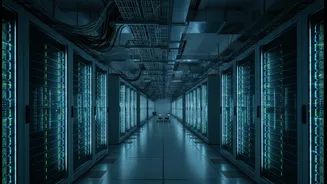
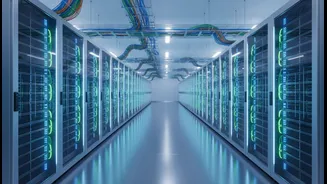
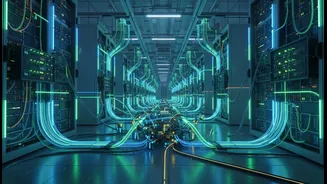
In a move that sent ripples through the tech industry, New York Governor Kathy Hochul signed an executive order for a one-year moratorium on permits for new large-scale data centres. The reason? An urgent need to assess their immense strain on the state’s
resources. Officials cited threats of soaring utility bills for residents, depletion of local water supplies, and an electrical grid struggling to keep pace with the sudden, explosive demand from facilities built to power artificial intelligence. The pause applies to 'hyperscale' centres consuming over 50 megawatts of power—equivalent to tens of thousands of homes—giving the state time to create a regulatory framework for this new industrial reality.
The Unprecedented Thirst for Power
The core of the issue is that AI isn't like other software. Training and running large language models requires specialised servers packed with power-hungry graphics processing units (GPUs). These AI-optimised racks can demand anywhere from 30 to over 100 kilowatts each, compared to just 5-15 kW for traditional server racks. This immense power density is causing a global surge in electricity demand from data centres. Gartner forecasts that data centre electricity consumption will grow 26% in 2026 alone, with AI servers driving the majority of that growth. By 2027, AI-specific hardware is expected to consume more power than all conventional servers combined. This isn't a distant problem; power availability is now the single biggest bottleneck constraining AI’s expansion globally.
More Than Just Electricity
The physical footprint of AI extends far beyond the electricity grid. These massive facilities also consume enormous quantities of water for cooling their overheated processors. A single large data centre can use millions of gallons of water per day, comparable to a small city. This is creating resource conflicts in water-scarce regions. Then there is the land itself. Hyperscale campuses can cover hundreds of acres with concrete and steel, replacing farmland or natural habitats. Furthermore, a recent UN University report highlights the often-overlooked land footprint associated with generating the power—whether from fossil fuels or renewables—and the growing challenge of e-waste from discarded servers. These combined costs are rarely borne by the tech giants, but by the local communities where these digital factories are located.
The View from India
While New York’s pause is a cautionary tale, India finds itself in a very different position: a massive build-out phase. India's data centre market is projected to more than double its capacity by 2026, fuelled by a digital-first economy, data localisation policies, and the rapid adoption of AI. This expansion, which will require an estimated Rs 50,000 crore in investment, is crucial for India's ambition to become a major player in the global digital economy. However, the challenges seen in New York are already on the horizon. While India currently holds only about 3% of global data centre capacity, the projected growth will place significant pressure on the country's power grids and water resources, particularly in existing hubs like Mumbai, Chennai, and Hyderabad. The key for India will be to balance rapid growth with sustainable infrastructure planning to avoid the very bottlenecks now stalling development in the West.