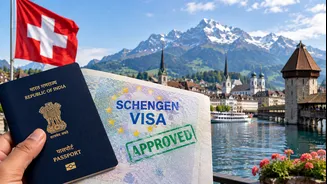








As Europe continues to capture the imagination of Indian travellers, the demand for Schengen visas has soared. Yet, the path to a European holiday is not equally smooth for all, with new data revealing a significant gap in visa approval rates across nations.
A Record Year for Indian Applicants
Indian travellers are heading to Europe in unprecedented numbers. According to the latest data from the European Commission for 2025, Indian citizens filed over 1.15 million short-stay visa applications, making India the third-largest applicant country in the world, just behind China and Türkiye. This represents a significant rise in demand, with applications growing by 29% compared to 2024 figures. The overall approval rate for Indian applicants stood at approximately 84.2%, with over 967,000 visas issued. However, this also means that more than 181,000 applications were rejected, translating to a non-issuance rate of 15.8%—slightly higher than the global average of 14.6%. This discrepancy highlights that while most applicants are successful, a significant number face disappointment and financial loss due to non-refundable fees.
The Great Divide: Which Countries Approve Most?
The 15.8% average rejection rate masks a dramatic variation between individual Schengen countries. Some nations demonstrate a significantly more welcoming stance towards Indian applicants. Among countries handling a substantial volume of applications, Denmark (6.9% refusal rate), Belgium (7.7%), and Germany (10.5%) had some of the lowest rejection rates in 2025. Italy (12.7%) and Switzerland also maintained comparatively favourable approval outcomes. For those planning a trip, it's crucial to remember the 'main destination' rule: you must apply to the country where you will spend the most nights. This means you cannot simply choose a country based on its high approval rate if your travel plans are centered elsewhere.
Where Rejection Rates Are Highest
On the other end of the spectrum, several countries have notably high visa rejection rates for Indian passport holders. In 2025, Slovenia had the highest refusal rate at a staggering 46.1%, meaning nearly one in every two applications was denied. Other countries with challenging approval odds included Bulgaria (37%), Greece (33%), Malta (31.7%), and Estonia (30.1%). Even popular destinations like the Netherlands (20.6%) and Austria (21.6%) had refusal rates well above the average. The high rate for Greece is particularly noteworthy, given its popularity as a tourist destination. The country received over 41,000 applications from India but rejected more than 13,500 of them. Interestingly, outcomes can also vary by the consulate's location within India; in 2025, refusal rates were just 8.1% in Bangalore and 10.6% in Mumbai, compared to 18.6% in New Delhi.
Common Reasons for Visa Denial
Understanding why applications are rejected is key to improving your chances. The most common reasons are often avoidable and relate to the quality and consistency of the documentation provided. Insufficient proof of funds is a major factor; this isn't just about having a low balance, but also about suspicious patterns like a large, sudden deposit just before applying. Another critical reason is failing to establish a clear 'intent to return' to India. This is particularly scrutinized for young, unmarried applicants with short work histories. Other frequent pitfalls include an illogical travel itinerary, inconsistencies across documents (e.g., mismatched dates on flight bookings and hotel reservations), invalid travel insurance, and applying to the wrong embassy. A well-prepared application tells a clear, consistent, and credible story about your trip.
Crafting a Stronger Application
To navigate this uneven landscape, a meticulous approach is essential. Start by ensuring your finances are in order for at least three to six months prior to your application, showing a stable income stream rather than last-minute fund transfers. Your cover letter should clearly and concisely state the purpose of your trip. Build a strong case for your 'ties to home' by providing sanctioned leave letters from your employer, evidence of property ownership, and family commitments. Double-check every detail: your travel insurance must cover the entire duration of your stay for at least €30,000, and your passport must have at least three months of validity beyond your intended return date. Finally, ensure your itinerary is logical and all your bookings—flights, hotels, and internal travel—are confirmed and consistent across all documents.