





A Queen's Devotion
The most famous tale associated with Karwa Chauth is that of the beautiful Queen Veeravati. She was the adored only sister to seven doting brothers. Following her marriage to a king, she returned to her parents' home to observe her very first Karwa Chauth.
As per tradition, she began a strict 'nirjala' fast at sunrise, abstaining from all food and water, with the intention of praying for her husband's long life and well-being.
A Deceptive Moonrise
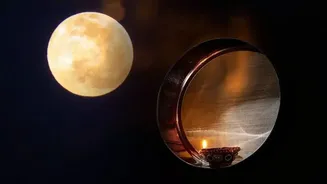
Veeravati was steadfast in her observance, but as evening fell, she grew faint with severe hunger and thirst. Seeing their beloved sister in such distress, her seven brothers were pained. They couldn't bear to watch her suffer while waiting for the real moon to appear. In an act of love, they devised a plan to trick her. They climbed a pipal tree and created an illusion using a mirror and a lamp, making it seem as though the moon had risen in the sky. An unsuspecting Veeravati believed them, offered her prayers to the false moon, and broke her fast.
The Tragic Consequence
The moment the queen took her first bite of food, ill news arrived. A messenger informed her that her husband, the king, had suddenly died. Heartbroken and inconsolable, Veeravati understood that this tragedy was a direct result of her prematurely broken fast. She immediately set out for her husband's kingdom. Her grief was immense, and she wept throughout the journey, blaming herself for the catastrophe.
Divine Guidance and Redemption
On her way, she encountered Goddess Parvati, who, along with Lord Shiva, appeared before the grieving queen. The Goddess explained the truth: her husband had died because she had broken her fast after seeing a false moon created by her brothers. Veeravati begged for forgiveness and a way to bring her husband back. Taking pity on her sincere remorse and devotion, the Goddess advised her on the path to redemption. She instructed Veeravati to observe the Karwa Chauth fast again, this time with absolute adherence to all the rituals, to undo the damage and revive her husband.
A Test of Faith
In some versions of the tale, Veeravati found her husband alive but unconscious, his body pierced with countless needles. Over the next year, she diligently cared for him, removing one needle each day. In other versions, she was required to observe a series of fasts with unwavering dedication. Finally, on the next Karwa Chauth, having proven her steadfast devotion, she completed the fast correctly. When the true moon rose, she performed the rituals without error. Seeing her dedication, Yama, the god of death, restored her husband's life. Her unwavering faith and perseverance had triumphed over fate.
The Legend's Legacy in Modern Rituals
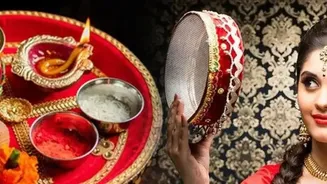
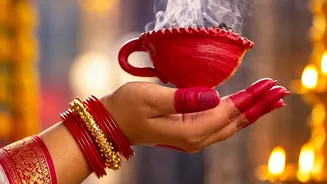
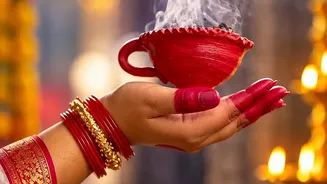
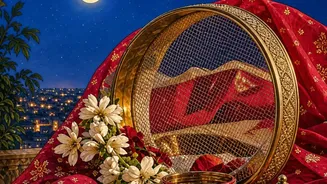
The story of Veeravati is not just a tale; it is the spiritual blueprint for the Karwa Chauth rituals. It serves as a lesson on the importance of patience and sincere faith. The practice of looking at the moon through a sieve ('chalni') is said to symbolize the need to distinguish the true moon from a false one, just as Veeravati learned to do. The evening puja, where women gather to hear the 'vrat katha' or story of the fast, directly involves recounting Veeravati's journey, reinforcing the values of devotion and the sanctity of the ritual. The story powerfully explains why the fast must only be broken after a genuine moonrise, embedding a lesson of caution and piety into this profound expression of love.