






Understanding Movement Isolation
Movement isolation, sometimes called motion transfer, refers to a mattress's ability to absorb movement in one area rather than spreading it across the entire surface. A mattress with good motion isolation ensures that when one person moves, the other
person feels little to no disturbance. This is a critical feature for couples, light sleepers, or anyone who shares their bed with a pet. For spring mattresses, the key to motion isolation lies in how the individual steel coils are connected—or not connected—to each other.
Bonnell Coils: The Traditional Choice
Bonnell coils are the oldest and most traditional type of innerspring. They have a distinct hourglass shape and are linked together by a network of small helical wires, forming a single, interconnected unit. While this design makes for a durable and often budget-friendly mattress, it comes with a significant trade-off: high motion transfer. Because every spring is tied to its neighbors, movement on one side of the bed creates a ripple effect that travels across the entire surface, making it a less-than-ideal choice for those who are easily disturbed.
Offset Coils: A Quieter Alternative
Offset coils represent an evolution of the Bonnell design. They also feature an hourglass shape, but the tops and bottoms are squared-off, creating a hinge-like effect when connected. This small change allows the coils to flex more independently than Bonnell coils when pressure is applied. As a result, they offer better contouring to the body and reduce motion transfer more effectively than their predecessors. While still connected, this design provides a quieter and more responsive sleep surface, often found in mid-range mattresses.
Continuous Coils: The Durable Web
As the name suggests, a continuous coil system is constructed from a single, long piece of steel wire that is shaped into rows of coils. This interconnected web creates an exceptionally firm and durable support structure. However, similar to Bonnell coils, the linked design means that motion is easily transferred across the mattress. Although they are a cost-effective and long-lasting option, they are not recommended for couples or light sleepers who prioritize motion isolation.
Pocketed Coils: The Gold Standard for Isolation
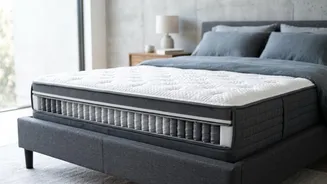
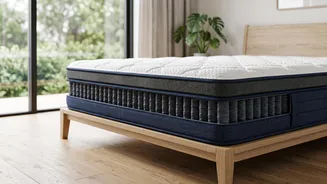
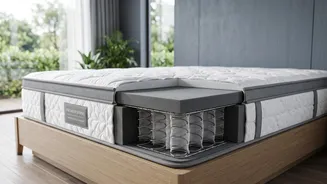
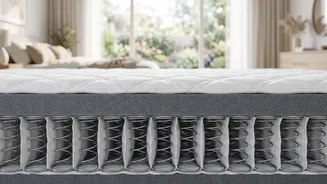
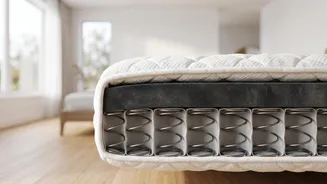
For those seeking the best motion isolation a spring mattress can offer, pocketed coils are the clear winner. Unlike other designs, each coil is individually encased in its own fabric sleeve or 'pocket'. These coils are not directly connected to each other, allowing them to move independently. When you move, only the springs directly beneath you compress, effectively absorbing the impact and preventing it from disturbing your partner. This modern design is the hallmark of most hybrid and premium innerspring mattresses.
Beyond the Coils: What Else Matters?
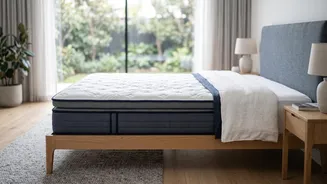
While the coil system is the primary driver of motion isolation in a spring mattress, it's not the only factor. The comfort layers—the materials like foam, latex, or padding that sit on top of the springs—also play a crucial role. Thicker comfort layers can help absorb some of the residual movement that might make it through the coil system. A hybrid mattress, which combines a pocketed coil support core with substantial foam layers, is often considered an excellent compromise, delivering both the support of springs and the motion-absorbing properties of foam.