




First, The Unchanging Reality
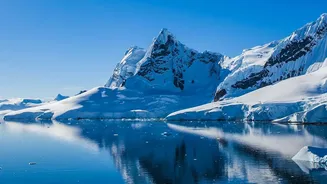
Before diving into the specifics of this new finding, it’s crucial to establish the baseline: Antarctica is losing ice at an alarming rate. Over the past two decades, the continent has shed an average of about 140 billion tons of ice per year. This isn't
a debate; it's a measured reality confirmed by years of satellite data. This massive loss of land-based ice is a primary contributor to global sea-level rise, a trend that continues to accelerate and poses a significant threat to coastal communities worldwide, including in India. The vast majority of Antarctica's coastline has been stable, but concentrated melting in West Antarctica and parts of the East has led to a significant loss of grounded ice over the past 30 years.
A Surprising Turn of Events
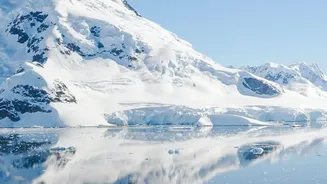
A recent study has uncovered a remarkable, short-term reversal of this trend. Between 2021 and 2023, the Antarctic Ice Sheet experienced a net mass gain of approximately 695 billion tons. This surprising gain was significant enough to temporarily slow the continent's overall contribution to sea-level rise. The growth wasn't uniform but was heavily concentrated in East Antarctica, a region that is typically more stable than the rapidly melting West. This finding doesn't negate the long-term melting trend, but it does highlight the complex and sometimes counterintuitive forces at play in our planet's climate system.
The Cause: A Ripple Effect From The Tropics
So, what caused this sudden ice gain? The answer, surprisingly, lies thousands of kilometres away in the warm waters of the tropical oceans. Scientists discovered that a persistent patch of unusually warm ocean water in the tropical Pacific and Indian Oceans set off a chain reaction in the atmosphere. This warming generated large-scale atmospheric waves, known as a Rossby wave train, which travelled towards the South Pole. This wave altered air circulation patterns, funnelling an immense amount of moisture toward East Antarctica and causing exceptionally heavy snowfall. In essence, a warming event in one part of the world led to a massive pile-up of snow and ice in another.
Land Ice vs. Sea Ice: An Important Distinction
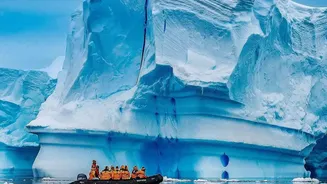
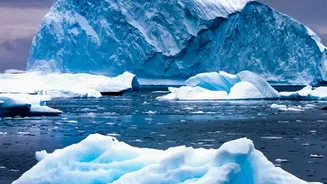
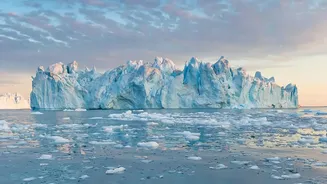
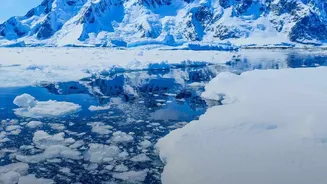
To understand the full context, it's vital to differentiate between land ice and sea ice. Land ice, found in ice sheets and glaciers, is formed from compacted snow that accumulates on land over thousands of years. When it melts and flows into the ocean, it adds new water, directly causing sea levels to rise. Sea ice, on the other hand, is simply frozen ocean water. It forms in the winter and mostly melts in the summer. Because it's already floating in the ocean, its melting doesn't significantly affect sea levels, much like a melting ice cube doesn't cause a glass of water to overflow. The recent gain in Antarctica was due to snowfall adding to the land ice sheet, not an expansion of sea ice.
Why The Long-Term Trend Is Still A Concern
Researchers are clear that this two-year gain is a temporary anomaly and does not signal a long-term recovery for the continent. The underlying drivers of ice loss—namely, warming ocean waters melting the ice shelves from below—have not stopped. In fact, some data suggests that while snowfall increased, the rate of ice loss from glaciers calving into the ocean also increased. The study highlights the powerful influence of natural variability within the broader trend of climate change. While this event provided a temporary reprieve, the fundamental physics of a warming planet mean that the overall trajectory for Antarctica remains one of accelerating ice loss. The West Antarctic Ice Sheet, in particular, continues to lose mass at a worrying rate.
The View From India
Events in a frozen continent thousands of kilometres away have direct consequences for India. The melting of Antarctica's land ice is a major driver of global sea-level rise. With a vast coastline and several low-lying megacities like Mumbai, Kolkata, and Chennai, India is extremely vulnerable to this threat. Rising seas lead to increased flooding, contamination of freshwater sources with saltwater, and damage to critical infrastructure. While a temporary gain from snowfall is a fascinating scientific event, the bigger picture of melting ice sheets remains a critical issue for India's future, reinforcing the urgent need to understand and address global climate dynamics.