




India's Answer to GPS
NavIC, which stands for Navigation with Indian Constellation, is the operational name for the Indian Regional Navigation Satellite System (IRNSS). Developed and operated by the Indian Space Research Organisation (ISRO), it was born from a crucial strategic
need: to give India its own independent eye in the sky. For decades, India, like most of the world, relied on foreign-owned systems like the US Global Positioning System (GPS). This dependency became a glaring vulnerability during the 1999 Kargil War, when access to precise location data was not guaranteed. NavIC was conceived to end this reliance. The system is designed to provide accurate real-time positioning and timing services across India and a region extending roughly 1,500 kilometres beyond its borders. Unlike GPS, which is global, NavIC is a regional system tailored specifically to the nation's strategic and civilian needs.
A Constellation in Crisis
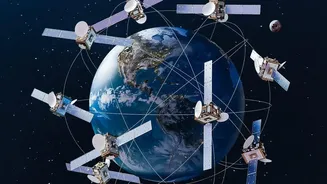
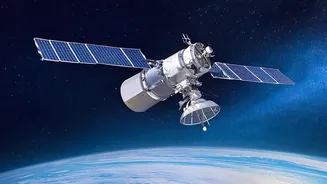
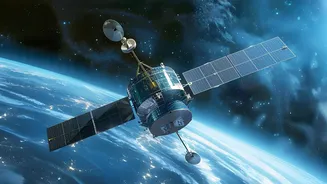
A navigation system requires a minimum of four operational satellites to provide accurate positioning data. As of mid-2026, India's NavIC constellation has fallen below this crucial threshold, with only three satellites remaining fully functional for positioning services. The original constellation, comprising a series of IRNSS satellites launched between 2013 and 2018, has been plagued by a critical flaw. Many of these first-generation satellites have suffered premature failures of their imported rubidium atomic clocks—the ultra-precise timekeepers that are the heart of any navigation satellite. An error of even a microsecond can throw off a position calculation by hundreds of metres. With several satellites past their ten-year mission life and their essential components failing, the network's ability to provide standalone navigation has been compromised, leaving the system in a precarious state.
The Next-Generation Saviour
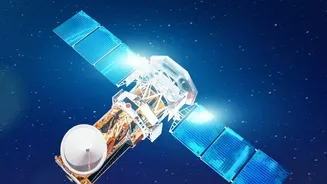
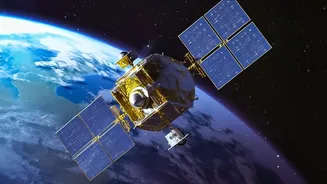
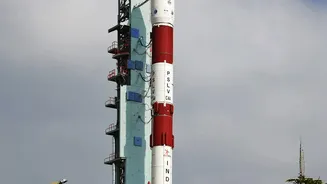
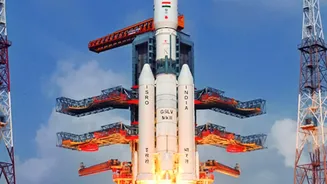
The upcoming launch of NVS-03 is a make-or-break moment for the NavIC system. It is the next satellite in the new NVS (Navigation Satellite) series, designed specifically to replace the ageing first-generation fleet and fix its core problems. The most significant upgrade in the NVS series is the inclusion of an indigenously developed rubidium atomic clock. This is a monumental step towards true self-reliance, directly addressing the key failure point of the earlier satellites. Furthermore, the NVS satellites are designed for a longer mission life of at least 12 years. They also broadcast on the L1 frequency band, which is the most common band used by civilian GPS devices and smartphones worldwide. This addition is crucial for accelerating the mass-market adoption of NavIC, making it easier for manufacturers to integrate it into consumer products.
More Than Just Maps
The importance of a fully functional NavIC system extends far beyond turn-by-turn directions on a smartphone. It is a dual-use technology critical for both national security and economic development. For the armed forces, NavIC provides an encrypted, secure signal for navigating ships, guiding missiles, and coordinating troop movements without the risk of a foreign power denying access during a conflict. This strategic autonomy is non-negotiable for a regional power. In the civilian domain, NavIC's applications are vast. It is essential for disaster management, providing early warnings to fishermen and coordinating relief efforts in areas without terrestrial communication. It enables precise vehicle tracking for the logistics industry, improves the efficiency of the power grid through accurate time-stamping, and supports a host of location-based services that are fundamental to a modern digital economy.
Rebuilding for a Self-Reliant Future
NVS-03 is not just a single launch; it represents the beginning of a systematic effort to rebuild and strengthen the entire NavIC constellation. According to government statements, following NVS-03, two more satellites—NVS-04 and NVS-05—are already in advanced stages of production. This steady pipeline of launches is essential to restore the network to its full complement of at least seven satellites and ensure it remains robust for decades. The failure of the first-generation clocks provided a hard-earned lesson in the complexities of building and maintaining a strategic space asset. The successful deployment of the NVS series, beginning with NVS-01 and now the critical NVS-03, will prove India's ability to learn, innovate, and secure its long-term interests in space, cementing NavIC's role as a cornerstone of the 'Aatmanirbhar Bharat' vision.