





The Allure of the 'Clean' Container
For any business handling food—from restaurants and caterers to packaged goods manufacturers—efficiency and cost-effectiveness are paramount. It can be tempting to purchase bulk containers that appear clean, clear, and perfectly suitable for storing ingredients
or packaging products. The assumption is that if a container is new, it must be safe. However, this overlooks a crucial aspect of food safety: not all plastics and materials are designed to come into contact with food. Industrial-grade plastics, decorative containers, or those intended for general storage may look identical to their food-safe counterparts but can pose significant health risks to consumers.
The Hidden Danger: Chemical Migration
The primary risk of using non-food-grade containers is chemical migration. Many plastics contain chemicals to make them flexible, hard, or durable. When these plastics are not specifically manufactured for food contact, these chemicals can leach into the food they are holding. This process can be accelerated by heat, acidity, or fats in the food. Chemicals like phthalates and bisphenol A (BPA) have been linked to health concerns, including endocrine disruption. While many manufacturers have moved towards BPA-free materials, other potentially harmful additives can still be present in plastics not intended for food. These containers have not been tested to ensure they are inert, meaning they won't transfer any substances to the food.
How to Identify Food-Safe Containers
Fortunately, there are clear indicators to help businesses verify if a container is food-safe. In India, food packaging is regulated by the Food Safety and Standards Authority of India (FSSAI). Globally, several symbols are used. The most important one to look for is the international 'food safe' symbol, which features a wine glass and a fork. This icon certifies that the material is intended for food contact. Additionally, it's wise to understand plastic resin identification codes—the numbers inside the recycling triangles. Plastics marked with 2 (HDPE), 4 (LDPE), and 5 (PP) are generally considered safe for food use. Polypropylene (PP, number 5) is often used for containers that hold hot food or are microwaveable because of its high melting point. Always look for a 'microwave-safe' symbol (often wavy lines) before heating food in any plastic container.
FSSAI Regulations and Business Responsibility
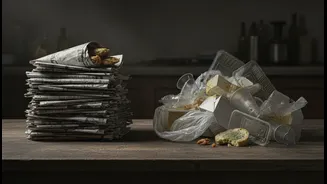
In India, FSSAI regulations are explicit: any material that comes into direct contact with food must be food-grade and not cause the food to become unsafe. This includes primary packaging, storage containers in kitchens, and delivery packaging. FSSAI specifically prohibits the use of newspaper for wrapping or serving food due to the risk of ink leaching heavy metals. The regulations also extend to printing inks on packaging, which must be non-toxic. As a business, the responsibility lies with you to source and use compliant materials. This involves working with reputable suppliers who can provide documentation certifying that their products meet FSSAI and Bureau of Indian Standards (BIS) norms for food contact materials.
Beyond Plastic: Other Materials
While plastic is a major focus, the principle of using food-grade materials applies to everything. Glass and stainless steel are generally considered inert and safe for food contact. When choosing paper or paperboard products, ensure they are food-grade and not made from recycled materials that could contain ink residues or other contaminants, unless certified for food use. The recent FSSAI regulations have started allowing certain types of recycled plastics, but only if they meet extremely strict safety and processing standards. For most businesses, sticking to virgin food-grade materials or certified recycled materials from a trusted supplier remains the safest path.