






Bengaluru Takes Centre Stage
The International Conference on Spacecraft Mission Operations (SMOPS-2026) brought the global space community to Bengaluru in April. Jointly organised by the Indian Space Research Organisation (ISRO), the Astronautical Society of India (ASI), and the International Academy
of Astronautics, the event was a clear signal of India’s rising prominence in the space sector. The theme, “Innovative Operations for Smart and Sustainable Space Mission Management,” moved beyond the glamour of exploration to focus on the essential, long-term task of keeping our space-based infrastructure functional, safe, and efficient. Experts from NASA, ESA, and other leading agencies gathered to discuss everything from managing large satellite constellations to using AI for autonomous operations.
Life After Launch: The Real Mission Begins
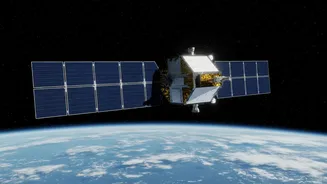
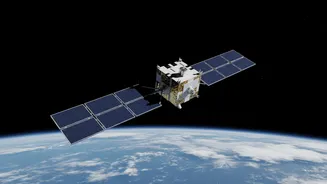
Launching a satellite is just the first step of its journey. Space operations encompass everything that happens next. For the entirety of a satellite’s life—which can be 15 years or more—teams on the ground must continuously monitor its health, maintain its orbit, command its systems, and ensure it delivers the data we rely on. This is the behind-the-scenes work that powers everything from the GPS in our phones and weather forecasts on our screens to secure military communications and financial transactions. As ISRO Chairman V. Narayanan noted at the conference, these mission operations are crucial, especially for the long-duration missions that are becoming the norm. It’s a constant, complex process of management that makes modern life possible.
The Challenge of Crowded Skies
A major reason for this new focus is that space is becoming dangerously crowded. Low Earth Orbit is now home to thousands of active satellites, but also tens of thousands of pieces of trackable space debris—defunct satellites, spent rocket stages, and fragments from past collisions. These objects travel at hyper-velocities, where a collision with even a small piece of junk can be catastrophic. The rapid deployment of “mega-constellations” by companies like SpaceX, which involve thousands of new satellites, adds another layer of complexity, increasing the risk of orbital traffic jams. This new reality has made Space Situational Awareness (SSA)—the ability to track and predict the movement of all objects in orbit—one of the most critical challenges in space today.
India’s Answer: Project NETRA
India is tackling this challenge head-on with Project NETRA (NEtwork for space object TRacking and Analysis). This ISRO initiative is an indigenous early warning system designed to detect and track debris and other hazards to India’s space assets. From its control centre in Bengaluru, NETRA integrates data from radars and optical telescopes to monitor objects as small as 10 centimetres, giving India the independent ability to protect its fleet of over 50 crucial satellites. Before NETRA, India relied heavily on data from foreign agencies. Now, it has a sovereign capability that not only safeguards its own assets but also enhances its stature as a responsible space power committed to sustainable operations.
The New Frontier for Jobs and Innovation
The growing emphasis on mission operations is creating a new economic frontier. This sector is no longer just for government agencies; it's a burgeoning industry for startups and tech professionals. The efficient management of satellite constellations requires cutting-edge software, robust cybersecurity, and advanced data analytics. A key topic at SMOPS-2026 was the pivotal role of Artificial Intelligence and Machine Learning in automating operations and enabling human-machine synergy, a technology ISRO successfully used in its Chandrayaan-3 mission. This shift is creating demand for skilled engineers and data scientists in India, cementing Bengaluru’s status as a hub for both space technology and software innovation.