


The Science of the Strand
The core difference between hair types begins at the follicle. Straight hair tends to grow from round follicles, while curly and coily hair emerges from oval or asymmetrical ones. This fundamental geometry dictates the shape of the hair strand itself.
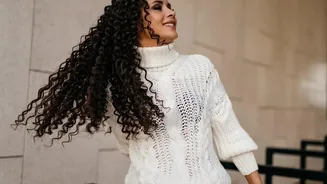
Straight hair is cylindrical, whereas curly hair is more elliptical and flattened. This isn't just a matter of appearance; it affects the hair's structure. The bends in a curl create stress points where the outer protective layer, the cuticle, is slightly lifted. Think of it like shingles on a roof; on straight hair, they lie flat, but on curly hair, they're often raised at the curves. This makes curly hair inherently more porous and prone to moisture loss.
The Journey of Natural Oils
Your scalp produces a natural conditioner called sebum, which is designed to protect and lubricate your hair. On straight hair, that sebum has a direct, easy path from the root to the tip. Like a smooth slide, the oil glides down the hair shaft, coating it evenly. This is why straight hair can appear oily more quickly. For wavy, curly, and coily hair, the journey is much more difficult. Every twist and turn acts as a roadblock, slowing down the distribution of sebum. As a result, natural oils often don't make it to the mid-lengths and ends, leaving them dry and in need of external moisture, even when the scalp is producing oil normally.
Porosity: The Deciding Factor
Beyond texture, your hair's porosity—its ability to absorb and retain moisture—is a crucial piece of the puzzle. Porosity is determined by how tightly the cuticle scales on the hair shaft are packed together. Low porosity hair has tightly bound cuticles, making it difficult for water and oils to penetrate. Products might feel like they're just sitting on top of the hair. High porosity hair, common in curly and damaged types, has more open cuticles. It absorbs moisture and oils quickly but also loses them just as fast, leading to dryness and frizz. This is why two people with curly hair might have very different results with the same oil; their porosity levels could be completely different.
Oils for Coarse and Curly Hair
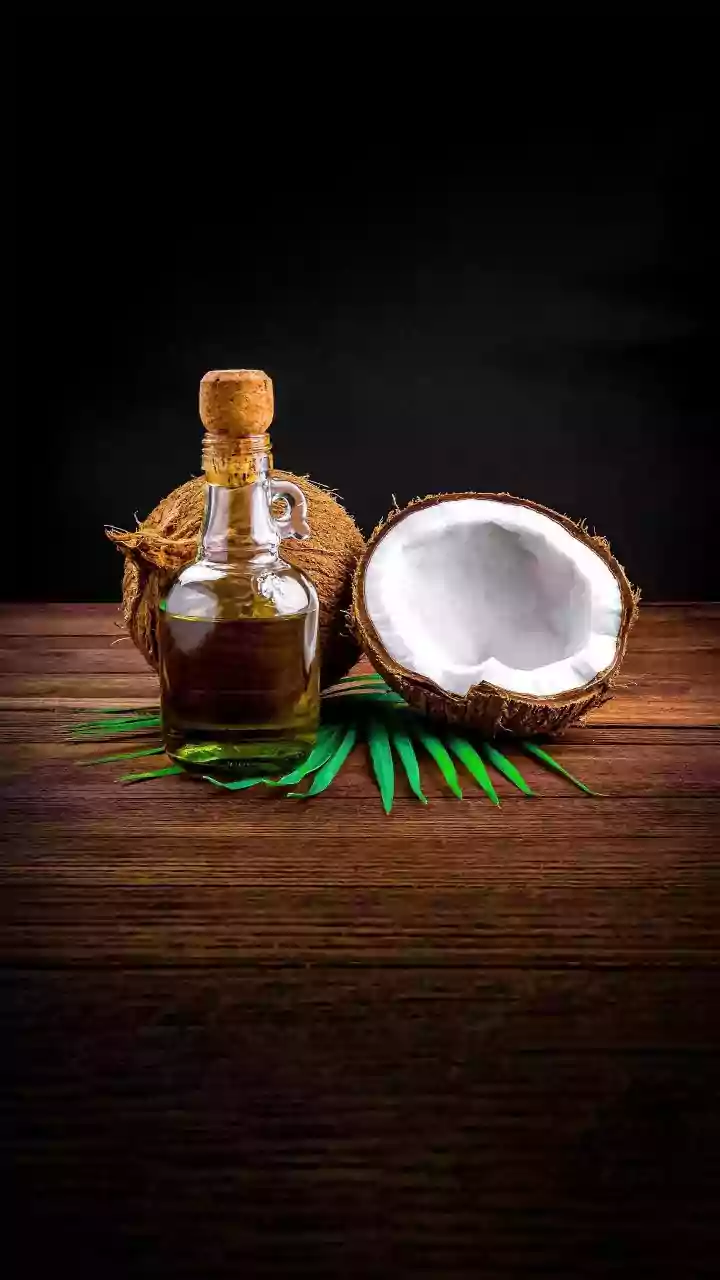
Thicker, coarser, and curlier hair types generally need more help with hydration and can handle heavier oils that seal in moisture. Because this hair type is often higher in porosity, it benefits from oils that can both penetrate the hair shaft and create a protective outer layer. Richer oils like castor oil, coconut oil, and avocado oil are excellent choices. Coconut oil is known for its ability to penetrate the hair shaft and prevent protein loss, making hair more resilient. Castor oil is extremely thick and acts as a sealant, locking in moisture applied from leave-in conditioners or water. These heavier oils help to combat the natural dryness of curls by supplementing the sebum that struggles to travel down the hair shaft.
A Lighter Touch for Fine and Straight Hair
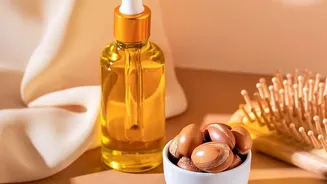
If you have fine or straight hair, the goal is to add shine and reduce frizz without weighing your hair down. Since natural oils already travel efficiently, heavy oils can quickly lead to a greasy, flat appearance. Lightweight oils are the best option. Argan oil is a popular choice because it's nourishing yet light, adding shine without heaviness. Grapeseed and jojoba oils are also fantastic, as they are very light and can help balance the scalp. Jojoba oil is particularly interesting because its molecular structure is very similar to the scalp's natural sebum, making it great for moisturizing without creating excess oiliness.
Application Is Everything
How you apply oil is just as important as which oil you choose. For fine, straight hair, it's best to use a very small amount—just a drop or two—and focus exclusively on the mid-lengths and ends to avoid greasy roots. For coarse and curly hair, oils can be used more generously. Many with curly hair find success with the LOC (Liquid, Oil, Cream) or LCO (Liquid, Cream, Oil) methods, where oil is layered with water-based products to seal in hydration. Applying oil after a leave-in conditioner on damp hair can help lock in moisture and define curl patterns. For all hair types, starting with a small amount and adding more as needed is the best way to avoid overuse.