






A Message Across Time and Space
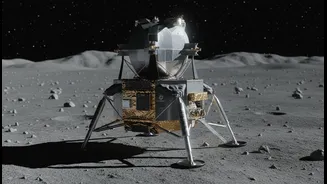
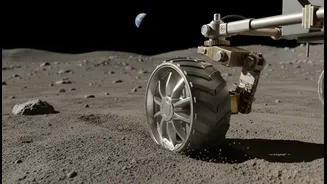
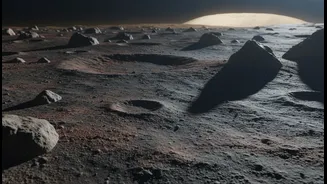
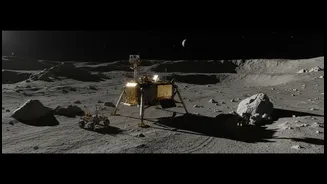
When the Pragyan rover rolled onto the lunar surface in August 2023, it wasn't just exploring new ground; it was digging into a 4.5-billion-year-old history book. Recent analysis of the data sent back by its instruments has unveiled a stunning connection.
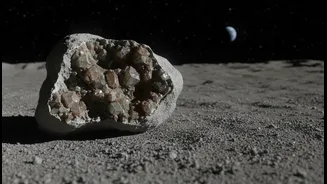
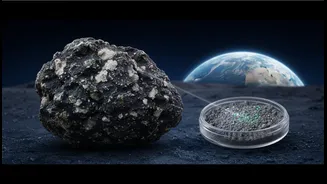
Scientists at India's Physical Research Laboratory (PRL) in Ahmedabad have discovered that the soil at Shiv Shakti Station has a chemical fingerprint that is an incredibly close match to a famous meteorite found on Earth. This isn't just any space rock; it’s a piece of the Moon that was blasted into space and eventually landed in Antarctica. The finding provides a crucial link between a specific, known location on the Moon and the lunar samples that fall to Earth, opening new windows into our satellite's turbulent past.
The Antarctic Connection
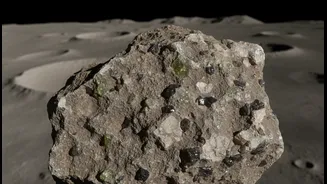
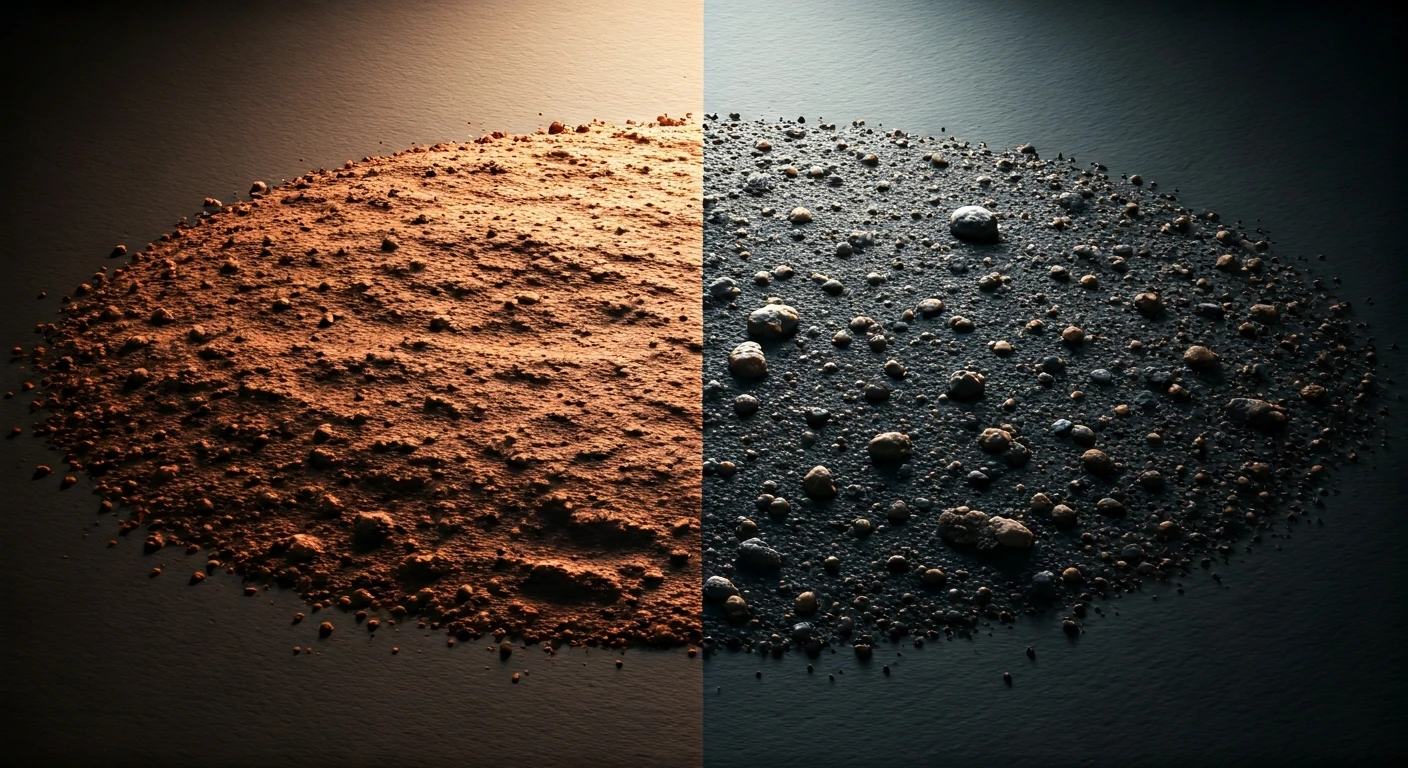
The meteorite in question is known as ALHA 81005. It was discovered in the Allan Hills region of Antarctica back in 1982 and holds the distinction of being the very first rock from Earth confirmed to have originated from the Moon. For decades, scientists have studied it, but without knowing exactly where on the Moon it came from. The data from Chandrayaan-3's Alpha Particle X-ray Spectrometer (APXS) has changed that. The analysis showed the soil at the landing site is lower in aluminium and richer in iron and magnesium than typical lunar highland areas. This unusual composition is almost identical to that of ALHA 81005. While this doesn't mean the meteorite was launched from the exact spot where Pragyan roved, it proves that both samples represent the same rare and ancient type of lunar crust.
Echoes of a Violent Creation
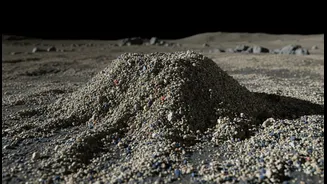
So why is this soil composition so special? Scientists believe it’s a direct result of one of the most violent events in the solar system's history: the formation of the South Pole-Aitken basin. This is one of the largest and oldest impact craters known, a colossal scar over 2,500 kilometres in diameter. The Chandrayaan-3 landing site is located about 350 kilometres away from this basin. The theory is that the gigantic impact that created the basin billions of years ago was powerful enough to excavate material from deep within the Moon's crust and even its upper mantle, flinging it across the surrounding landscape. The soil at Shiv Shakti Station is therefore not just surface dust; it is a mixture containing pieces of the Moon’s deeper layers, giving scientists a glimpse of what lies far beneath the surface without having to drill.
Rewriting the Moon's Story
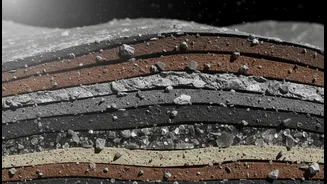
This discovery provides powerful new evidence for a long-held theory known as the 'Lunar Magma Ocean' hypothesis. This idea suggests that when the Moon first formed, it was a searing ball of molten rock. As this massive magma ocean slowly cooled, lighter minerals floated to the top to form the initial crust, while heavier materials like iron and magnesium-rich minerals sank. The material found at Shiv Shakti, which is rich in these heavier elements, supports the idea that ancient impacts dredged up this primordial, deep-seated material. For India, this finding is a monumental achievement. It moves beyond the engineering triumph of the landing itself and establishes Chandrayaan-3 as a mission of profound scientific importance. The data provides a vital 'ground truth' that helps calibrate instruments and interpret data from orbital missions, fundamentally improving our map of lunar resources and geology.