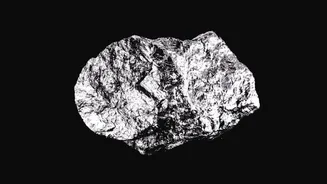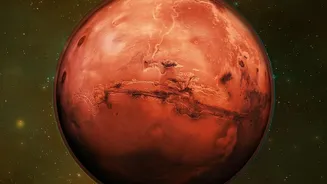

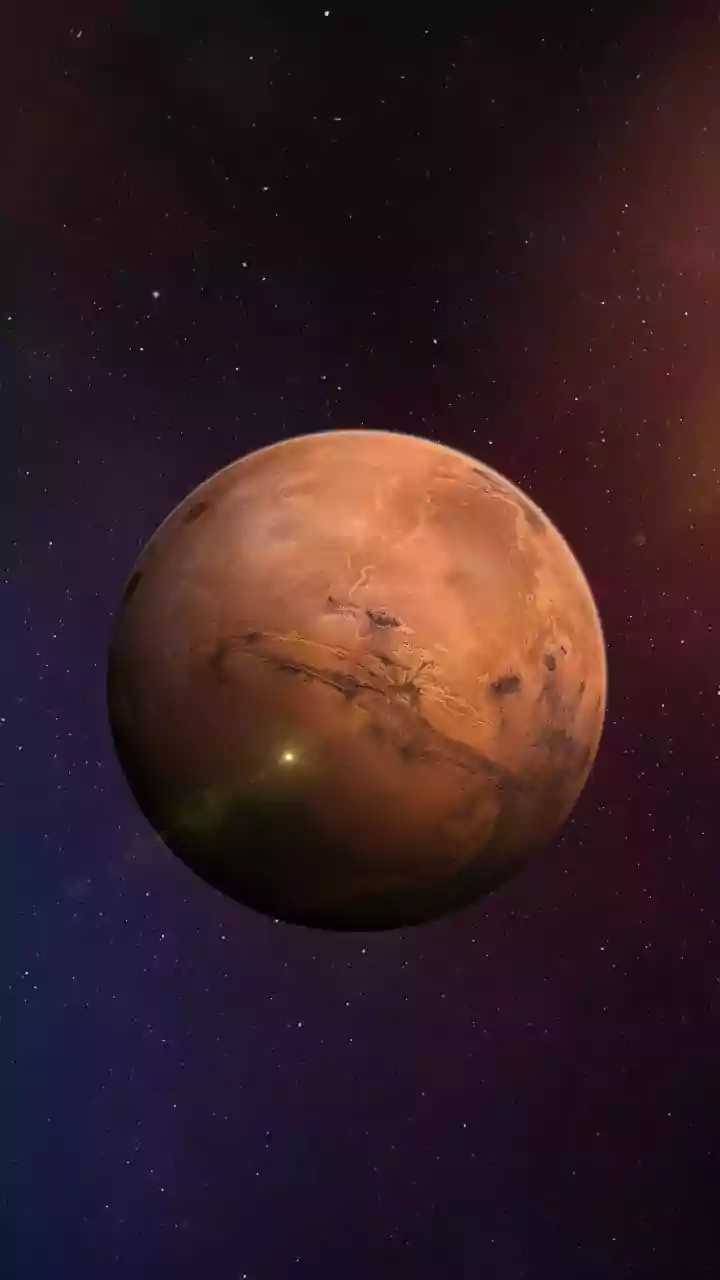
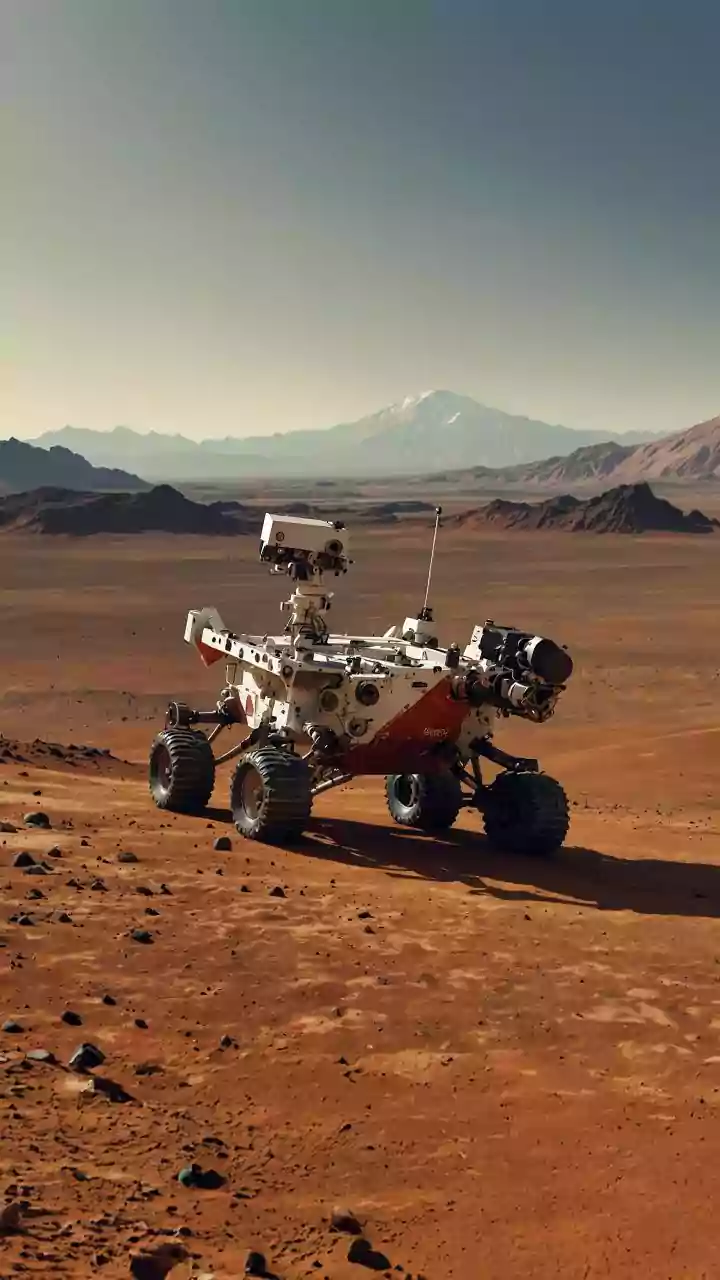
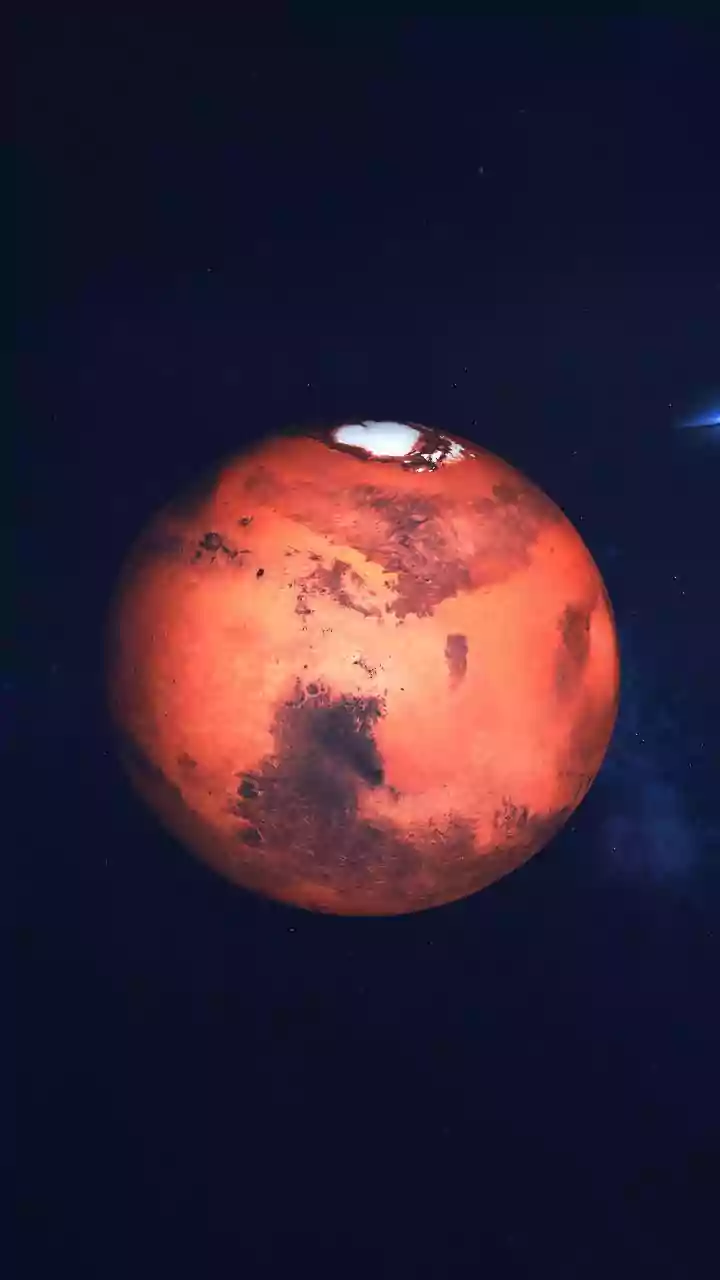


Imagine holding a piece of another world in your hand. That's the reality for scientists studying Teghaza 001, a remarkable rock that travelled millions of kilometres from Mars to Earth, carrying secrets of our planetary neighbour's ancient past.
A Rose-Coloured Stone in the Sand
In 2022,
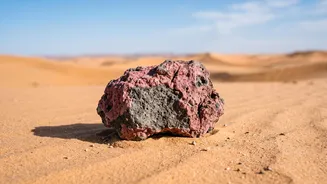
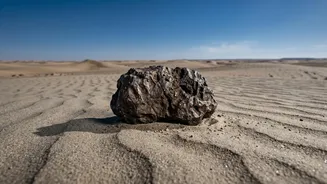
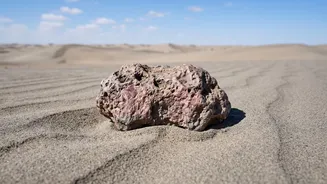
a striking, rose-coloured rock weighing about 800 grams was discovered in the vast expanse of the Sahara Desert in Mali. This was no ordinary stone. Found on the Teghaza salt plain, it was given the designation Teghaza 001. Deserts and polar ice sheets are prime hunting grounds for meteorites, as the barren landscapes make it easier to spot these extraterrestrial visitors. Initial analysis quickly suggested this was something special. While meteorite collectors and scientists find thousands of rocks from space, only a tiny fraction—less than half a percent—are confirmed to have come from Mars. Teghaza 001 would soon join this very exclusive club, but it turned out to be far more significant than just another Martian rock.
The Unmistakable Martian Fingerprint
So, how can scientists be certain a rock fell from Mars? The proof lies in the chemistry. In the 1970s, NASA's Viking landers directly measured the composition of the thin Martian atmosphere. Years later, scientists discovered that some rare meteorites on Earth contained tiny pockets of trapped gas. When analysed, the composition of these gases was a perfect match for the atmospheric data sent back by Viking. This became the 'smoking gun' for identifying Martian meteorites. Teghaza 001 was confirmed as Martian through a similar method involving oxygen isotopes, which act as a geochemical fingerprint unique to a planetary body. Its specific isotopic signature linked it directly to the family of rocks originating from the Red Planet.
A Violent, Billion-Year Journey
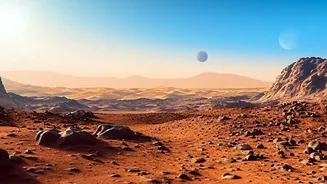
The story of Teghaza 001's journey is one of cosmic violence and incredible luck. Millions, or even billions, of years ago, a massive asteroid or comet slammed into the surface of Mars. The impact was so powerful that it blasted chunks of the Martian crust into space with enough force to escape the planet's gravity. These fragments then entered their own orbits around the Sun, drifting through the solar system for eons. Eventually, the path of this particular rock intersected with Earth's orbit, and our planet's stronger gravity pulled it in. Surviving a fiery descent through our atmosphere, it landed in what is now the Sahara Desert, waiting to be discovered.
A 'Rosetta Stone' for Ancient Mars
What makes Teghaza 001 so important is its incredible age. Scientific analysis revealed the rock formed more than 4.1 billion years ago, making it one of the oldest Martian meteorites ever found. One researcher even called it a 'Rosetta Stone' for understanding early Mars. It belongs to a class of volcanic rocks known as shergottites, named after the Shergotty meteorite that fell in Bihar, India, in 1865. However, unlike most other Martian meteorites which are much younger, Teghaza 001 provides a rare snapshot of the planet's primordial crust. It contains a mix of igneous minerals that tell a story of how the planet’s crust first formed from cooling magma, and was later altered by subsurface water, providing clues to a more dynamic water cycle on early Mars than previously thought.
Clues to a Watery Past
Perhaps most excitingly, Teghaza 001 contains evidence that it interacted with liquid water around 4.1 billion years ago. This suggests water was present and active on Mars very early in its history. Scientists matched the meteorite’s mineralogy to data from NASA's Mars Reconnaissance Orbiter, identifying potential source craters in the planet's heavily cratered southern highlands—one of the oldest surfaces on Mars. Studying this rock is the next best thing to a sample_return mission. It gives scientists a physical piece of Mars' ancient, and possibly water_rich, past to analyze in laboratories on Earth, helping us understand why Mars became a cold, dry desert while our own planet remained a vibrant, water_filled world.