






A Cosmic Crime Scene Investigation
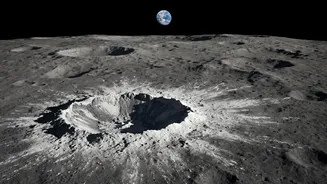
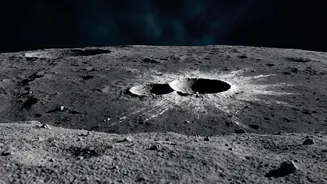
NASA's Lunar Reconnaissance Orbiter (LRO) played the role of a celestial detective, capturing definitive before-and-after images of the Moon's surface. The photos, taken between August 11 and 12, 2026, reveal a fresh crater, estimated to be about 60 feet
(18 meters) wide. The impact occurred on August 5, 2026, near a feature known as Einstein Crater. Finding the site was a collaborative effort. Independent astronomers first predicted the impact, and their calculations were refined by NASA. South Korea’s Danuri lunar orbiter was the first to spot the darkened patch, providing crucial coordinates that helped the LRO team pinpoint their target.
The Long, Chaotic Journey of a Rocket Stage
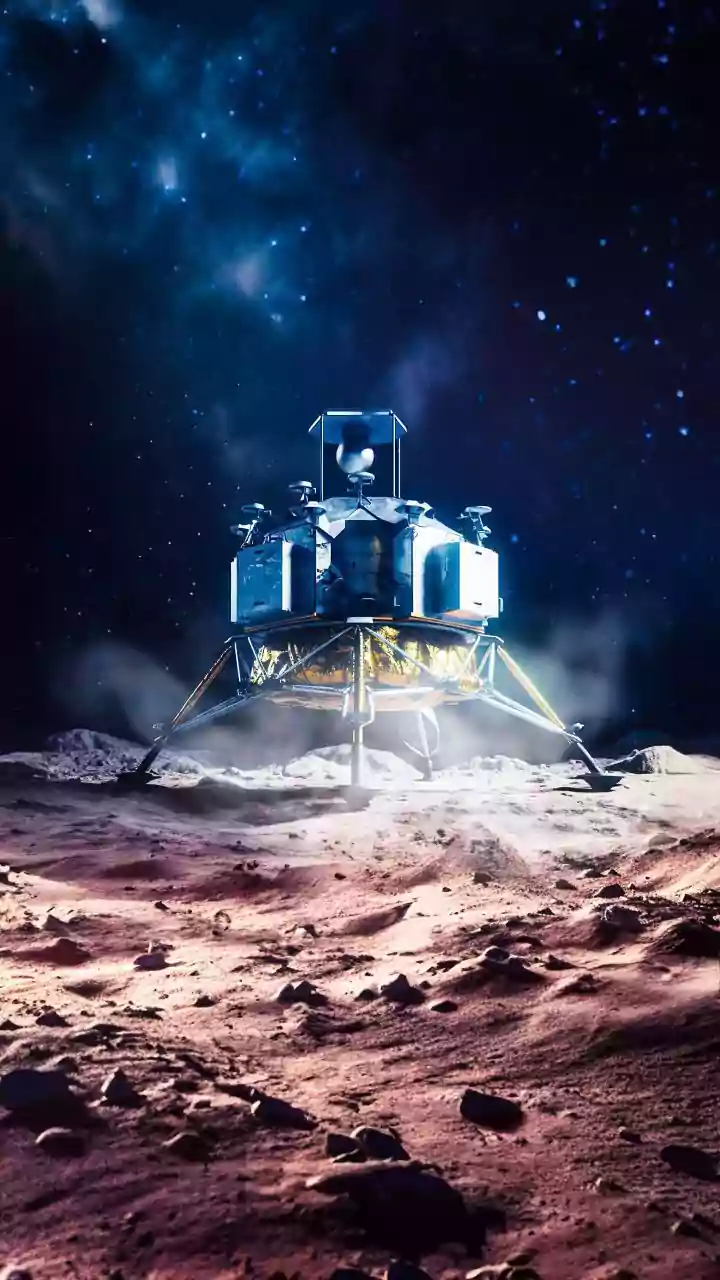
The object in question was the upper stage of a SpaceX Falcon 9 rocket. It began its journey on January 15, 2025, with a mission to deploy two commercial lunar landers. After successfully completing its primary task, the four-tonne rocket stage was left without enough fuel to either return to Earth's atmosphere for a controlled disposal or escape the Earth-Moon system's gravity. For over a year and a half, it was trapped in a chaotic, unpredictable orbit, pushed and pulled by the gravitational forces of the Earth, Moon, and Sun, until its trajectory finally intersected with the lunar surface. It ultimately slammed into the Moon at a staggering speed of about 5,400 mph (roughly 8,700 km/h).
An Unintentional Scientific Experiment
While the crash was unintentional, it has provided scientists with a rare opportunity. The impact kicked up material from beneath the Moon's weathered surface, offering a fresh glimpse into its geology. The LRO's images show bright and dark rays of ejecta—the material blasted out from the crater. The darker streaks are older surface dust altered by long-term exposure to solar winds and cosmic rays, while the lighter material is freshly excavated from deeper underground. Studying the crater, which is less than 10 feet deep, and its ejecta pattern helps scientists verify their models of impact physics on the Moon, which is crucial for understanding both natural meteoroid strikes and the effects of human-made objects.
A Wake-Up Call for Lunar Debris
This event is more than just a cosmic curiosity; it's a stark reminder of a growing problem. As more countries and private companies like SpaceX set their sights on the Moon, the amount of hardware left behind is increasing. Unlike Earth, the Moon has no atmosphere to burn up incoming objects, meaning every piece of defunct hardware on a collision course will hit the surface. To date, humanity has left around 200 tonnes of material on the Moon, from historic Apollo modules to crashed probes and rocket stages. This lunar litter poses a potential risk to future missions, scientific sites, and any potential long-term human settlements. The Outer Space Treaty holds nations liable for damage caused by their space objects, but the rules for managing debris in the lunar environment are still catching up to the pace of exploration.